Humanism
In the Mountains of Madness: Science Confronts the Legend of the Halny
28 March 2026





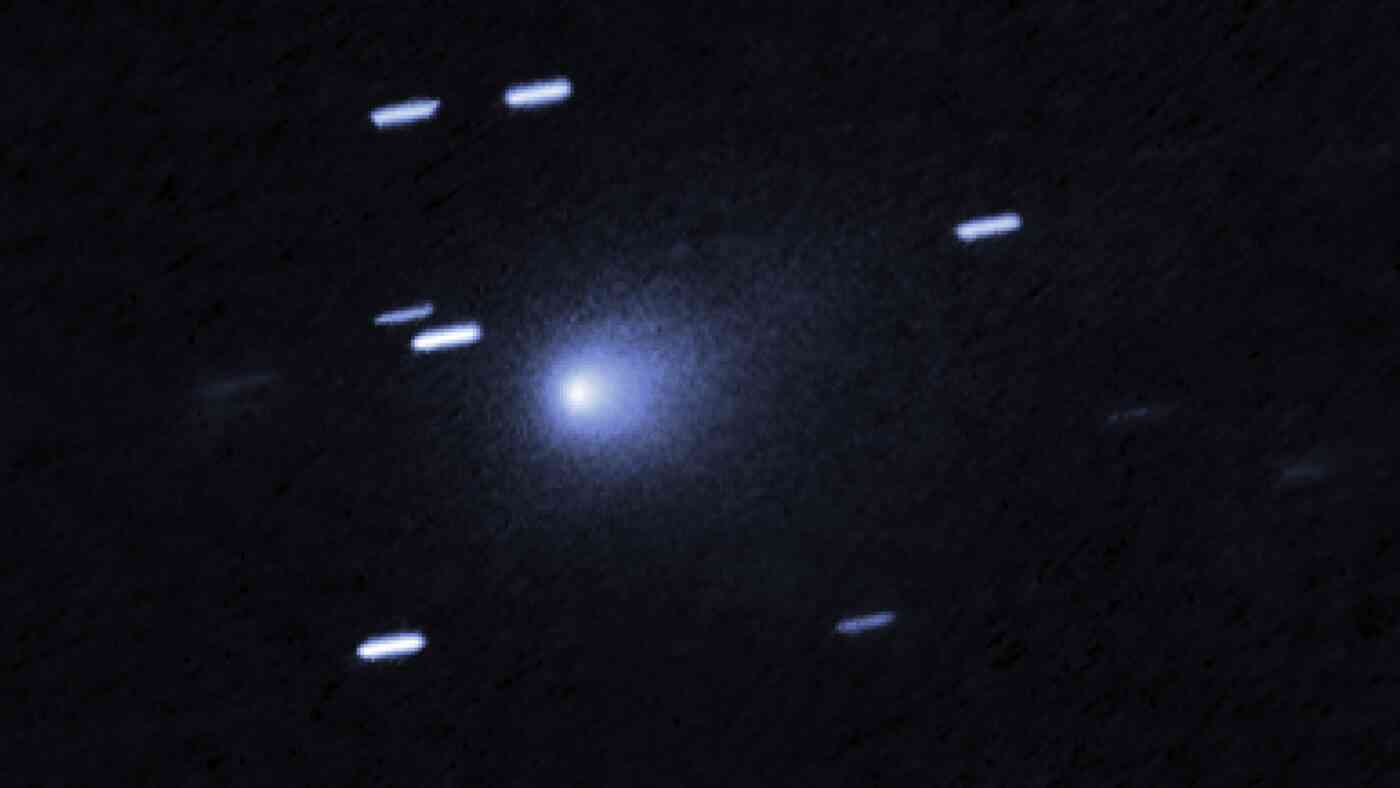
New analyses from the Hubble and Webb telescopes reveal that the interstellar comet 3I/ATLAS measures approximately 2.6 kilometers in diameter. This is significantly larger than previous objects from outside our system, and it is not the only surprise this cosmic visitor has in store.
The interstellar comet 3I/ATLAS is the third confirmed interstellar object to visit our Solar System. The ATLAS telescope in Chile first spotted it on July 1, 2025. Its hyperbolic orbit proves that it originated outside our system. Once it departs, it will never return.
On October 29, 2025, the comet reached its perihelion. It passed the Sun at a distance of about 200 million kilometers. By December 19, 2025, it swept past Earth at a distance of roughly 270 million kilometers. Now, the object is heading toward Jupiter.
Scientists monitor the comet closely and uncover new details almost constantly. The latest spectral analyses from the James Webb Space Telescope show methane in the coma. This cloud of gas and dust surrounds the comet’s nucleus.
The detection of methane in an interstellar object is a breakthrough. Researchers use methane as a key “tracer molecule” to study how planets and comets form. The specific concentrations of methane, water, and carbon oxides in cometary ice reveal the temperature of the original environment. These chemical signatures allow us to compare the genesis of distant comets with our own Solar System.
The presence of methane suggests the comet formed in an environment rich in organic molecules. This likely occurred in a distant ice zone around its parent star. Such findings raise questions about how interstellar objects transport the “ingredients for life.” However, non-biological processes can also produce methane.
The second major update concerns the size of the nucleus. Two independent research groups used images from the Hubble and Webb telescopes to estimate its diameter. They placed it at approximately 2.6 kilometers. This scale compares to the downtown area of a major city.
This measurement means the interstellar comet 3I/ATLAS is substantially larger than previous interstellar visitors. Earlier objects measured only about 80 and 400 meters, respectively.
The official discovery date is July 1, 2025, but survey systems recorded the object much earlier. Astronomers returned to the archives after they calculated the comet’s hyperbolic orbit. They found observations in the ATLAS and Zwicky Transient Facility data dating back to June 14, 2025. The TESS satellite even captured the comet on May 7, 2025. That is nearly two months before the official discovery.
The comet sat in raw data for weeks. Algorithms and astronomers simply had not yet linked the individual detections into a coherent trajectory.
This story illustrates the massive challenge of modern survey astronomy. Telescopes generate terabytes of data every day. Automated algorithms must sift through these piles to find significant objects. The case of the interstellar comet 3I/ATLAS makes us wonder how many similar visitors still linger unrecognized in our archives.
Read this article in Polish: Jądro wielkości centrum miasta. Kometa 3I/ATLAS znów zaskakuje


A Journalism and Social Communication graduate with 15 years of experience in the media industry. He has worked for titles such as "Dziennik Łódzki," "Super Express," and "Eska" radio. In parallel, he has collaborated with advertising agencies and worked as a film translator. A passionate fan of good cinema, fantasy literature, and sports. He credits his physical and mental well-being to his Samoyed, Jaskier.



Zmień tryb na ciemny