Humanism
The Quietest Fear. The One That Finds You When You Are Alone
25 March 2026





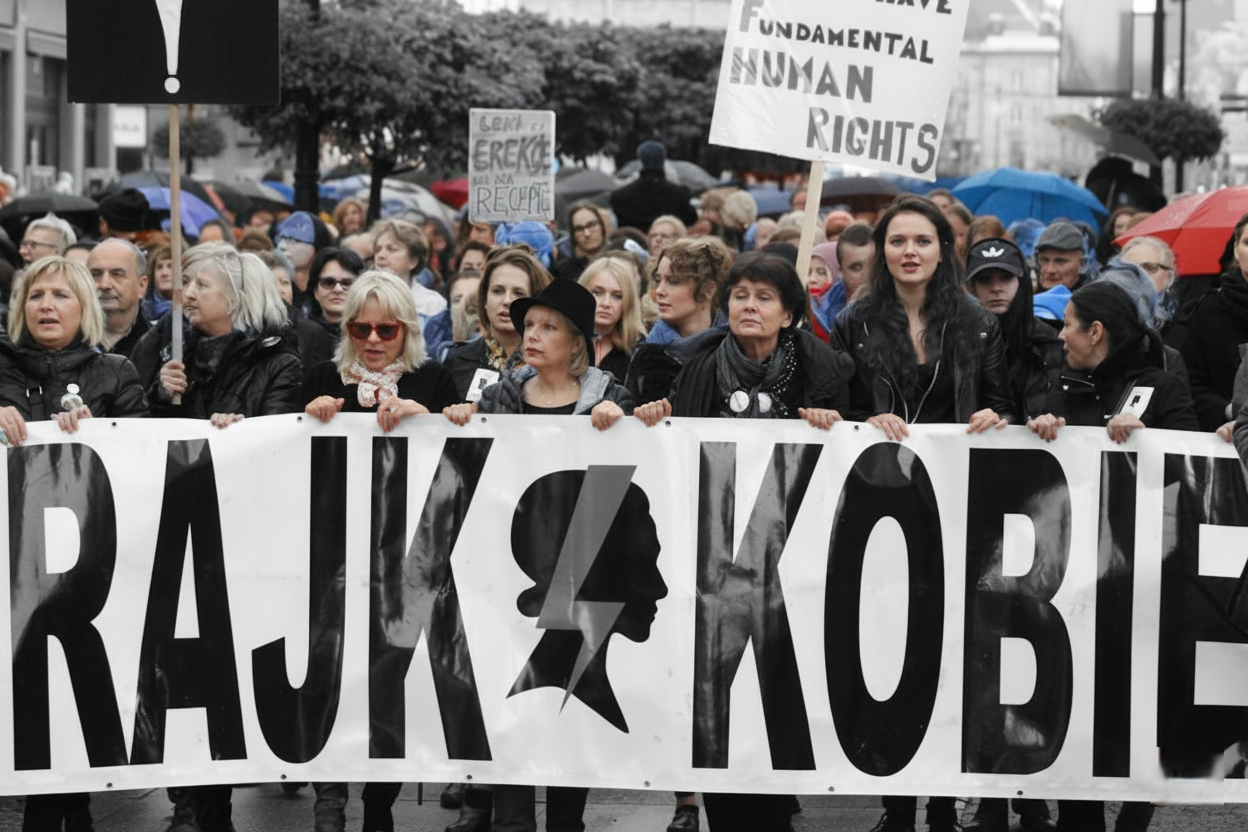
Young people graduating from media-related programs increasingly enter the job market with the label: "journalist and activist." This is their manifesto: they want to take action, fight for causes, and speak out. The problem is that newsrooms are looking for someone completely different. The result? Disappointment, frustration, and often, unemployment. Although journalism changes dynamically, it primarily requires reliability, curiosity, and craft. And these are the qualities most critically lacking today.
Young candidates arrive at job interviews with CVs that immediately declare: I write, I comment, I support, I fight. For them, this is a value; but for newsrooms, it serves as a warning sign. Editors increasingly state:
“It’s great you have energy, but we are looking for a journalist, not a spokesperson.”
26-year-old Maja precisely heard this during a recruitment interview for a journalist position at a major national outlet, and she did not hide her disappointment. She takes pride in her pro-social stance, clearly stating it in both her CV and LinkedIn profile.
But newsrooms have no demand for activists because activism, by definition, requires choosing a side. And the work of a reporter—despite all changes—still demands the opposite: clarity, detachment, and the ability to listen even to those with whom they disagree. Young people want to change the world fast. Newsrooms need people who can first understand it.
When you ask artificial intelligence if one can be both a journalist and activist simultaneously, the answer is usually similar: “yes, but after hours.” This is a surprisingly accurate comment on a reality that sells the vision of work-life balance, yet it remains astonishing.
Journalism is not a profession you can easily switch off at 5:00 PM. If you truly are a reporter, you cannot stop being one “after work.” Meanwhile, young people treat the profession like a set of skills they can unpack and put away. They think they only need to polish their style, know how to create a short clip for TikTok, and surround it with a bit of neat rhetoric.
Yet, something else remains most valuable in newsrooms: competence, knowledge, and the ability to ask difficult questions. While AI effectively takes over simpler tasks—summaries, abstracts, quick news updates—the need for journalists who possess more than just opinions increases.
Deans and lecturers at Poland’s top journalism programs have warned for months: young people arrive at universities with less general knowledge and weaker curiosity about the world. However, they know the tools extremely well—editing, social media, content writing.
The problem is that journalism is not about “creating content.” It is about understanding reality. And you can only describe reality if you truly know it: history, politics, social contexts, economics, and culture. When this is missing, emotional commentary remains. It is often hot, but rarely reliable.
Newsrooms today report a similar problem: many candidates apply, but few are suitable for the job. The reason is most often the same: lack of craft, lack of objectivity, and an excess of ideology.
CVs are full of phrases: “I work for the benefit of…”, “I support…”, “I actively participate in…”. But they lack the most important elements: reporting experience, a portfolio (even if created only for a drawer), and the ability to talk to people outside their own bubble.
“A journalist who cannot call someone they disagree with cannot perform this job. Yet, this is one of the most difficult competencies young people do not bring from universities,” concludes Wojciech Wybranowski, Editor-in-Chief of Holistic News.
No, but only its simplified version is dying—the one where simply “having a voice” and an opinion suffice. Real journalism still exists and is needed more than ever. In the world of deepfakes, algorithms, disinformation, and censorship, the reporter’s role is growing, not shrinking. But to shoulder that role, you need more than an ideological declaration. You need craft, humility, and curiosity. And above all, the courage to seek the truth instead of confirming your own beliefs.
Young people want to be both creators and defenders of their own convictions. But the market seeks individuals who can ask questions, verify facts, and listen. People interested in the world, knowing it does not consist only of black and white, but of many shades of gray. The need for true, unbiased reporting skills is why the journalist and activist combination proves challenging in professional newsrooms.
Read the original article in Polish: W CV wpisują „dziennikarz i aktywista”. I nie mogą znaleźć pracy

Media manager, publisher, and producer. She has hands-on experience in radio, print media, and online platforms. She holds degrees in Russian Studies and European Studies. Always on the move.


Truth & Goodness
24 March 2026

Zmień tryb na ciemny