Truth & Goodness
From Apollo to Artemis: Why Humans Are Returning to the Moon
04 April 2026





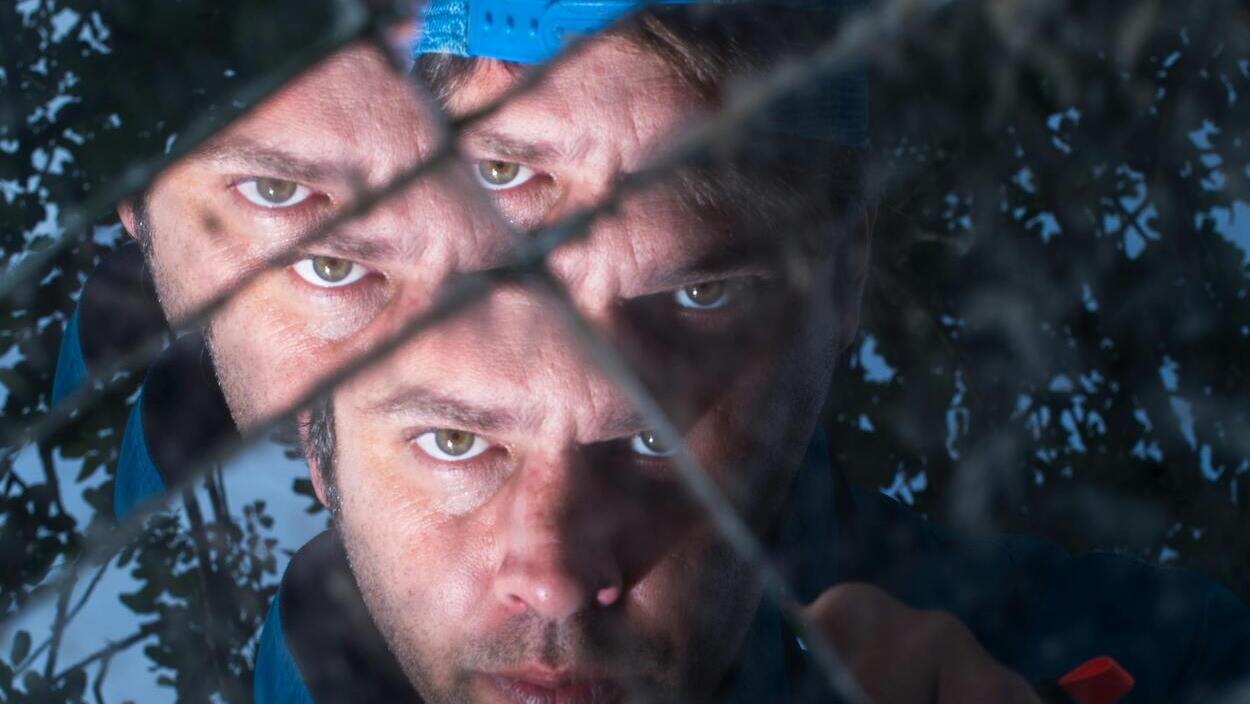
We live in a civilization of falsehood, delusion, and distorted mirrors—a civilization in which the manipulation of reality's image dictates how we see the world. Distorted mirrors reflect it exactly as the "artist" telling us their story desires, writes Jacek Piekara in his column.
The very title of this article could be considered a falsehood, because very often it is precisely the lie that appears to us as much more attractive, much more colorful, and usually much more convenient than the truth, and more profitable. However, if we treat “beauty” more seriously, as a kind of spiritual splendor, a virtue, then the title of this text gains more sense.
But is revealing the truth always the right thing to do? If the truth harms innocent people, should we simply ignore that and strive to disclose it at all costs?
This is likely the question asked by those who hold dark secrets. Should they confess them to their closest relations, risking the ruin of a marriage, a family relationship, or a friendship? And should one reveal the secrets of others, knowing that it will expose them to great trouble? Presumably, a multitude of good and bad answers, better or worse justified, will be found, depending on the context and specifics of the problem.
We live in a civilization of falsehood, delusion, and distorted mirrors, which reflect the world in the way that the artist telling us their story chooses to position those mirrors. And usually, there is no problem when we speak of a true artist: a filmmaker, a writer, or a painter. They have the right to their vision of the world, which sometimes has little to do with the real world.
Although I must admit to you that excessive departures from realism in films that claim to be historical drive me mad. Few people know, for example, that the outstanding film Braveheart is completely fabricated in most of its details, and the famous series Bridgerton, which depicts black people as English aristocrats or members of the royal family, is sheer nonsense that pushes far beyond the scale.
Similarly, it has been with the historical veracity of costume dramas, such as films about the musketeers, where, after all, fictional heroes appear alongside characters genuinely known from history.
It is half the battle if the artistic falsehood concerns events long past and does not affect reality in any significant way (because who cares whether Cardinal Richelieu was a traitor or a French patriot?). It is worse when the falsehood concerns contemporary or near-contemporary events and strongly impacts the social imagination.
We had such an example in the film Valkyrie with Tom Cruise, where Colonel Stauffenberg, the officer who attempted to assassinate Hitler, was portrayed as a flawless hero.
Meanwhile, Stauffenberg was a racist scoundrel, hating Poles, Russians, and Jews. He believed that Slavs should be turned into slaves. In short, he had nothing against murdering Slavs and Jews, just not under Hitler’s command and while at peace with England, France, and the USA. The film’s viewers will not learn this.
We know perfectly well how to present a false image as true, thanks, for example, to YouTubers who first show the entire process of creating videos or photos for Instagram and then reveal the final effect. And we see how greatly reality differs from that final outcome—usually polished, colorized, and entirely untrue.
In the social sphere, not just the celebrity one, similar techniques are naturally used. I once saw a famous photo showing a child lying on the ground, with a military boot next to its head. We immediately imagine a soldier who knocked the child over and is now threatening them with a weapon. Meanwhile, the wider shot shows that this is a staged situation. The child is lying safely next to the boot (an empty boot, not the shod foot of a soldier!), and people, including photographers, are standing all around. But of course, the media does not show the wider shot, only the small, emotionally resonant fragment.
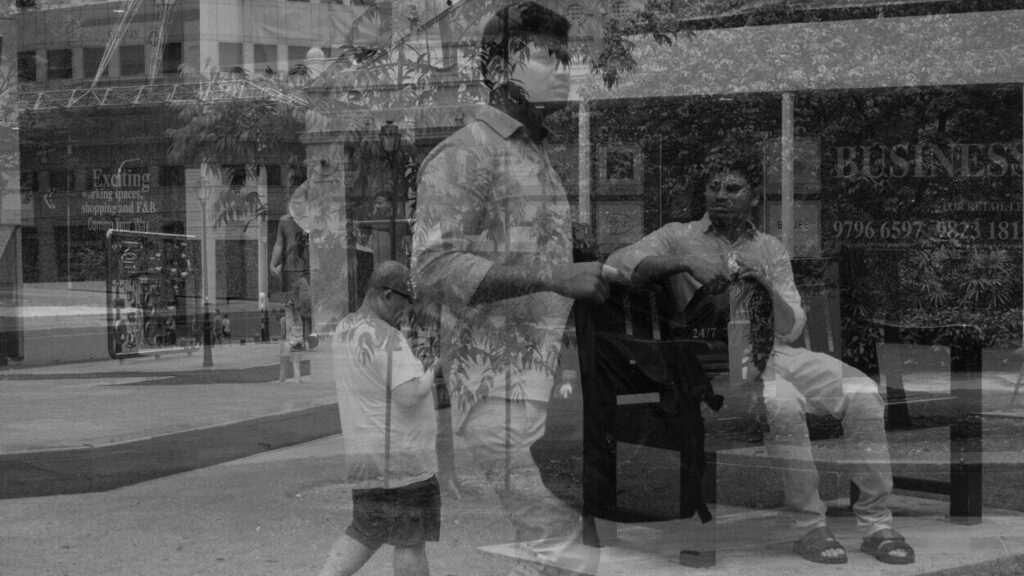
I once wrote in one of my books that most people resemble individuals locked in a house with iced-over windowpanes, who only have access to a small vent window and see a piece of the garden from there.
Based on this very view, they form an opinion about the entire world. Yet, one can wipe the glass, and then one will see something different. One can approach another window, one can finally leave the house and see what is in the backyard. And eventually, one can take the path leading from the door to see what lies beyond the forest or the mountains.
Most people, however, are quite satisfied with peering through the small vent window, and often they do not even realize that someone deliberately placed it in a specific spot so they would only see a specific, designated image.
Politicians deceive us habitually; in Poland, Prime Minister Donald Tusk excels at this, but his electorate does not mind these lies, despite them being so primitive and easy to debunk that often just a few minutes are enough to realize we are dealing with a falsehood (in Poland, the Demagog portal does this, for example).
Lies sometimes harm the rulers less, sometimes more, but the real danger lies in when they begin to believe their own lies and build political plans and strategies upon that belief. That is a straight road to disaster when the liar allows themselves to be fooled by their own fabrications.
I agree with Mark Twain, who wrote that a truthful person does not need to have a good memory. Because they do not need to remember whom they lied to or exaggerated things to. If we hunted a rabbit, but boast about killing a lion or a hippopotamus, we must then remember whom we “spun a yarn” about the lion and whom about the hippopotamus. If we tell the truth from the start, we do not have a similar problem.
In short, the truth is often more convenient, speaking it brings tangible benefits, and being caught deviating from it brings tangible losses. It is also very often the case in social or political life that the sincere confession of an inconvenient truth by a public figure builds trust and credibility in the eyes of the people.
I remember when people wondered what would have happened if Lech Wałęsa had honestly, immediately, admitted to contacts with the communist Security Service and to being a paid informant reporting on his closest colleagues. Surely, in that way, right at the beginning, he would have defused the bomb that still explodes under his feet today and cost him the loss of his political position and reputation.
Remaining with the allegory about the house with iced-over windowpanes, it is fitting to wish for all of us that we wipe those panes, step out onto the street, look beyond the mountains and the forest. Because there are many economic and political centers whose goal is that we NEVER know the truth. These can be large corporations and quite small companies, powerful governments or agencies, foundations, or associations.
These can be politicians, celebrities, or so-called opinion leaders. They all usually have more or less dark secrets that they meticulously conceal. And only knowing the truth about these secrets gives ordinary citizens the opportunity to defend themselves against the system. And that is why the truth is so important. Because it can be a weapon in our hands. A weapon with which we not only learn about the world and people but also disarm the traps set in our path.
Read the original article in Polish: Jacek Piekara: Piękna jest tylko prawda

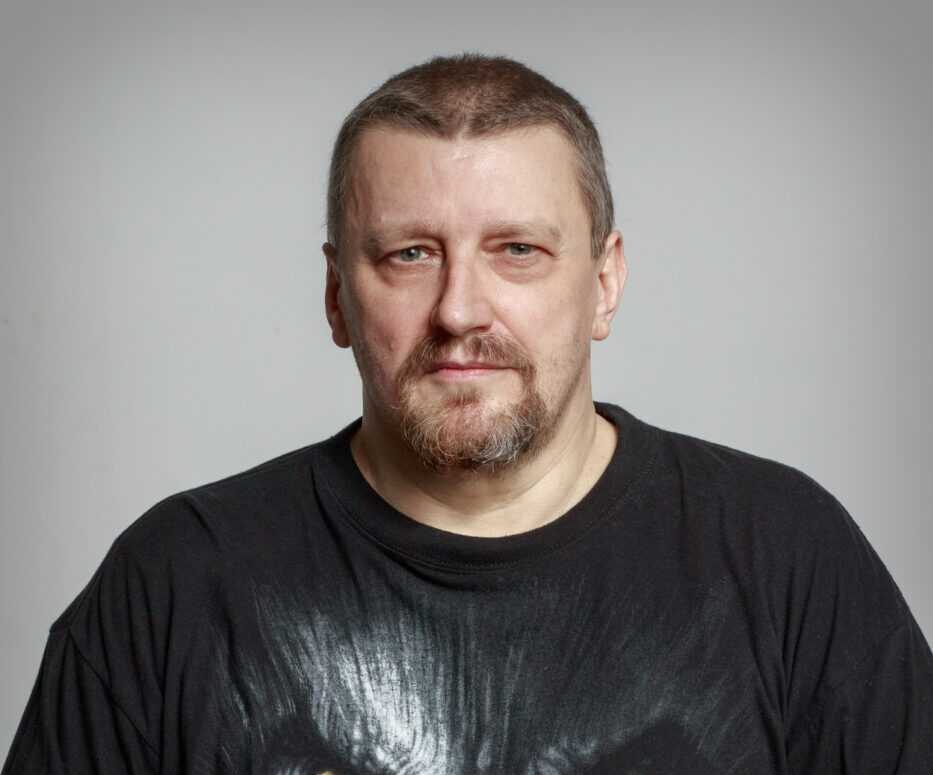
Jacek Piekara: One of Poland's most popular fantasy writers, a journalist, and a columnist. He is the author of the widely acclaimed "Inquisitor Series" (Cykl Inkwizytorski), dozens of books, and numerous short stories. Piekara has also contributed to specialized and popular press, including the magazines Click! and Gambler. In addition to literature, he writes scenarios for computer games and works as a publicist.

Zmień tryb na ciemny