Humanism
Another Day, Another Rat Race: Epictetus on Living Better
02 April 2026





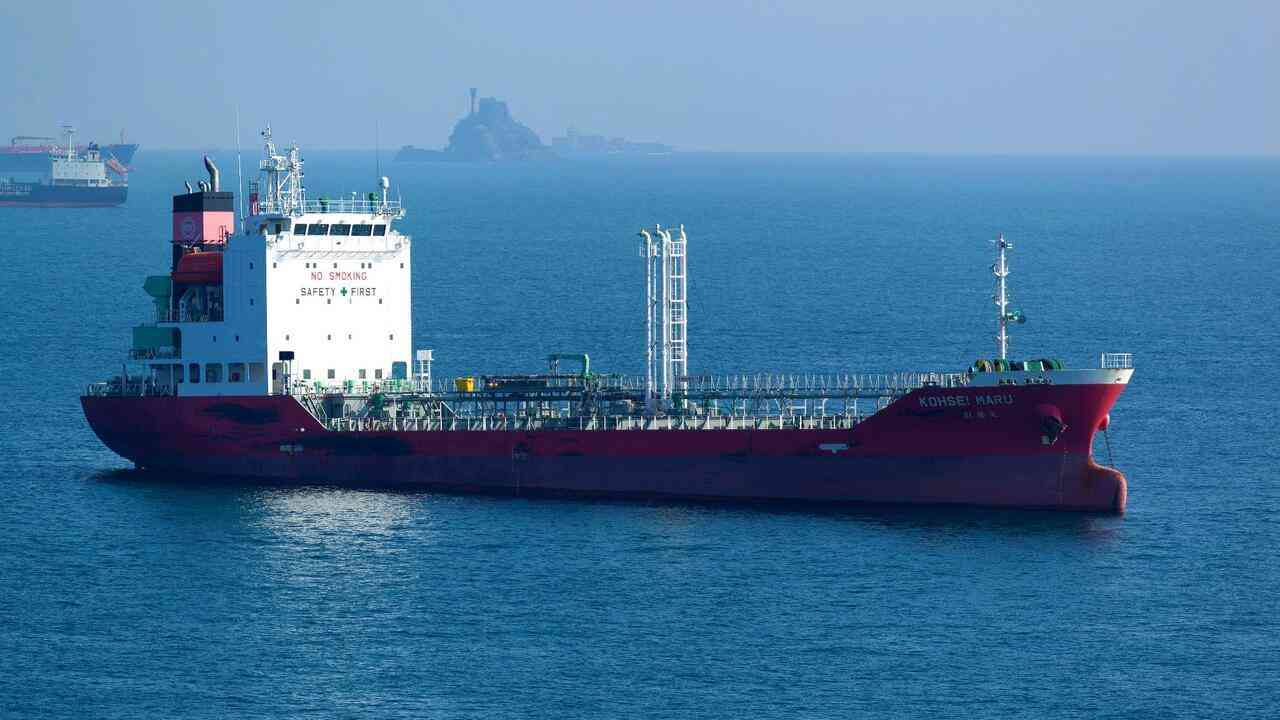
On the map of the world, some places look almost unremarkable. But when they stop functioning, millions of people feel the consequences — from prices at petrol stations to food bills. That is because maritime chokepoints determine the flow of oil, gas and goods on which the global economy still depends.
The seas and oceans had not seen anything like it since the end of the Second World War. Operation Earnest Will assumed that Kuwaiti tankers would be escorted by US Navy warships, while early-warning aircraft and helicopters flew overhead, ready to neutralise the greatest threat: small, ultra-fast boats that Iran sent out to attack the slow-moving giants loaded with crude oil.
In the end, the Americans managed to secure oil supplies from the Persian Gulf, and the Western world breathed a sigh of relief. The effects of the Iran-Iraq War of 1980–88, which had spilled into the waters of the Gulf, were not as severe as they might have been. That chapter of the conflict between Tehran and Baghdad went down in history as the “Tanker War”. Even then, the world focused its attention on the Strait of Hormuz and began to understand how important this bottleneck of maritime transport really was. Iran mined the area at the time, but it failed to close the strait.
Much suggests that the current White House had grown used to the idea that the mighty US Navy would always be able to guarantee the free flow of hydrocarbons out of the Persian Gulf, and that Tehran would never be capable of cutting off the Strait of Hormuz, the gateway to the Gulf itself. Donald Trump’s administration became accustomed to a world that no longer exists, a world that disappeared with the democratisation of war. Cheap drones have made it remarkably easy to paralyse the key bottlenecks of maritime transport.
I once spoke about the Strait of Hormuz with John Lehman, who served as Secretary of the Navy under Ronald Reagan. Our conversation took place before the era of cheap offensive drones, yet even then Lehman downplayed the danger posed by Iranian mines, which today have become a major problem.
Closing the Strait of Hormuz would not mean the end of the world,
– Lehman told me, convinced that US Navy minesweepers and those of allied states would be able to clear mines laid in the strait “within a few days”.
The last 3 weeks have shown that many leading American decision-makers remain stuck at a similar stage of thinking about sea lanes. Old assumptions about the power of the US Navy still dominate, along with the belief that the gateway to the Persian Gulf will remain open simply because Washington wants it to.
At its narrowest point, the strait is only about 35 kilometres wide. Yet roughly 20 percent of the world’s oil and liquefied natural gas flows through it. In 2024, oil flow through Hormuz averaged 20 million barrels per day, equal to about 20 percent of global petroleum liquids consumption, while the IEA says about 25 percent of global seaborne oil trade and 19 percent of global LNG trade pass through the strait. UNCTAD also describes it as a critical route for LNG and fertilisers.
Every year, energy commodities worth around 600 billion dollars move through this passage. The strait also carries other crucial goods, including major fertiliser flows; UNCTAD notes significant fertiliser volumes through Hormuz, and recent analyses place the share of global seaborne fertiliser trade at about 1 third.
According to reporting on the latest Iran crisis, traffic through Hormuz dropped sharply, and several outlets have described the route as heavily disrupted by attacks and Iranian control measures.
Ships that managed to leave the Persian Gulf did so with Iranian permission. The rest, hundreds of vessels, have had to wait because the risk of passing through the strait became too high. Recent reporting says more than 20 ships were attacked and large numbers of vessels were stranded or waiting in and around the Gulf.
Are there alternative ways to bypass this bottleneck and export hydrocarbons from Saudi Arabia or the United Arab Emirates without using Hormuz? There are, of course, pipelines. For Saudi Arabia, those pipelines can move oil to the country’s western coast on the Red Sea, while in the UAE they allow crude to reach the Gulf of Oman.
In an emergency, that gives both countries some room to manoeuvre. Even so, pipelines do not match the capacity of maritime transport. That is why the entire world is waiting for the moment when Tehran finally eases its grip on the Strait of Hormuz and hydrocarbon prices come down.
Bab al-Mandab means “Gate of Tears” in Arabic. The name comes from old Arab legends stressing how dangerous those waters could be. Recent years have shown that we now need to add Houthi missiles to the older threats of piracy, dangerous currents and hidden rocks.
Bab al-Mandab forms the southern gateway to the Red Sea. At the northern end of that basin lies the Suez Canal. Djibouti stands on the African side of the strait, Yemen on the Asian side. Before the Red Sea crisis escalated, around 10–12 percent of global oil shipments moved through Bab al-Mandab, making it one of the world’s key energy bottlenecks.
The Iran-aligned Houthis have already shown that not only the Strait of Hormuz, but also Bab al-Mandab, only about 25 to 29 kilometres wide at its narrowest point, is a classic bottleneck of the global economy. Reuters reported in late March 2026 that the Houthis had declared themselves ready to join the Iran war if needed, raising fresh risks for shipping through the strait.
If this point on the maritime map were also blocked by missile and drone attacks on passing vessels, the world economy would face another inflationary shock. Redirecting trade from Asia to Europe around the southern coast of Africa adds 7 to 14 days to journeys, sharply increasing transport costs, as UN and industry analyses of the Red Sea crisis have repeatedly shown.
After the Houthis began attacking ships moving through Bab al-Mandab in late 2023, traffic along that route nearly collapsed. By mid-2024, Suez Canal traffic had fallen sharply. UN and market analyses described reductions on some routes of roughly 2 thirds as shipping lines avoided the Red Sea because of the attacks.
US Navy ships and vessels from allied states gradually regained part of the initiative in the area. Even so, the weakened Houthis retained the ability to strike merchant shipping. That is why the crisis remains far from resolved, and the Houthis still function as Iran’s strategic reserve, waiting for a signal to open yet another maritime front. Reuters’ latest reporting suggests exactly that.
In 2021, the world learned that major disruption could also emerge 1,500 kilometres farther north, at the northern gateway to the Red Sea, in the Suez Canal. The enormous 400-metre container ship Ever Given was pushed off course by strong winds and blocked the canal completely for 6 days. By the end of the blockage, nearly 400 ships were waiting in line to pass through the Egyptian waterway.
It is easy to imagine a similar blockage not caused by an accident, but by a drone attack.
That is one reason why, in recent years, Egypt has tightened the security cordon around this strategic route. The spread of cheap drones has changed the logic of maritime security. It is no longer enough to think in the old categories of fleets, escorts and minesweepers alone.
No strait is longer than Malacca. It stretches for nearly 1,000 kilometres and remains extremely narrow. At its narrowest point, near Singapore, it is only a few kilometres wide. There is also no busier sea route. About 100,000 ships pass through it every year. It is the most convenient shipping lane linking East Asia with Europe and Africa.
Roughly 1 third of global maritime trade moves through the Malacca route, and Chinese leaders have long worried about their dependence on it. Beijing even gave that vulnerability a name in 2003: the “Malacca Dilemma”.
It is easy for accidents to happen in the Strait of Malacca, but today the main problem is piracy. ReCAAP’s half-year report recorded 80 incidents in the Straits of Malacca and Singapore between January and June 2025, a 4-fold increase from the same period in 2024.
A glance at the map makes it easy to understand why the area attracts pirates. It is full of islands and islets covered in dense forest.
From China’s point of view, however, the greatest concern is not piracy alone. It is the ability of the US Navy to block this route relatively easily if a serious confrontation between the 2 superpowers were ever to break out.
Beijing has recognised this danger for years. One response has been the rapid expansion of the Chinese navy, intended to protect the trade routes used by the giant vessels on which China depends.
That is why maritime chokepoints now matter far beyond naval strategy. They shape inflation, food prices, insurance costs, delivery times and the political stability of entire regions. One drone, one missile, one minefield or one accident can turn a narrow strip of water into a global economic shock. And that is exactly why these places now decide much more than the movement of ships — they help decide the cost of everyday life.
Read this article in Polish: Jeden dron i świat staje. Te miejsca decydują o cenach paliw


Journalist with a degree in American studies, writing mainly about foreign policy and history. Author of numerous reports on international issues and interviews with leading experts in the field of economy, geopolitics and history. Since March 2023, editor-in-chief of the monthly "Historia Do Rzeczy".



Zmień tryb na ciemny