Truth & Goodness
Ghost in the Machine: How AI Hallucinations Are Eroding Wikipedia’s Reliability
10 March 2026





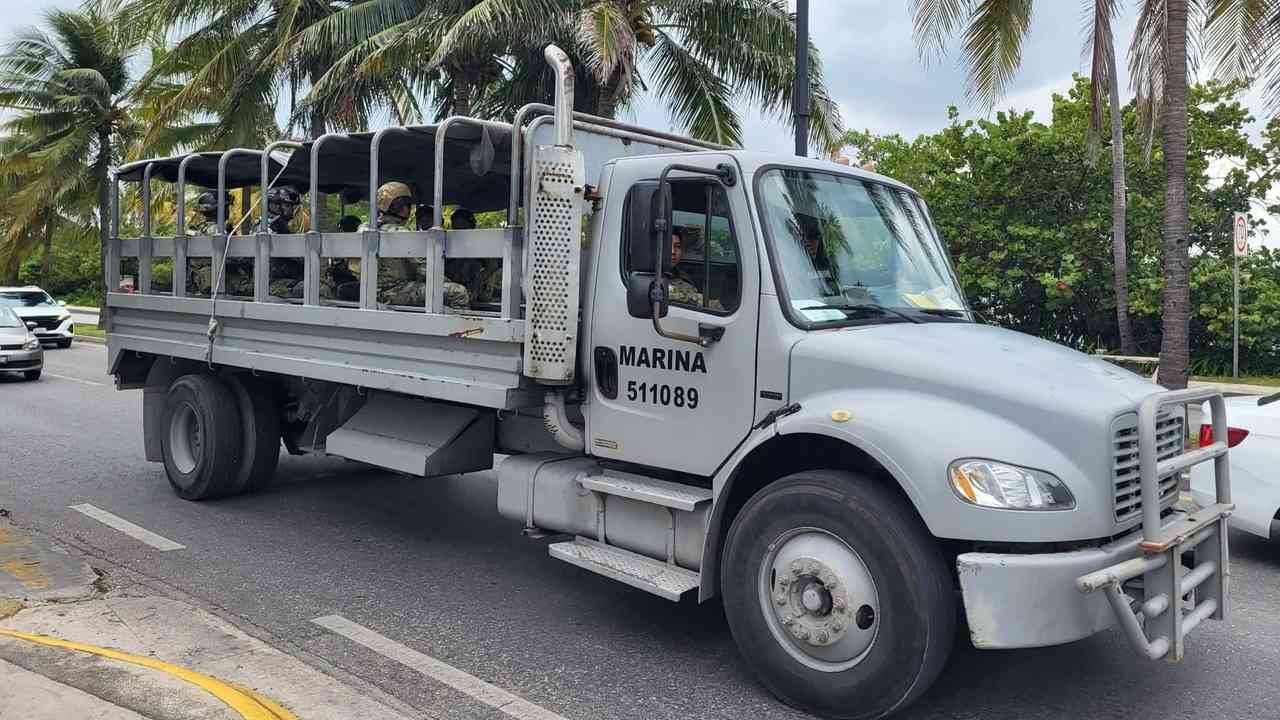
In just a few months, the world will turn its gaze toward Mexico, one of the hosts of the FIFA World Cup. Yet, behind the facade of sun-drenched resorts and gleaming stadiums, a war has raged for two decades, claiming hundreds of thousands of lives. Powerful Mexican drug cartels now control entire regions of the country, wielding private armies and profound political influence.
This place will forever bear the name “Mexican Auschwitz.” Behind an ordinary ranch gate, horrors unfolded that seem plucked from a nightmare. The Izaguirre Ranch, located near Teuchitlán in the state of Jalisco, served as a site of execution and cremation for the victims of one of the world’s most terrifying organizations: the Jalisco New Generation Cartel (CJNG).
The comparisons to Auschwitz became undeniable when media outlets published photos of piled shoes and clothing belonging to those turned to ash in the ranch’s crematoriums. Remarkably, volunteers searching for their missing loved ones—not the police—uncovered the grimmest secrets of this site.
The police investigation—widely criticized for its staggering incompetence—revealed that the cartel used the ranch to train its “soldiers.” These recruits are often young men whom the cartel drugs before forcing them to commit their first murders under “controlled conditions,” serving as a brutal combat baptism.
The “Mexican Auschwitz” functioned as a training and extermination hub for a cartel that recently lost its kingpin. On February 22, Mexican forces tracked down and killed Nemesio Oseguera Cervantes, known globally as “El Mencho.” The United States had placed a $15 million bounty on his head. This high price reflected El Mencho’s leadership of an organization that mastered the smuggling of fentanyl—a drug currently ravaging American cities.
One can witness the tragic results of this trade in Hollywood, the legendary district of Los Angeles. Walking down the Walk of Fame on a February evening, the reality is haunting: among the stars of cinema icons, dozens of people slump in unnatural poses—some frozen on their knees, others swaying in a fentanyl-induced trance.
Every year, tens of thousands of Americans die from fentanyl overdoses. This synthetic opioid is 50 times stronger than heroin, making a lethal dose terrifyingly easy to ingest. Estimates suggest that in 2024, approximately 50,000 Americans died from the drug—a fivefold increase from just a decade ago. As Washington watches this wave of addiction rise, the White House has placed a target on the backs of the cartels and their leaders.
Donald Trump has repeatedly threatened to deploy U.S. forces against cartel strongholds, a move that would trigger a massive political crisis by violating Mexican sovereignty. However, the current U.S. administration already demonstrated a bolder approach in Latin America when it captured Nicolás Maduro on charges of narco-terrorism.
Fentanyl, which is relatively simple to produce, has become a literal gold mine for Mexican drug cartels. These criminal organizations constantly expand their production capacity, even recruiting the brightest students from Mexico’s top technical universities to refine their chemical processes.
While no one can pinpoint exact figures, the cartels undoubtedly earn billions of dollars annually from fentanyl. When you add the massive profits from cocaine trafficking and human smuggling, it becomes clear how they have managed to essentially purchase vast swaths of Mexico. They buy politicians, corrupt law enforcement, and build private armies that frequently terrorize federal agencies.
The cartels demonstrated this raw power earlier this week when they set the streets of numerous cities ablaze, including the Pacific resort of Puerto Vallarta. Criminals torched cars and shops, specifically targeting and killing dozens of law enforcement officers.
The CJNG possesses the manpower and hardware for full-scale conflict. Experts estimate the group commands up to 10,000 “soldiers” equipped with top-tier military gear. A few years ago, a propaganda video went viral showing a long convoy of homemade armored vehicles surrounded by men in quasi-military uniforms, armed to the teeth. The film served as a direct warning to both the state and rival gangs.
During the video, the soldiers repeatedly shouted “Long live El Mencho!” in honor of their now-deceased leader. Under his reign, the cartel became a blueprint for others, evolving from a standard gang into a sophisticated criminal corporation. Beyond drugs, the CJNG controls illegal mines, real estate, and launders money through the tourism industry. They have even seized control of the avocado trade.
This latter move has hit Mexican citizens hard, as the price of this staple fruit has soared due to cartel extortion. Above all, however, the CJNG maintains a reputation as the most brutal cartel, using terror to fight both competitors and the government.
Mexico has fought its “War on Drugs” since 2006, when then-President Felipe Calderón launched a relentless offensive against the cartels. This military intervention shattered larger groups into smaller factions, but for every “head” the state cut off, several more grew in its place, triggering an unprecedented wave of violence.
The homicide rate skyrocketed, climbing from 10 cases per 100,000 residents in the early 2000s to nearly 30 during the pandemic. For comparison, Poland records fewer than one homicide per 100,000 residents annually.
Data compiled by Deutsche Welle indicates that since the war began two decades ago, violence has claimed approximately 400,000 lives in Mexico. This staggering toll suggests that the cartel wars have killed more people than twelve years of war in Ukraine or twenty years of conflict in Afghanistan.
The recent show of force presents a massive problem for Mexican authorities as the World Cup approaches. However, Mexicans have seen similar surrenders before. In 2019, federal authorities arrested the son of “El Chapo,” Ovidio Guzmán López, who had taken over the Sinaloa Cartel.
In response, the cartel effectively held the 800,000 residents of Culiacán hostage, firing indiscriminately in the streets and burning buildings. President Andrés Manuel López Obrador eventually capitulated, ordering the release of the 29-year-old Guzmán to stop the bloodshed.
While “El Chapo” himself famously escaped Mexican prisons—most spectacularly in 2015 through a mile-long tunnel—he likely won’t repeat the feat. Following his deportation, he is now serving a life sentence in a high-security American prison.
President Obrador largely ended the high-intensity phase of the war in 2018 with his slogan: “Abrazos, no balazos” (“Hugs, not bullets”). He aimed to use social programs to improve quality of life, thereby cutting off the supply of desperate young men the cartels recruit as soldiers.
However, such an ambitious program requires a total restructuring of the state and decades of modernization. Meanwhile, the cartels continue to grow in strength, and the public is demanding decisive action.
It seems that the drop that broke the camel’s back was the disappearance of 43 students in the city of Iguala, which became a sensation in the global media in 2014. It turned out that the local police, who cooperated with the local “Guerreros Unidos” cartel, were involved in the case. The students most likely died because they were in the wrong place at the wrong time.
Among many different versions, investigators are also considering the one where the protest planned by the students was very inconvenient for the local authorities, who were in league with the cartel. The incompetence of state organs unable to explain this mass crime was further proof for Mexicans of just how far the cartels’ tentacles reach.
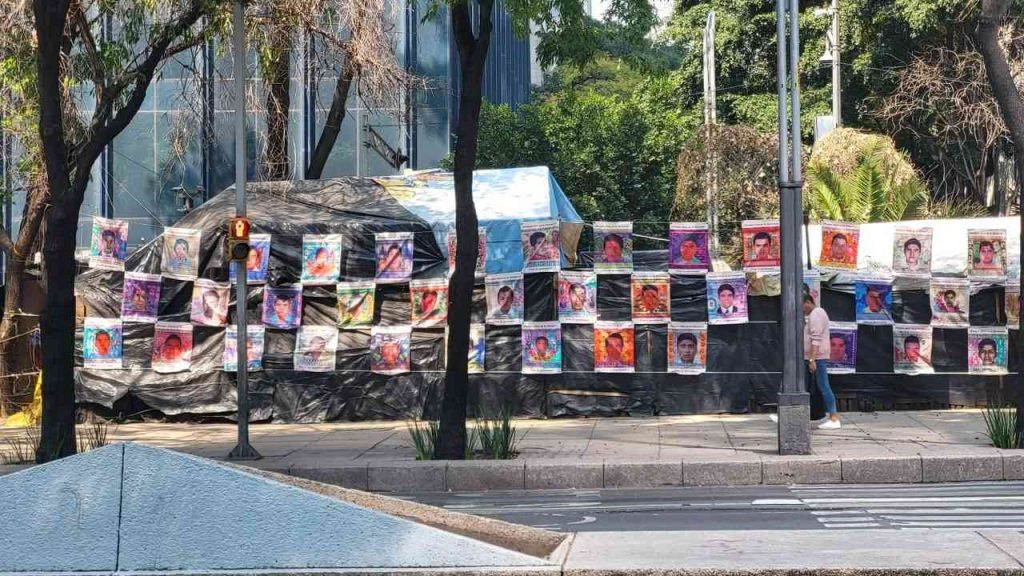
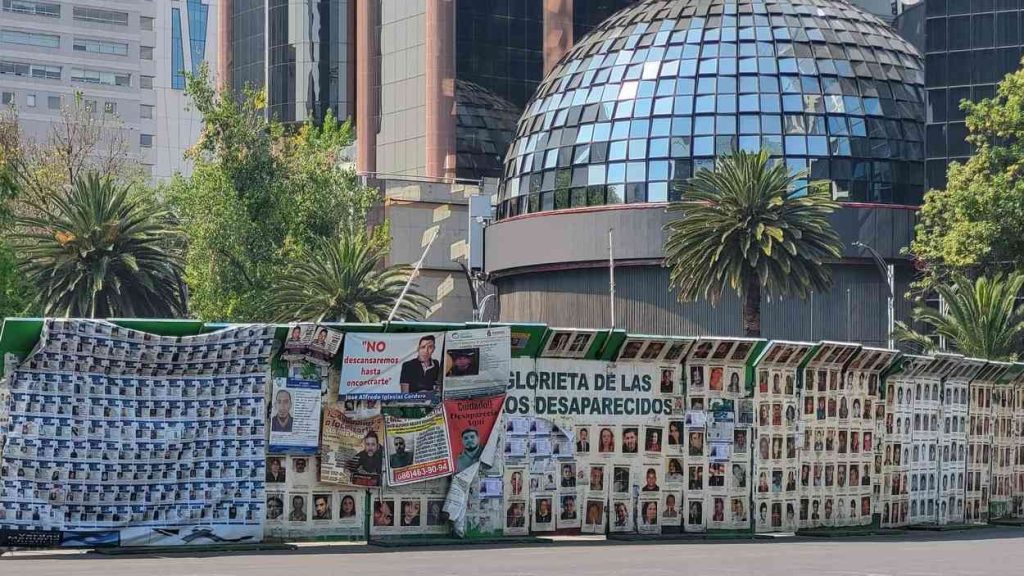
To this day, in the center of the Mexican capital, in its most prestigious locations, you will find plenty of posters of missing persons—a cry of despair from the victims’ families. One such point in Mexico City is a now-empty roundabout near the famous Paseo de la Reforma avenue, where a statue of Christopher Columbus stood until 2020.
The authorities removed the monument to the explorer, wanting to please the indigenous population, but very quickly the fence protecting access to the empty pedestal was plastered from top to bottom with photos of missing Mexicans, becoming a thorn in the side of the rulers. It is estimated that the total number of missing persons has already exceeded the threshold of 100,000 in Mexico.
As one might guess, the cartels killed most of them, sometimes simply because they were in the wrong place at the wrong time. From the point of view of these criminal organizations, the more fear of them exists in society, the better. Ordinary people are meant to fear the cartels and look away from violence so that politicians do the same.
And if any politician decides to act against the interests of the narco-bandits, they can count on the most terrible consequences. Suffice it to say that before the 2024 elections in Mexico, dozens of candidates for various positions were killed. Powerful corporations have the money to “kill” an unwanted candidate with appropriately placed funds; in turn, the cartels have machine guns to effectively eliminate their enemies from the election lists…
In doing so, it sometimes does not end with an “ordinary” shooting. If a cartel truly wants to terrify its enemies, it resorts to decapitation. This happened, for example, to Alejandro Arcos, the 44-year-old mayor of the nearly 300,000-strong city of Chilpancingo de los Bravo in Guerrero state, whose headless body was found in 2024 just six days after his term began following election victory. Another spectacular way of “communicating” the cartels’ strength is hanging victims on ropes in public places.
An example of this is the murder of 10 men whose mutilated and shot bodies cartel “soldiers” hung in 2021 on a bridge running over a highway in Zacatecas state.
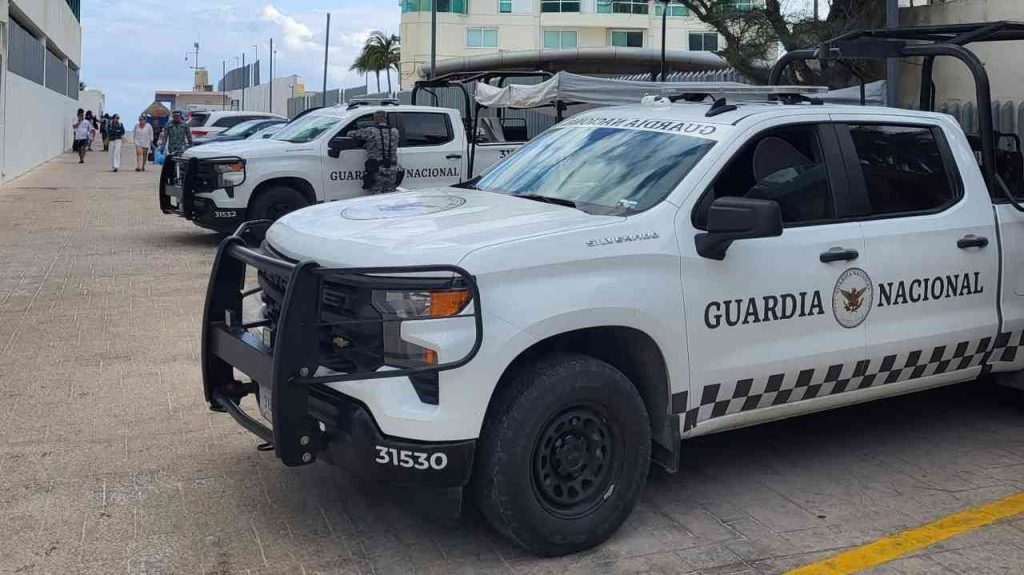
The Mexican central authorities have tried in various ways to show society that they want to limit the cartels’ influence. One way to do this was the establishment of the National Guard in 2019. In late January and early February, I visited Mexico and repeatedly saw National Guard pickups in various towns carrying masked and heavily armed soldiers on the flatbeds. This is, of course, a demonstration of strength and a message addressed to the local population, but perhaps primarily the recipients are meant to be guests from abroad: “You have nothing to fear. The state controls the city streets.”
A particularly large number of National Guard forces can be seen in tourist Cancun, where cartels also mark their presence, although this region of Mexico lies far from the drug smuggling route. I asked one of the National Guard officers why Mexico needs an additional formation—was the local police not sufficient? His answer was disarmingly honest.
The local police are very often riddled with corruption. Unfortunately, that is the reality in our country. The cartels are so powerful that it is easy for them to bribe the local police,
– I heard from the guardsman.
The assumption is that National Guard officers from other regions of Mexico, acting on behalf of the federal authorities, are supposed to be less susceptible to local arrangements.
Breaking the cobwebs woven over decades by increasingly powerful cartels seems, however, to be a true tilt at windmills. According to data presented in 2022 in Science magazine, approximately 185,000 people work directly for Mexican cartels, which makes them the 5th largest employer in the country.
The cartels have created a vicious circle—they create the demand for hard drugs and respond to that demand, ensuring appropriate supply. It is a fact, however, that without customers in wealthy Western countries (not only in the USA—Europe is also supplied by Mexican cartels), the Mexican narco-business would not have developed into such a monster.
A few years ago, I spoke on this subject with Steve Murphy, a retired officer of the American DEA drug agency, who participated in the pursuit of Pablo Escobar in the early 1990s. Murphy was a consultant for the series Narcos and became the prototype for one of the main characters of this excellent series.
People who use cocaine should realize that a bloody trail follows the powder they so eagerly snort. And at the other end of the world, for them to be able to have a great time, someone has to die.
– said Steve Murphy.
Mexico has been trying for two decades to win the war against Mexican drug cartels, which have built their own armies and empires worth billions of dollars. The balance of this fight is about 400,000 victims and over 100,000 missing persons. The discovery of the “death ranch” in Jalisco showed only a fragment of a world where violence has become a daily reality.
Meanwhile, in June 2026, the country will co-host the World Cup and for several weeks will become the stage for the largest sporting spectacle in the world. For the authorities, it will be not only a great sporting holiday but also a huge test of the state: whether it can ensure the safety of sports fans and, if only for a moment, win the fight for control over its own streets.
Read the original article in Polish: Meksyk przed Mundialem. 400 tys. ofiar i kartele rządzące ulicą


Journalist with a degree in American studies, writing mainly about foreign policy and history. Author of numerous reports on international issues and interviews with leading experts in the field of economy, geopolitics and history. Since March 2023, editor-in-chief of the monthly "Historia Do Rzeczy".
Truth & Goodness
10 March 2026



Zmień tryb na ciemny