Truth & Goodness
Evil Does Not Need Monsters. Silence Has Consequences
02 April 2026





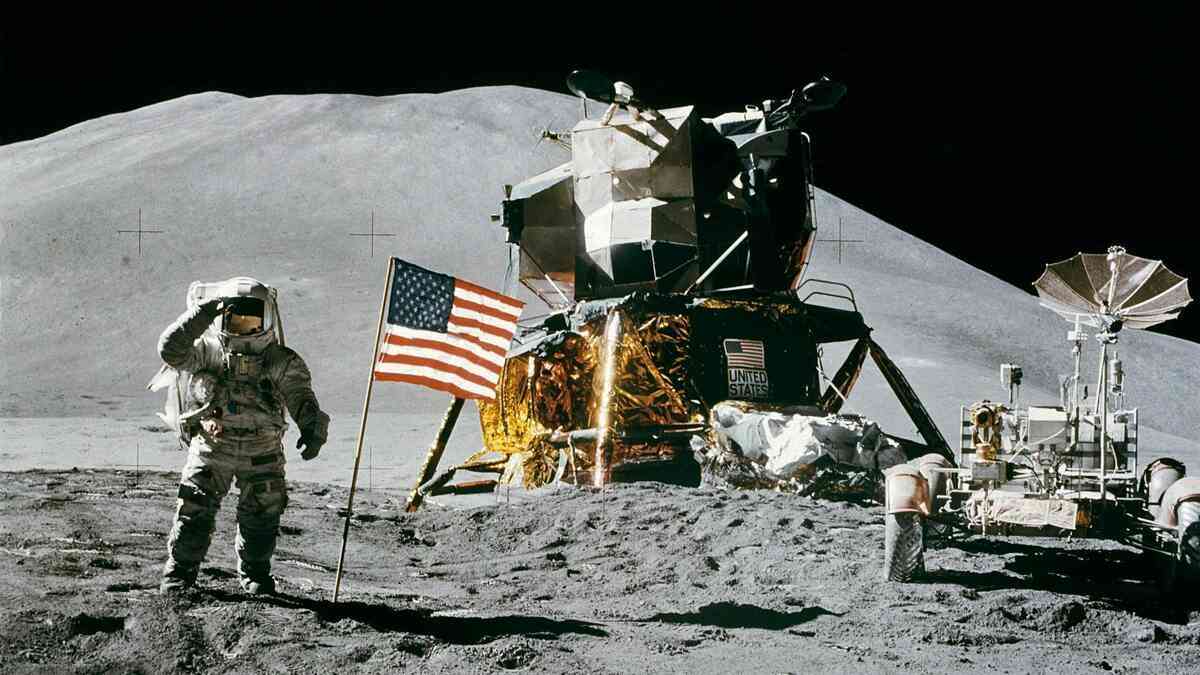
The NASA Artemis Mission: NASA Returns to the Moon PIOTR WŁOCZYK: With the Artemis programme, the Americans are returning to the Moon in spectacular fashion, competing with China in the process. Why do people want to stand once again on the surface of our natural satellite, when humanity has already, in a sense, “ticked that […]
PIOTR WŁOCZYK: With the Artemis programme, the Americans are returning to the Moon in spectacular fashion, competing with China in the process. Why do people want to stand once again on the surface of our natural satellite, when humanity has already, in a sense, “ticked that box”?
PROF. GRZEGORZ WROCHNA: For such a major expedition to happen, 2 things have to come together. The first is curiosity — the desire to discover ever new places, whether on Earth or in space. The famous Latin phrase Navigare necesse est captures this perfectly. It expresses the necessity of exploration, which has always driven humanity forward. That is why people have so often risked their lives to reach other continents or, indeed, the Moon. The second issue is more prosaic: someone has to pay for it. Christopher Columbus would never have discovered America if Queen Isabella of Castile had not provided the funds.
The same is true today. We need passionate people who can plan such a mission and develop the necessary technologies, but we also need a sponsor. Even now, the most ambitious expeditions are still financed by states, although it is true that private backers are becoming more visible.

A mission to the Moon still needs state funding?
Yes and no. The Americans stayed away from the Moon for more than 50 years, and NASA even abandoned robotic lunar missions. It was only in 2024 that the private company Intuitive Machines landed on our natural satellite, saving, in a sense, the honour of the United States. By then, China, Japan and India had already sent their own missions to the Moon.
Before we answer the question of why the United States has now decided to spend billions of dollars on a new lunar programme — and why there was a gap of almost half a century in flights to the Moon — it is worth asking why the American government in the 1960s decided to spend such enormous sums on Apollo in the first place.
The rivalry between the United States and the Soviet Union played out on many fronts, especially the military one. Rocket development was essential if nuclear warheads were to be delivered across continents. The best way to demonstrate superiority was to send a rocket into space. The first stage of that race was unexpectedly won by the Soviet Union, which launched Sputnik into orbit in 1957. The United States sent up its own satellite, Explorer I, just 3 months later, but it was still late. Then came another shock: the Soviets were the first to send a human being into orbit.
We tend to forget those 2 early American defeats because they were overshadowed by the spectacular success of Apollo 11.
After losing the first 2 stages of the race, the Americans had to do something that would show that the United States was the dominant technological power. Apollo was developed at an extraordinary pace. Perhaps only the Manhattan Project — the creation of the atomic bomb — can really be compared to it. By 1967, the Americans had already launched Apollo 7, the first crewed mission of the programme.
A decade ago, I spoke with Walter Cunningham, who died in 2023 and had been a member of the Apollo 7 crew. During that interview, the retired astronaut complained that NASA had become too cautious. “You can see that space exploration is no longer as important as it once was. But that also has to do with how our society has changed: today, taking risks is seen as something bad, something entirely unnecessary. But that has consequences. Without the boldness we once had, you simply cannot break through new barriers quickly,” Walter Cunningham told me.
It would be fascinating to know what he would say today, watching the Americans carry out the Artemis programme. They do indeed seem exceptionally cautious.
Returning to Apollo 7: at the same time, the Soviets had announced that they wanted to circle the Moon. That forced the Americans to accelerate their plans, and in fact they achieved that feat first with Apollo 8. The culmination came in July 1969, when the astronauts of Apollo 11 landed on the Moon.
The later Apollo missions were no longer followed with the same enthusiasm…
That is true. The later lunar landings simply became… ordinary to people. Apollo 13 was the exception. During that mission, the crew faced enormous difficulties. And it was then that John F. Kennedy’s words proved true: Americans wanted to go into space because space was “hard”.
Richard Nixon decided that Apollo 17 would be the final flight, because the goals of the programme had already been achieved: the United States had developed its rocket technology and overtaken the Soviet Union. It seemed that cheaper unmanned missions could continue the research, but even those were abandoned. Then, in 1971, the USSR surprised the world once again by placing the first space station in orbit. Funds cut from Apollo were therefore redirected into the construction of Skylab, which reached orbit in 1973.
In 1976, the Soviet Luna 24 mission took place, and that was the last landing on the Moon in the 20th century. From that moment until 2013, when China sent its own mission, the Moon remained “alone”. During that long pause, it seemed that humanity had lost interest in it. The Silver Globe, with its extremely hostile conditions — 2-week days and nights, and temperatures ranging from minus 180 to plus 120 degrees Celsius — appeared to have nothing left to offer us.
What changed after that?
The Moon is an excellent testing ground. Compared with a mission to Mars, getting to the Moon is relatively easy. That means we can test there all the technologies needed for a mission to the Red Planet. Those are the assumptions behind both the American Artemis programme and China’s lunar programme.
Over the years, we have learned many fascinating things about the Moon. We now know, for example, that tunnels exist beneath its surface, probably carved out by lava. Such places may prove highly attractive for establishing bases, because they could protect people from extreme temperature fluctuations. We should also remember that the Moon may hold the key to solving the mystery of Earth’s formation.
At the moment, we are witnessing an extraordinary boom in lunar missions. By the end of the decade, nearly 50 missions to the Moon are planned by more than a dozen countries.
Today we are seeing a kind of democratisation of space technology.
Yes, by the turn of the century technology had advanced so far that not only major powers could send missions to the Moon or its vicinity. China’s lunar programme is highly ambitious. As I mentioned earlier, in 2013 China placed a probe with a rover on the Moon. Later Chinese missions brought back extremely valuable samples of lunar soil, including material from the far side of the Moon. Those are major scientific achievements. Beijing is now preparing to land its own astronauts. So today the old US-USSR race has been replaced by US-China rivalry.
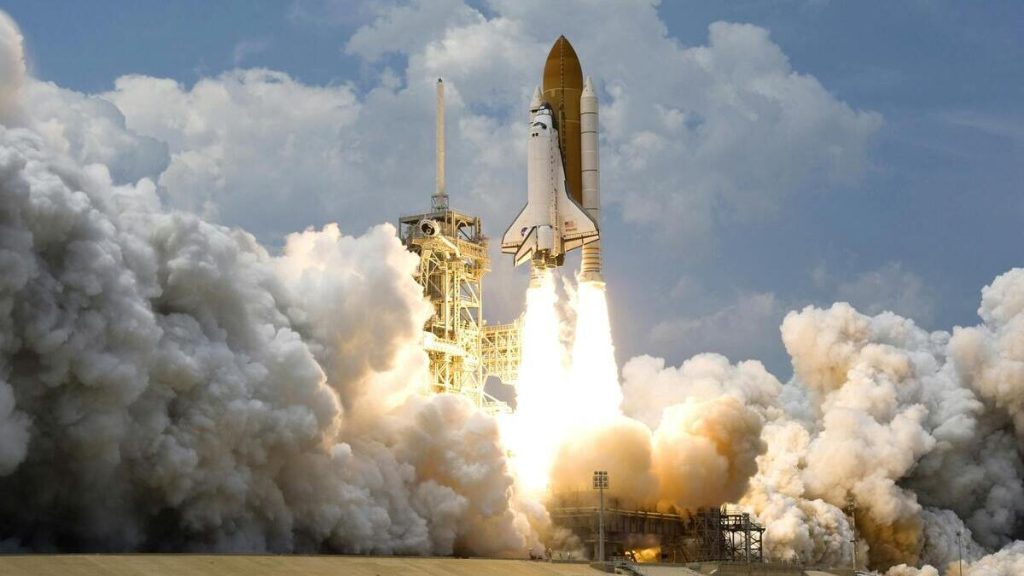
Is Russia far behind in this competition now?
In truth, Russia hardly counts in this lunar race anymore. To be perfectly honest, India now has greater capabilities than Russia.
So politics still drives the lunar race?
To a large extent, yes. These missions are given scientific and technological goals, but without massive state funding they would be impossible.
Of course, the world also has visionary billionaires who are building their own spacecraft capable of reaching the Moon — Elon Musk is one example. But even people that rich would not be able to do all this without additional support from the state budget, in this case from NASA. Politicians do take scientific goals into account, but once international and military rivalry enters the picture, it becomes much easier to find money.
It is hard not to notice that Donald Trump wants to go down in history in several different areas. Can we see that in space policy as well?
Yes, we can see that Trump changed the assumptions of the Artemis programme. At first, it had been conceived as a long-distance project, with Mars as the final destination and the Moon treated mainly as a staging ground for reaching the Red Planet. But the President of the United States does not want to allow China to become the first country to land on the Moon in this century. That is why the United States is, for now, “forgetting” about Mars and focusing on a crewed lunar mission. Once again, we are seeing what we saw under Kennedy: all hands on deck, America is going to the Moon.
The ambitions are enormous, because the Americans are planning to build a base on the Moon.
This time, the race really is not only about setting foot on the Moon. Bases — one American, one Chinese — are the natural next step. The logic is similar to that of polar stations, where crews remain continuously and conduct research on site. Lunar bases are supposed to work on the same principle. That is what both the American and the Chinese plans suggest. If it can be done, scientists will be able to conduct systematic research there.
Today, however, one major difference from Apollo is that the Americans are not going alone. They are receiving considerable support from other states. The European Space Agency is building the service module that powers the Orion crew capsule. ESA is also constructing a large cargo vehicle that will deliver supplies needed for the construction of a lunar base.
Interestingly, the United States, in order to enable other countries to join the Artemis programme, proposed a declaration known as the Artemis Accords. International law states that everything in space is extraterritorial — no one can claim ownership of it. But if we want to build a research base somewhere in space, we naturally have to occupy a piece of ground. The declaration proposed by the United States says that if we explore space, we must coordinate such matters with one another.
I had the pleasure of signing that declaration on behalf of Poland while serving as President of the Polish Space Agency. This is not merely a theoretical issue. So many countries are now planning space missions that the exchange of information has become essential, so that during a landing we do not accidentally damage installations whose existence we were unaware of.
Is the Moon really becoming that crowded?
Yes. After all, we are talking about dozens of missions. The most interesting areas, and therefore the most attractive ones, are the polar regions, where the transitions between day and night are somewhat less extreme. As the area of interest narrows, the risk of accidents naturally increases.
But that crowding is also necessary, because we need to study the Moon in order to determine where the essential minerals are located. Why does that matter? Because it will not be worth bringing everything from Earth. The Moon contains minerals that include hydrogen and oxygen atoms. We need to find them, extract them and process them. Hydrogen and oxygen form the foundation for sustaining future lunar bases.
Poland has also begun preparing an unmanned space probe mission that would enter lunar orbit and, from there, search for minerals on and beneath the Moon’s surface. The probe will be built by Creotech Instruments, while the scientific instruments will be supplied by the Space Research Centre of the Polish Academy of Sciences, together with other Polish and Spanish institutions. At the moment, we are carrying out the first phase of this project within ESA. We hope that the mission will reach lunar orbit in 2029.
When could the first lunar base be established? Is a 10-year horizon realistic?
I think the first elements of a base could appear on the Moon within a decade. I do have some doubts as to whether people will live there permanently within that timeframe, but they will certainly stay there for longer periods.
In that case, how do you assess the timetable for NASA’s most ambitious goal — a crewed mission to Mars? Is 2040 a realistic date?
We can see 2 trends here. The first is the extraordinary development of technology. The second is constant… delay. Looking at the determination of billionaires — above all Elon Musk and Jeff Bezos — but also at the ambitions of the United States and China, I would say that 2040 would be realistic if Earth were spared major crises that shift priorities and divert funding. But will that happen? The current conflict in the Middle East may have very far-reaching consequences. One thing is certain: if we want to travel to other planets, we should first take care of peace here on Earth.
Read this article in Polish: Od Apollo do Artemis. Dlaczego ludzie wracają na Księżyc


Journalist with a degree in American studies, writing mainly about foreign policy and history. Author of numerous reports on international issues and interviews with leading experts in the field of economy, geopolitics and history. Since March 2023, editor-in-chief of the monthly "Historia Do Rzeczy".



Zmień tryb na ciemny