Humanism
In the Mountains of Madness: Science Confronts the Legend of the Halny
28 March 2026





The sky in 2025 offered a series of extraordinary spectacles, and NASA captured them with breathtaking precision. We present six of the most stunning NASA space photos—ranging from galaxies dating back to the age of the dinosaurs to spectacular nebulae and a comet set against the backdrop of Poland’s Tatra Mountains. Each of these is more than just a captivating image; it is a fascinating story about the Universe.
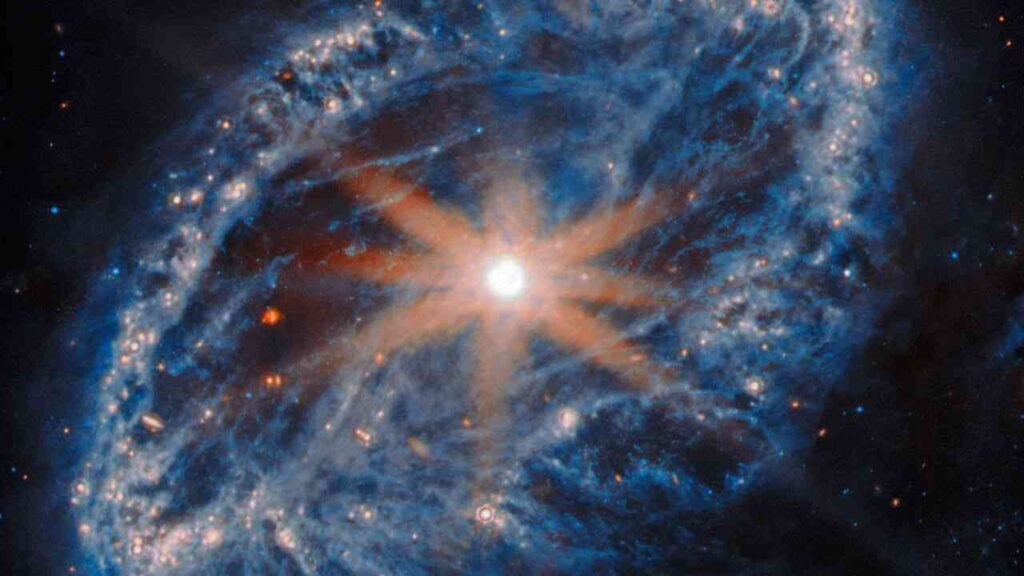
One of the most beautiful celestial photographs features the heart of the spiral galaxy NGC. In the center of the image, rays appear to emanate from an infrared core. However, this is merely an optical illusion—these are actually diffraction spikes, a result of the James Webb Space Telescope’s physical design.
Interestingly, this galaxy sits 76 million light-years away from our planet. The light reaching our sensors today began its journey when dinosaurs still walked the Earth. Furthermore, the object itself boasts a brilliant central bar and distinct, sweeping outer spiral arms.
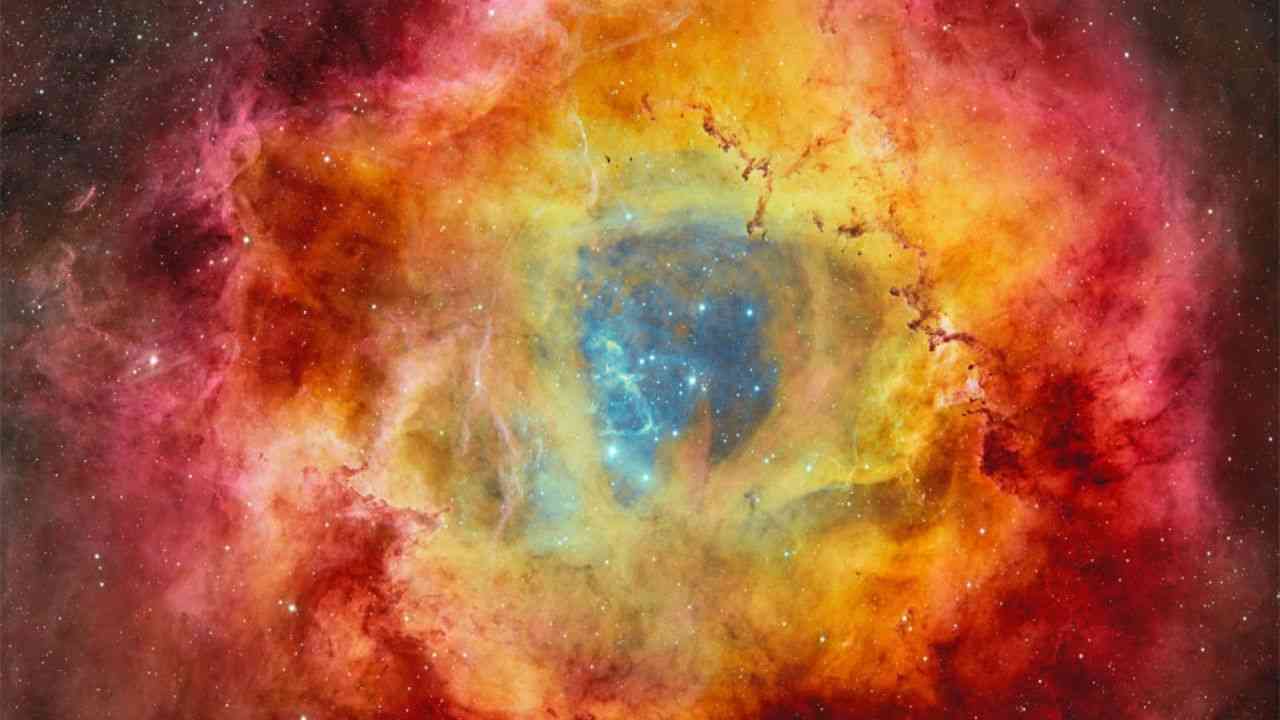
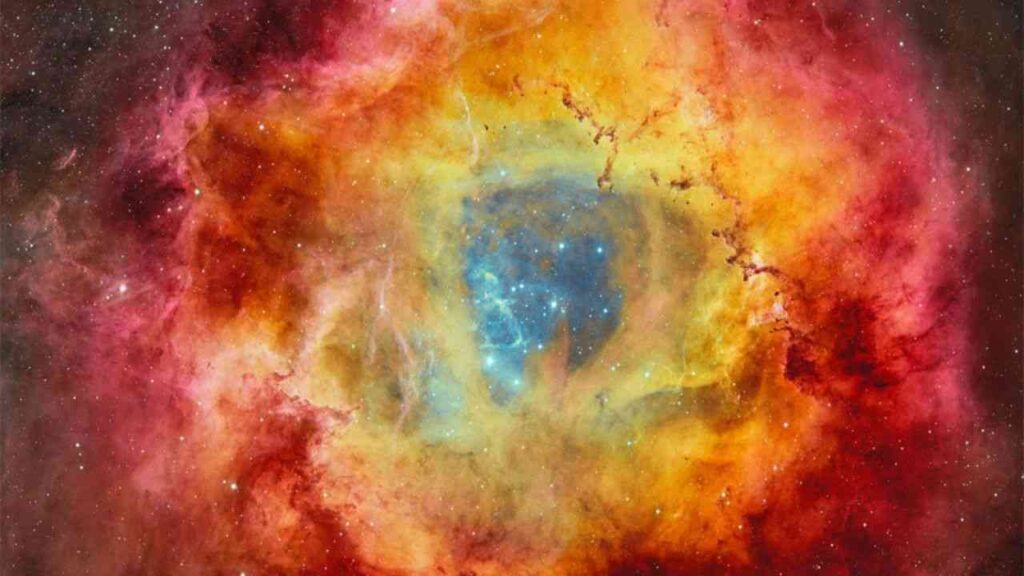
In mid-July 2025, NASA unveiled a vivid, detail-rich image of the Rosette Nebula. At its core lies a cluster of bright, young stars that formed approximately four million years ago from the nebula’s own matter. The intense ultraviolet radiation they emit excites the surrounding gas, causing it to glow and giving the object its signature colors and structure. The entire nebula spans an impressive diameter of about 100 light-years and is located roughly 5,000 light-years from Earth.
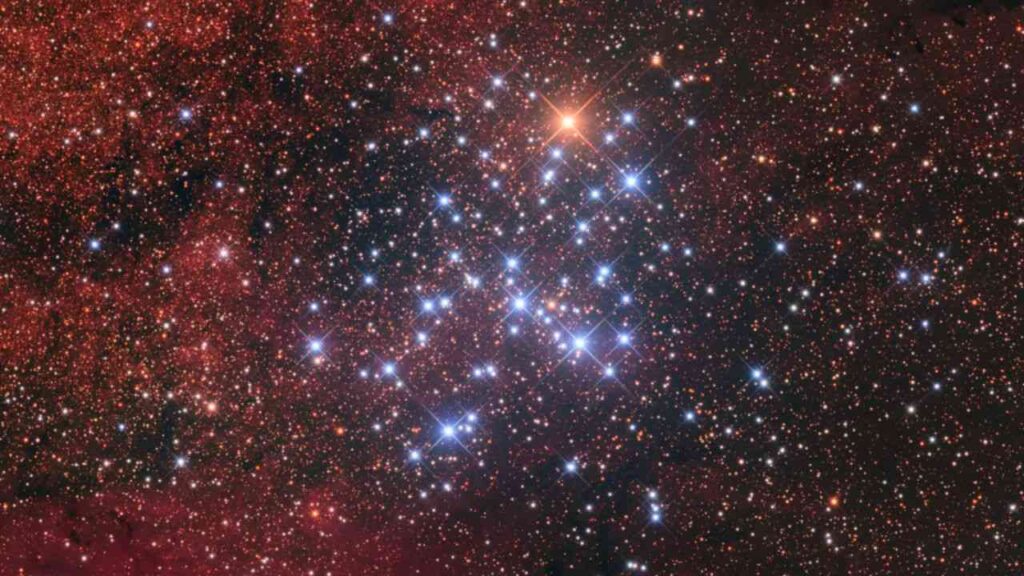
Just a few days later, astronomers captured another extraordinary object: Messier 6, an open star cluster. It brings together about 100 stars, all estimated to be around 100 million years old.
The cluster’s shape distinctly resembles a butterfly, earning it the nickname “The Butterfly Cluster.” A red haze surrounding the group consists of hydrogen emissions. Near the butterfly’s “antennae,” a K-type giant star—the brightest in the cluster—shines with a brilliant yellow-orange glow.
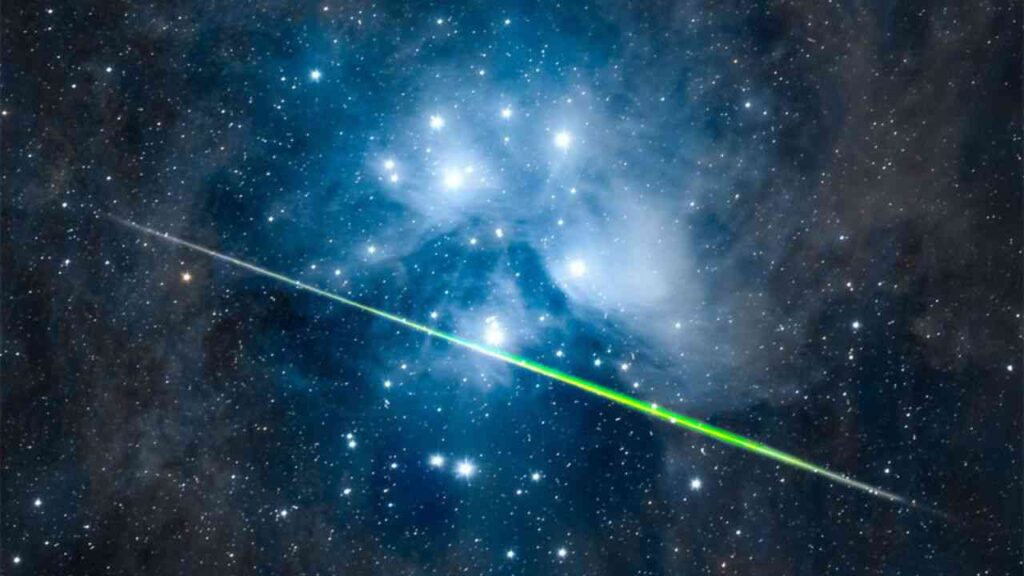
On August 25, 2025, NASA published a photograph taken in Saudi Arabia. It was there that a meteor streaked across the sky during a one-hour exposure of the Pleiades. This fast-moving fragment of rock created a vibrant green trail amidst the brilliant blue stars and cosmic dust.
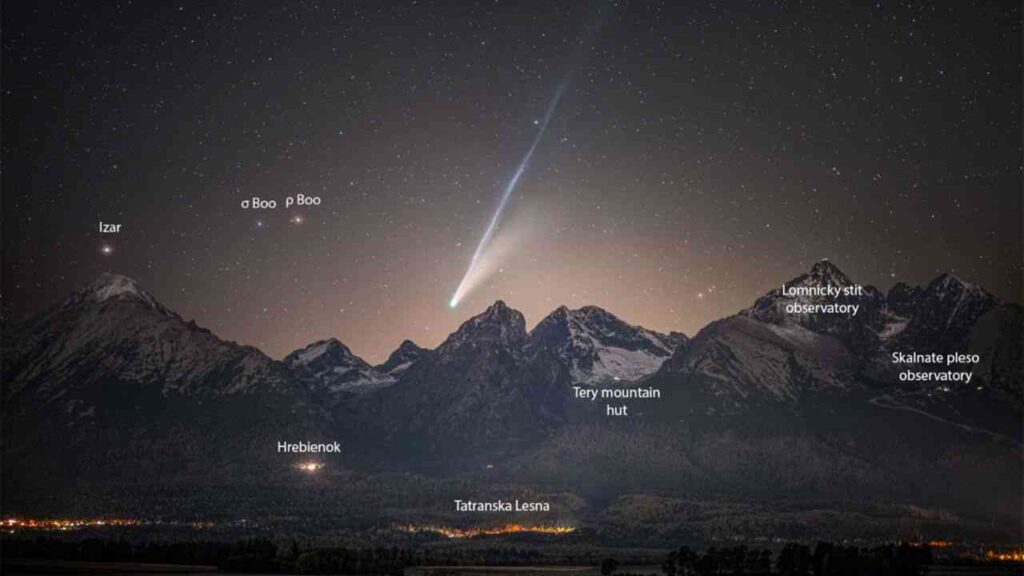
In late autumn of last year, Comet Lemmon soared over the border between the Polish and Slovak Tatra Mountains. The comet features two long tails: a blue ion tail and a white dust tail. The solar wind pushes the first tail away from the Sun; it glows because high-energy sunlight ionizes the gas. The second tail emanates light simply by reflecting the Sun’s rays.
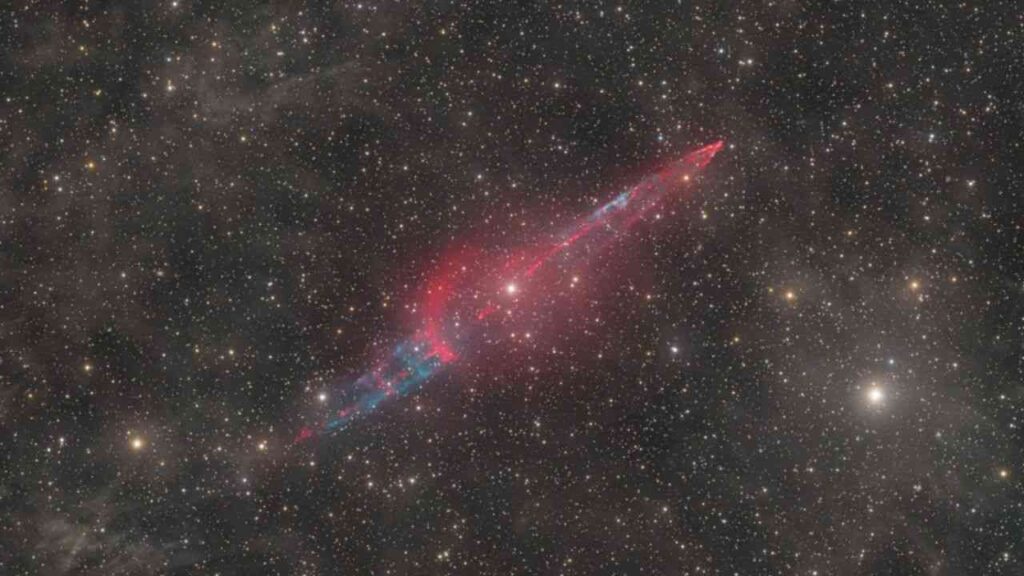
The final photograph in our gallery, taken in late December 2025, displays bipolar jets stretching 19 light-years long, erupting from a variable star. This cool giant star ejects matter through spectacular, symmetrical streams directed outward—perpendicular to its surrounding disk.
The NASA space photos captured in 2025 provide more than just magnificent visual experiences; they demonstrate how diversely the night sky can present itself under various conditions.
Read this article in Polish: Najpiękniejsze zdjęcia NASA 2025. Galaktyki i kometa nad Tatrami


A graduate of journalism and social communication at the University of Rzeszów. She has been working in the media since 2019. She has collaborated with newsrooms and copywriting agencies. She has a strong background in psychology, especially cognitive psychology. She is also interested in social issues. She specializes in scientific discoveries and research that have a direct impact on human life.



Zmień tryb na ciemny