Truth & Goodness
More Than a Moral Virtue: The Hidden Power of Letting Go
29 March 2026





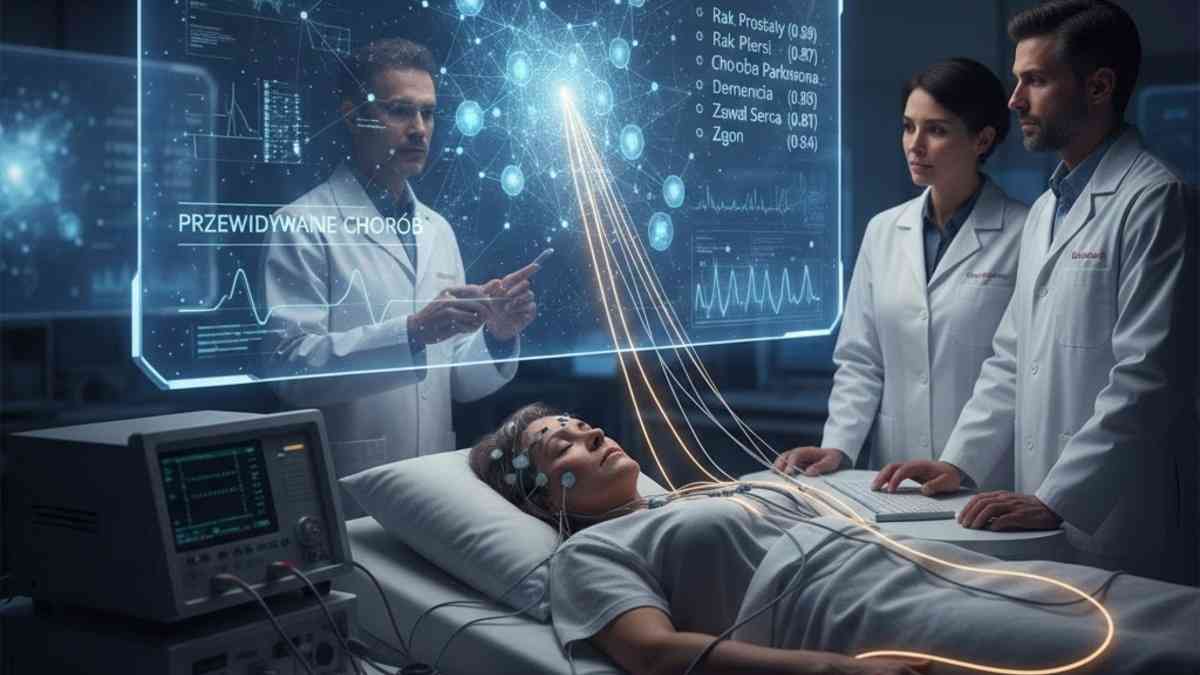
A single night of sleep may contain early warning signals for diseases that will not appear for years. Researchers from Stanford University have shown that artificial intelligence can analyze sleep data to estimate long-term risk for cancer, dementia, or heart disease—long before the first symptoms emerge.
Researchers at Stanford University have developed a foundation model known as SleepFM. Using data from just one night of polysomnography, the system can estimate long-term risk for more than 100 medical conditions. This breakthrough in AI disease prediction allows scientists to identify elevated risk for illnesses such as prostate cancer, breast cancer, Parkinson’s disease, dementia, heart attacks, and even all-cause mortality.
SleepFM analyzes data from polysomnography—a comprehensive sleep examination that records brain activity, heart rhythm, muscle movement, oxygen levels, airflow, and other physiological signals.
“We record an extraordinary number of signals during a sleep study. It’s an incredibly data-rich process,”
-emphasizes study co-author Dr. Emmanuel Mignot, quoted by ScienceDaily.
The researchers trained the model on a massive dataset comprising 585,000 hours of sleep recordings from 65,000 individuals, aged 2 to 96. Researchers then linked these data with electronic health records spanning up to 25 years of follow-up, allowing them to compare sleep patterns with real medical outcomes over time.
SleepFM functions as a foundation model, similar in concept to large language models—except instead of text, it learns patterns from biological signals.
Each sleep recording is divided into five-second segments, treated as the “words” of sleep. The model then learns complex relationships between multiple signal channels, including EEG, EKG, respiration, pulse oximetry, and muscle activity.
The most valuable information comes from subtle mismatches between signals. For example, the system detects when brain activity indicates deep sleep while the cardiovascular system behaves as if the body is awake. These discrepancies often correlate with elevated long-term health risks.
“SleepFM learns the language of sleep. It doesn’t explain its reasoning in plain English, but we’ve developed interpretation techniques that let us understand what patterns the model focuses on when estimating disease risk,”
– explains co-author Dr. James Zou.
The AI model evaluated more than 1,000 disease categories and identified 130 conditions where sleep data alone could estimate risk with meaningful accuracy. In these cases, the model achieved a C-index above 0.8, meaning its predictions aligned with real medical outcomes in over 80 percent of cases.
The strongest results were observed for cancers, cardiovascular disease, neurological disorders, pregnancy complications, and psychiatric conditions. Reported performance included:
“We were surprised by how consistently the model identified meaningful risk patterns across such a wide range of conditions,”
– adds Dr. Zou.
Until now, clinicians have used polysomnography primarily to diagnose sleep disorders such as apnea or insomnia. In routine clinical practice, they analyze only a small fraction of the recorded data.
SleepFM demonstrates that sleep contains early biological signals of future disease, often appearing years before clinical diagnosis. If these findings are confirmed in broader and more diverse populations, sleep studies could become a powerful tool for preventive medicine.
For individuals at elevated risk, this advance in AI disease prediction may eventually allow physicians to intervene earlier—long before illness becomes irreversible.
Worth reading: AI-Designed Virus: Medical Breakthrough or Path to De-Extinction?
Read this article in Polish: Jedna noc snu wystarczy. AI wykrywa ryzyko poważnych chorób

A Journalism and Social Communication graduate with 15 years of experience in the media industry. He has worked for titles such as "Dziennik Łódzki," "Super Express," and "Eska" radio. In parallel, he has collaborated with advertising agencies and worked as a film translator. A passionate fan of good cinema, fantasy literature, and sports. He credits his physical and mental well-being to his Samoyed, Jaskier.


Zmień tryb na ciemny