Truth & Goodness
Strong Men Also Cry: When the Mind Breaks in Silence
30 March 2026





Not long ago, many people dismissed them as relics of the past. Today, they are returning at a moment when more and more young people struggle with loneliness, exclusion and mental health problems. Old books can still give children something the online world cannot: a living sense of loyalty, friendship and responsibility for another human being. That is why they may matter so much in a time of online loneliness among children.
“One for all, all for one,” wrote Alexandre Dumas in The Three Musketeers. In his later novels, Twenty Years After and The Vicomte of Bragelonne, he turned that idea into a broader manifesto of brotherhood, loyalty and civil courage. Today, in an age of radical individualism, it sounds almost like heresy. Some would call it an archaism.
For part of today’s media and political establishment, the values that shaped our parents and grandparents have also become archaic. They now seem outdated, drawn from dusty old books with yellowing pages, books whose chapters are, horror of horrors, longer than a Facebook post.
The language of the books our grandparents and parents once read can indeed feel difficult, old-fashioned or unfamiliar. They contain none of the trendy words now celebrated by youth culture. The descriptions of nature in Karl May or Alfred Szklarski can run longer than an average nature podcast episode on YouTube. And Tomasz Wilmowski, with his masculine sense of responsibility and his care for Sally Allan, seems hopelessly out of place in the world of red-pill culture, incels and an indeterminate number of genders. Thankfully so.
By the end of 2025, the World Health Organization’s data were clear: 1 in 7 adolescents worldwide between the ages of 10 and 19 struggled with a mental disorder. One well-known psychologist recently pointed out that a new and deeply serious model of exclusion has appeared among young people living half in the real world and half in the virtual one. A child can now be thrown out of a Discord group or excluded from a shared online game. And suddenly, for their peers, that child no longer exists. If they are gone from the chat, they are also gone from a community that matters deeply to them.
Years ago, “you’re too fat, you can’t play with us” hurt for a few hours, maybe until the next game or the next meeting. Today, when the virtual world has become a substitute for reality, that exclusion lasts. It can hurt for weeks.
Children now move through a world that is not only virtual but emotionally corrosive. Online, they see division, hatred, exclusion, snobbery and narcissism. Deeper bonds are often reduced to a like under a photo. In that reality, the books our parents and grandparents once read can become a powerful weapon, even a kind of vaccine. They speak to the imagination with unusual force. They show that friendship is the greatest strength, stronger than firearms, and that someone may be physically weak while remaining inwardly strong and good.
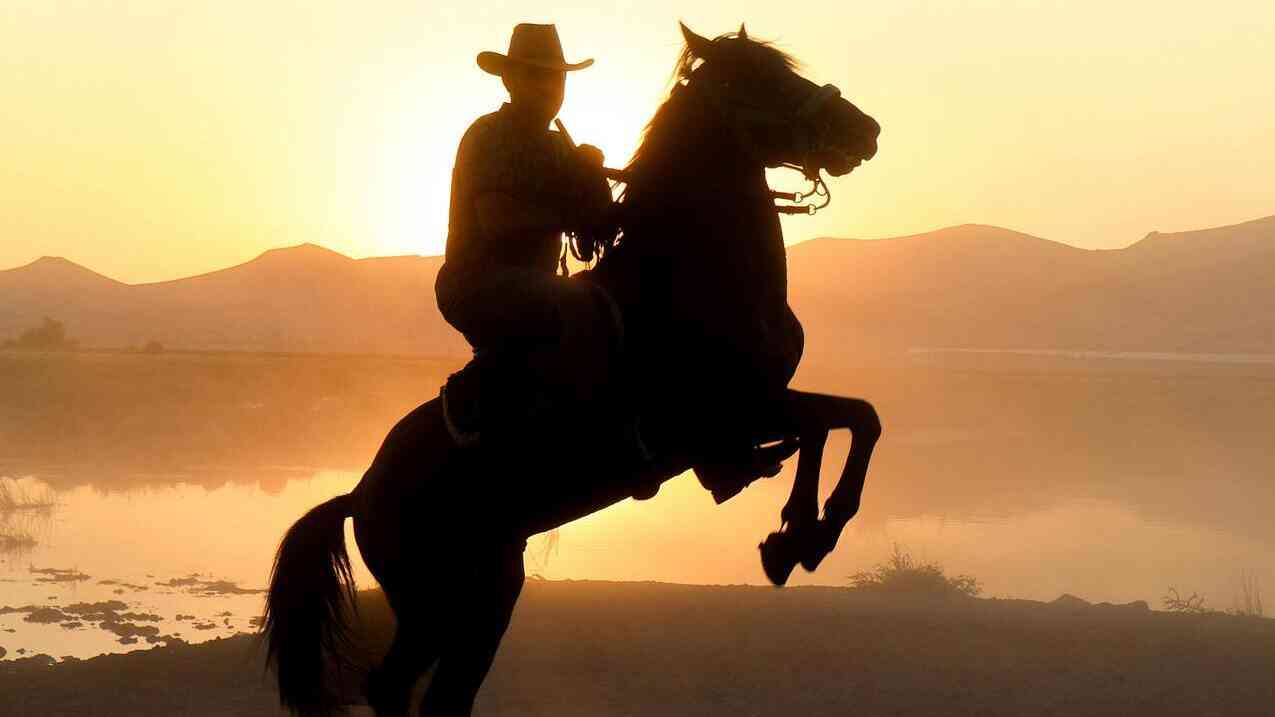
Take Winnetou, for example. My parents read those books to me at bedtime when I was still too young to recognise letters, and they told me about the dramatic fate of the Native peoples. A few years ago in Germany, prompted by activist circles, Karl May’s Winnetou became the subject of a public debate about “cultural colonialism.” Some voices even called for limiting the availability of books about the great Apache chief in schools and public education.
And yet Winnetou, Treasure of the Silver Lake, Old Surehand and the other novels in Karl May’s series—written by a man who himself spent time in prison for fraud—remain beautifully written and still relevant today. They offer a powerful manifesto of respect across cultural, racial and religious differences. The German author created Winnetou, chief of the Mescalero Apaches, along with his noble sister Nscho-Tschi, and Old Shatterhand, the white frontiersman. He bound them together by ties of blood and, through their adventures, showed that some values can overcome greed, racism and hatred.
Indians, cowboys, villains, mountains, forests, deserts, rivers, steamships, towns and haciendas. Heroic deeds and the eternal struggle between good and evil. It turns out that all of this is timeless.
That is how Mikołaj Foks described, in 2019 on the Aleteia portal, his impressions of listening with his children to an audiobook about the adventures of the Apache chief.
And what about the characters created by another writer, Jules Verne, whose books travelled from my parents’ shelves into the world of my own childhood? In The Mysterious Island, the characters must build the beginnings of civilisation from scratch in order to survive. They manage it through cooperation, shared knowledge and creative thinking. In Search of the Castaways, Two Years’ Vacation and Twenty Thousand Leagues Under the Seas do the same in different ways. All of these adventure novels promote courage, loyalty, honesty and curiosity about the world.
Then there is Alfred Szklarski, with his magnificent Tomek series, along with Jan Smuga, bosun Nowicki, Sally and the dog Dingo. Tomasz Wilmowski, a young boy from partitioned Poland, travels the world. Szklarski’s description of lessons in a Tsarist school and of the quiet resistance of the young is especially strong. As Tomek journeys across continents, he meets Maasai, Aboriginal people and Inuit communities, and in each one he sees a valuable human being, equal to himself. He does not see an exotic curiosity to photograph sweetly and turn into a TikTok clip.
The list could go on for a long time. Kornel Makuszyński, with Przyjaciel wesołego diabła and Szatan z 7 klasy. Adam Bahdaj, with Wakacje z duchami, Stawiam na Tolka Banana and Podróż za jeden uśmiech. In those books, young heroes pass through extraordinary events and learn friendship, responsibility, independent thinking and solidarity.
Or consider the central characters of Wiesław Wernic’s cowboy saga about Karol Gordon and Doctor Jan. Quite simply, in the rough world of the Wild West, they help the weak, react to injustice and, above all, remain honourable.
No doubt we will hear many more times from various “wise authorities” that the language of these books is too difficult for children, that today’s world demands “different values,” and that such novels are outdated because the world has moved on. It has moved on a little. And in the process, it has also become badly lost.
The books of our parents’ youth are not archaic. In fact, with a little goodwill and real involvement, they can become an excellent bridge in the relationship between adult and child. All it takes is to pick up an old book and say: “let’s read.” Then show how the way of thinking in Szatan z 7 klasy can help in an age of fake news, or how Winnetou and Tomasz Wilmowski understood respect for another person despite all differences.
D’Artagnan and his companions, in turn, show just how important friendship is in human relationships. They show that goodness is not weakness, but a powerful force that survives adversity. And they remind us that “one for all” still makes sense, even now, despite everything. In a world shaped by online loneliness among children, that lesson may matter more than ever.
Read this article in Polish: Te książki miały zniknąć. A dziś mogą uratować coś bardzo ważnego


A journalist, columnist, and commentator, he is a devoted fan of the Lech Poznań soccer team, Polish fantasy literature, and unhealthy high-calorie cuisine.

Zmień tryb na ciemny