Truth & Goodness
Can We Still Seek the Truth? The Boundaries of Scientific Freedom
24 March 2026





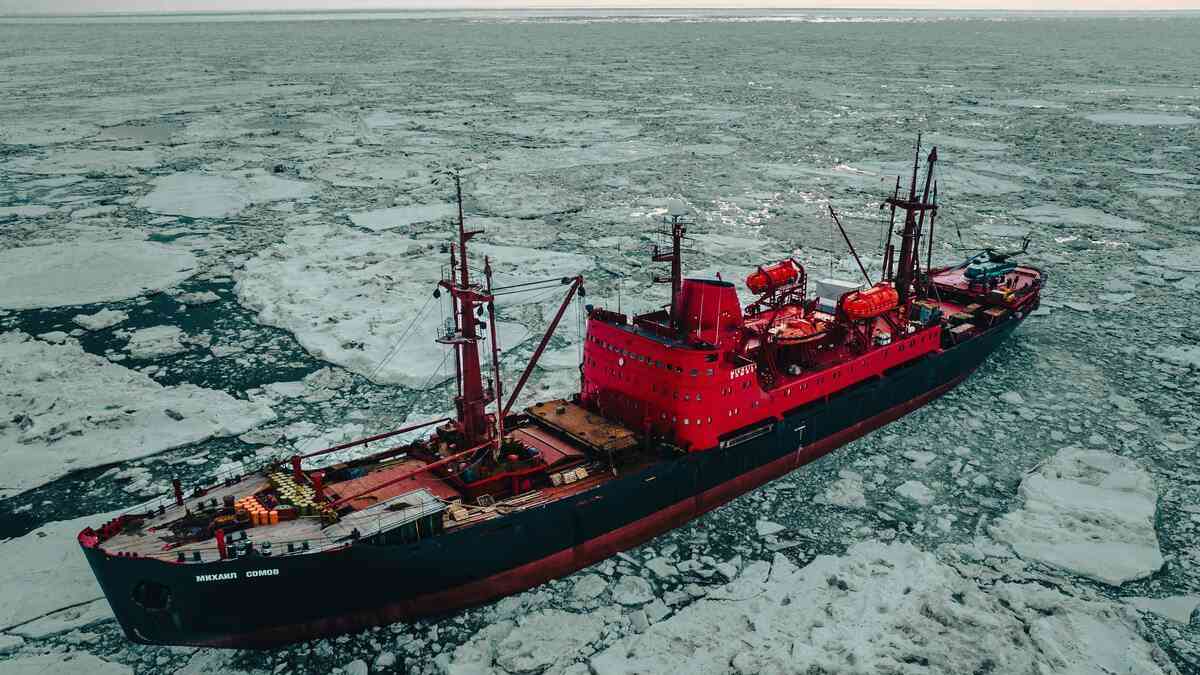
Until recently, the Northern Sea Route was an inaccessible “Arctic hell.” Today, this passage through Russia’s frozen north looks increasingly promising to global economic giants. Yet major questions still hang over this ultra-ambitious project, especially over the long-term viability of the Polar Silk Road.
The commander of the expedition led by the Xuelong (Snow Dragon) was, by the standards of a Chinese official, unusually expressive. “To our amazement, most of the Northern Sea Route is open,” Huigen Yang told reporters. He spoke those words 14 years ago, at the end of a Chinese research mission along Russia’s northern coast. Until recently, people associated this region mainly with harsh rocky islands and seas locked in ice. On one of those islands, the Soviets once detonated the most powerful hydrogen bomb in history. For decades, these waters seemed impossible to navigate.
Fourteen years later, the Chinese are no longer surprised. They now use this route with growing confidence, though still on a trial basis. The ships involved are no longer small research vessels but massive carriers transporting thousands of containers. Thanks to this passage, shipping goods from the industrial hubs of eastern China to Europe no longer takes more than a month. The journey now lasts just 18 to 20 days. The distance drops from roughly 11,000–12,000 nautical miles to only 7,000–8,000.
Interestingly, this route can move goods from East Asia to Europe even faster than rail transport. The savings in both time and fuel make it extremely attractive. As a result, Beijing is paying more and more attention to this corridor, even though it still comes with major challenges. Security also matters. An alternative to traditional routes that an adversary could easily blockade offers a clear strategic advantage. China officially named this route the Polar Silk Road and incorporated it into the Belt and Road Initiative in 2018.
Poland should watch this project closely as well. Recently, the Istanbul Bridge called at the Port of Gdańsk. This Chinese Arctic container ship, equipped with a specially reinforced hull, arrived there on October 19 last year. It had departed from Ningbo-Zhoushan, currently the world’s largest port by cargo tonnage. Thanks to global warming, whose effects are especially visible in the Arctic, the ship sailed not through the Suez Canal or around the Cape of Good Hope, but along Russia’s northern coast instead.
Shortening the travel time between Asia and Europe to 18 days gives a real advantage for cargo that requires efficient distribution, such as electronics or apparel,
– said Dominik Landa, Strategy and Development Director at the Port of Gdańsk, after Gdańsk was added to the Istanbul Bridge route.
At the same time, we remain aware of the limits of Arctic navigation, including volatile ice conditions and geopolitical factors. Environmental concerns are also significant. They raise legitimate questions about both the natural environment and the navigability of the Arctic. On the other hand, the shipowner says CO₂ emissions during the voyage may be about 50 percent lower than on traditional routes through the Suez Canal.
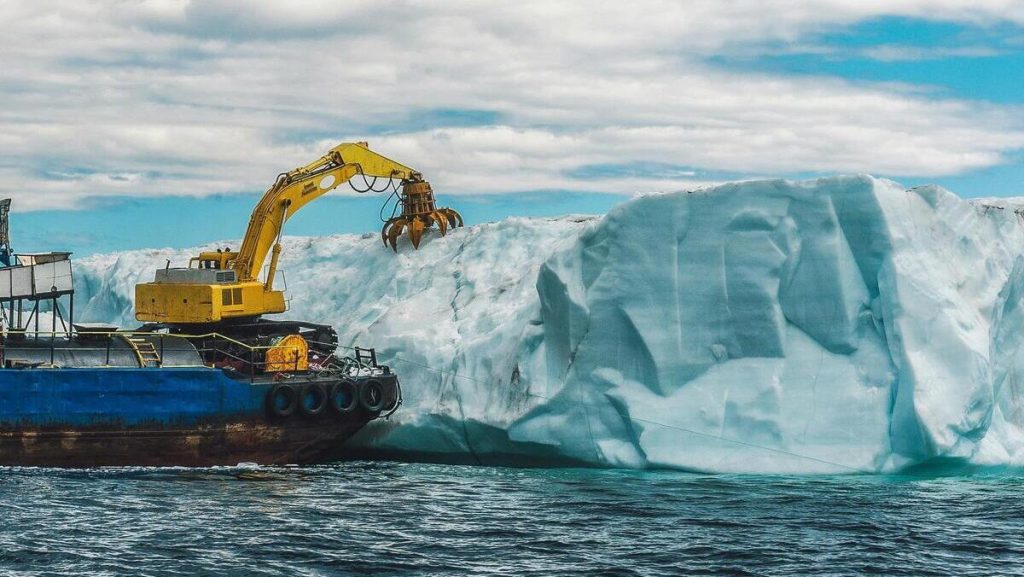
The maritime route along Russia’s northern coast is known as the Northern Sea Route, or NSR. It is the shortest sea link between Europe and the eastern coast of Asia. Even so, it remains a seasonal route. The shipping season usually lasts about 4 to 5 months and ends around November. Even in good conditions, ships often still need icebreaker assistance. During the peak season, vessels frequently move in convoys led by icebreakers that cut a path through the ice. After November, the ice grows so thick that the route becomes almost impossible for ordinary commercial traffic.
The Arctic transport system was already used in Soviet times to supply the country’s northern regions and export raw materials. After the collapse of the USSR, the use of this route became heavily restricted. Only climate change, which has made navigation in this region easier and significantly shortened distances across the northern parts of the globe, has renewed Russia’s strong interest in the Arctic,
– we read in the Centre for Eastern Studies (OSW) report The Northern Sea Route in Russia’s Policy by Iwona Wiśniewska.
The report cites data showing that temperatures in this region rose by 3.1°C between 1971 and 2019. That is roughly three times faster than the global average. Over the same period, the Arctic Ocean’s ice cover in September shrank by half. In 2020, it covered about 3.7 million km², compared with 7.4 million km² forty years earlier. “As a consequence, the Arctic Ocean will most likely be ice-free as early as the summer season of 2040,” writes Iwona Wiśniewska.
Transit cargo moving through the NSR between Asia and Europe is on the rise. In 2020, the route handled 1.3 million tons. By 2024, that figure had reached 3 million tons. Even so, most of the cargo carried along the NSR still consists of LNG and crude oil. These shipments move within the Russian Federation, so they do not count as international transit.
A major obstacle for shipowners is the fact that the NSR runs so close to the Russian coast. Because of that, the Kremlin treats it as an internal waterway. An internal document from the Russian FSB, leaked last year, shows that Moscow faces a dilemma. On the one hand, it needs closer economic ties with China. On the other, it remains wary of Chinese ships operating along the NSR.
The report also emphasizes China’s interest in Russia’s vast Arctic territories, as well as in the Northern Sea Route, which hugs Russia’s northern coast. Historically, these waters contained too much ice for safe navigation, but according to current projections, climate change will make them increasingly busy. Using this route would make it easier for China to sell its goods,
– wrote The New York Times, which obtained the FSB document.
Experts also point to serious doubts about how useful the NSR can really become. Ksenia Vakhrusheva, an Arctic expert working with the Bellona organization, which focuses on environmental issues in Russia, told Holistic News that despite climate change, ice still poses a major challenge for vessels other than icebreakers. That raises the risks for shipowners.
Another major problem for maritime transport is the lack of infrastructure for rescue operations and environmental protection. In addition, the waters of the NSR still lack full coverage from modern communication tools and navigation systems, especially in the eastern section,
– Vakhrusheva says.
This route could speed up shipments from Asia and make them cheaper. Yet the wild terrain of northern Russia means that if technical problems arise, help may be very slow to arrive. Environmental disasters are another concern. The 1989 Exxon Valdez spill off the coast of Alaska remains a warning. That accident happened in an area that was already difficult for rescue crews to reach. A similar catastrophe in the middle of the NSR would be far harder to contain and clean up.
Russia does not have a strong global reputation for the kind of infrastructure needed to deal with spills on that scale. Yet responsibility for cleaning up such contamination would fall on the Kremlin. What Russia does have is the world’s largest fleet of icebreakers. Those vessels form the foundation of every plan to turn the NSR into a northern “maritime highway.” That is why Rosatom, the state corporation responsible for civilian nuclear energy, oversees the route. Its nuclear-powered icebreakers—Rosatom currently has eight of them—keep this sea corridor operational.
Vice Premier Yuri Trutnev recently announced a new program to build 10 more icebreakers, 46 rescue ships, and 3 maritime rescue bases along the NSR by 2035. Yet these are not the Kremlin’s first ambitious plans to “civilize” the Arctic. Earlier attempts ran into many obstacles. At the same time, Russia is now looking for savings almost everywhere as it continues to feed its war machine in Ukraine.
It is therefore very likely that as long as the war against Ukraine continues, and as long as Western sanctions remain in place, any ambitious plans for developing the NSR will move forward only in part. Until the route gains enough icebreaker support and the right infrastructure, savings in time and fuel will not outweigh the costs. Those costs include above all the route’s unpredictability, its impact on delivery schedules, and the higher insurance premiums for ships and cargo.
There is, however, another possible source of funding for investment in the NSR: China. If Beijing decides that worsening global tensions require a fast, reliable alternative sea route, the necessary infrastructure could appear at remarkable speed. In that case, Russian doubts about a growing Chinese presence in the Arctic may matter less than the sheer force of China’s economic interests and its broader vision for the Polar Silk Road.
Read this article in Polish: Polarny Jedwabny Szlak. Czy da się wygrać z geografią?


Journalist with a degree in American studies, writing mainly about foreign policy and history. Author of numerous reports on international issues and interviews with leading experts in the field of economy, geopolitics and history. Since March 2023, editor-in-chief of the monthly "Historia Do Rzeczy".



Zmień tryb na ciemny