Education
What Singapore and Estonia Teach About Education Reform
21 March 2026





Americans have neglected a critical sector of the economy, allowing China to achieve total dominance. The extraction and processing of rare earth minerals give Beijing significant leverage—and the U.S. is now desperately scrambling to make up for lost time. Names like scandium, yttrium, lanthanum, europium, or praseodymium are virtually unknown to the average person. Yet, these very elements are the centerpiece of a brutal geopolitical chess match.
The Chinese trawler had no intention of obeying the order issued from the deck of the Japanese Coast Guard (JCG) vessel. It was just another such incident—Chinese fishing boats constantly appeared off the shores of the Senkaku Islands, taking advantage of the rich fishing grounds there. Although the islands are uninhabited and lie much closer to Taiwan than to Tokyo, the Japanese authorities consider them their territory. The catch is that both the Taiwanese and the Chinese also lay claim to the Senkaku Islands.
The trawler ignored the JCG’s instructions and rammed two Japanese units. In response, the Japanese gave chase, stopped the fishing boat, boarded it, and detained the entire crew. This triggered a violent intergovernmental crisis. The Chinese also arrested several Japanese citizens staying in the PRC, accusing them of photographing military facilities. Finally, they reached for an economic weapon that softened the Japanese stance: Beijing introduced an unofficial embargo on the sale of rare earth minerals to Japan. Without access to them, a modern, highly developed economy simply cannot function.
The described crisis in Sino-Japanese relations took place in 2010, when the Japanese were practically entirely dependent on China for access to these elements. The unofficial embargo on these key minerals lasted two months. The Japanese economy felt it acutely, and authorities in Tokyo learned their lesson. Just eight years later, the Japanese reduced their dependence on China by nearly half. Today, they are in an even better position in this regard.
The United States did not learn from Japan’s problems. Entering a trade war with China, the USA now finds itself in a situation regarding access to these resources comparable to where Japan stood 15 years ago.
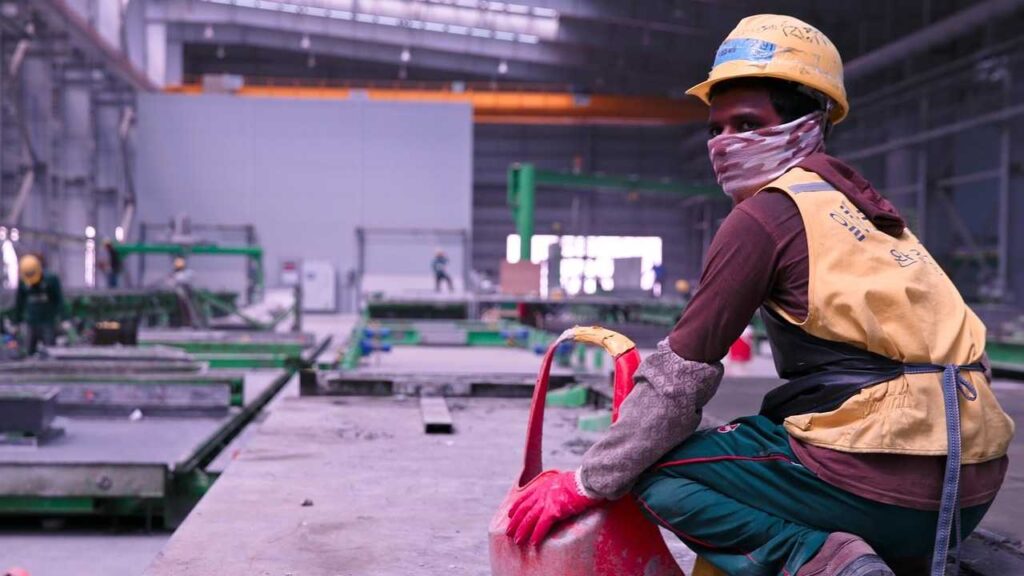
The USA is increasingly preparing for a confrontation in the Pacific. Meanwhile, to construct a single state-of-the-art F-35 fighter jet, nearly half a ton of these minerals is required. Building a Virginia-class submarine requires ten times that amount.
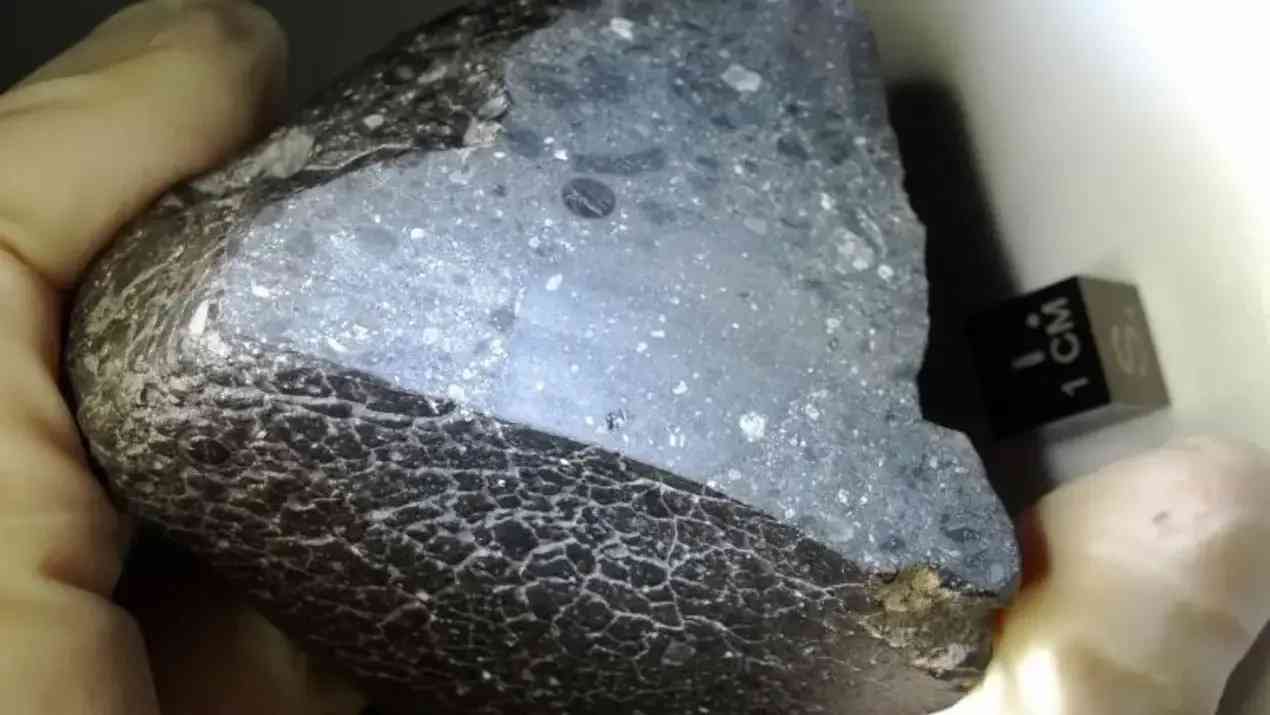
Rare earth elements (REE) are a group of 17 elements that are absolutely crucial components not only of our everyday consumer electronics. They are also essential for electric cars, wind turbines, radars, nuclear reactors, and even catalytic converters installed in internal combustion engines. Without REE, it is impossible to build high-tech weaponry.
While the Americans hold several very strong economic cards, the Chinese hold their opponents “by the throat” in this specific sector. According to data from the United States Geological Survey (USGS), China controls 70% of global REE mining (followed by the USA, Australia, Myanmar, and Thailand), but when it comes to the processing of these elements, the Chinese totally dominate.
PRC companies are responsible for 90% of the processed REEs that hit the global market each year. There is no doubt that American companies produce much more advanced processors than the Chinese (which is key to developing Artificial Intelligence), but Beijing controls the supply of the necessary materials to produce those processors.
The Chinese do not hesitate to use this tool—a tool that will carry even more weight in the coming years. According to estimates by the International Energy Agency, within two decades of the COVID-19 pandemic, the demand for these minerals in the so-called “green sectors” (including electric car production) will grow sevenfold!
A curious case is dysprosium, a ton of which costs about a million PLN (approx. $250,000). Thanks to its exceptional resistance to high temperatures, it has been used for some time in the production of highly advanced processors. The catch? Virtually the entire production of refined dysprosium is under China’s control.
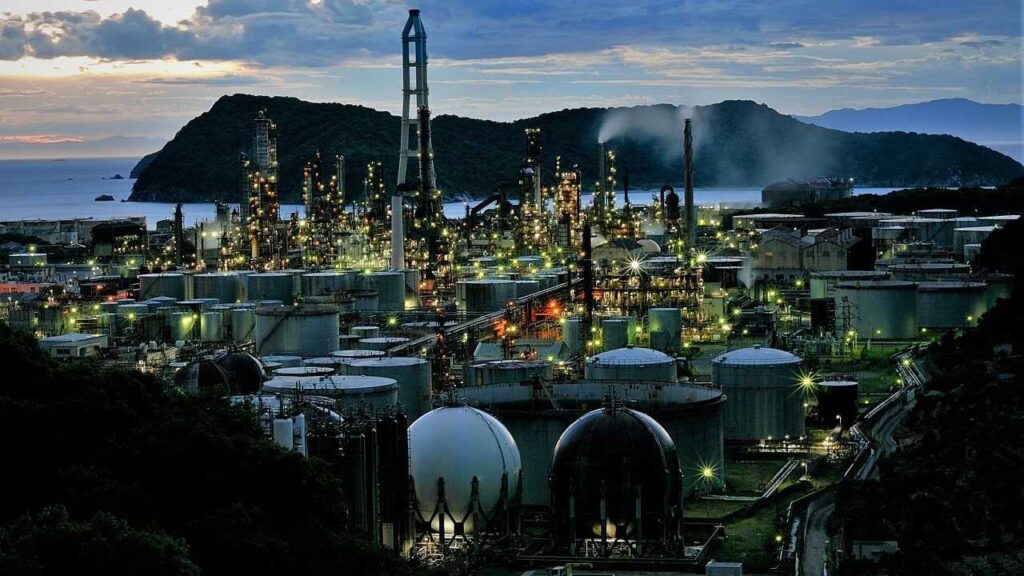
The Americans possess only one mine that extracts these elements: Mountain Pass in California. Opened in the 1950s, it was still the world leader in the 1980s. Afterward, however, the charts show China decisively taking over this strategically important sector. How did this happen? Three issues proved key: the costs of mining and production, environmental regulations (or rather the lack thereof), and a political decision by the PRC authorities.
For years, China offered these materials at such attractive prices that competing with them on market terms was essentially impossible. The Chinese, to put it colloquially, “wiped out” the competition.
The extraction and processing of these elements require the use of very strong chemicals, and this process heavily pollutes the environment—in Chinese conditions, this was never a major problem. And finally, the political issue: Beijing has shown more than once that it can set economic policy over a long-term horizon. Recently, we see the results of this strategy in the flood of Chinese electric cars on the market, but earlier, a similar decision was made regarding the mining and processing of these minerals.
American and European mining and production capacities are essentially symbolic. The West has only been trying to decouple from the (near) Chinese monopoly for a few years. Currently, we see almost frantic attempts to build this industry from the ground up. In doing so, the Americans are reaching deep into taxpayers’ pockets. Since 2022, federal authorities have already spent nearly half a billion dollars to support American companies trying to disentangle the USA from its dependence on China. The Americans are currently launching a large refinery in Texas. However, many more such projects are needed; therefore, in the foreseeable future, the USA will remain vulnerable to blackmail from China.
Neglect on the Western side is also visible in the education of specialists working in this sector. As The New York Times meticulously calculated: universities in the United States and Europe offer only occasional courses on the technology of processing these minerals. Meanwhile, in the PRC, 39 universities have departments that train specialists for the REE refining industry. The effects of this are visible in the development of processing technologies and the number of related patents. In this respect, the Chinese are beating the West hands down.
The Chinese are already signaling to the Americans that they see their weak point. “The Chinese government has made it significantly harder for foreign companies, particularly semiconductor manufacturers, to purchase many rare earth elements and other minerals mined and processed mainly in China,” The New York Times warned at the end of the year. “Meanwhile, China already accounts for almost the entire global supply of these materials. New restrictions solidify their dominance in the market.”
“Rare earth elements are a powerful tool that China will use to respond to the Trump administration if the tariff war escalates,” said Zhiqun Zhu, a political scientist specializing in the PRC from Bucknell University in Pennsylvania, speaking to The Voice of America.
Recognizing the gravity of this situation is something that unites both Democrats and Republicans. “China has cornered the market for processing critical minerals,” the White House warned in late 2024. “This leaves the United States, its allies, and partners vulnerable to supply chain shocks and undermines economic and national security.”
A three years ago, in December 2023, China announced a ban on the export of REE extraction and processing technology. Furthermore, just before Donald Trump took office, in response to American restrictions on the sale of advanced processors and the machinery used to produce them to China, Beijing introduced a ban on the sale of gallium, germanium, and antimony to the USA. It hardly needs adding how many advanced products cannot be created without them.
Currently, both superpowers have not yet reached a point where all processed materials from China simply stop flowing to American firms. However, Beijing is already showing that these resources are not just a tool in its hands, but also a dangerous weapon.
And that is exactly why, among other reasons, Donald Trump’s administration is so categorically making demands of Ukraine and its substantial natural resources (including rare earth minerals). According to data from the Ukrainian Geological Service, approximately 5% of the world’s deposits of critical raw materials are located on that country’s territory.
Read the original article in Polish: Chiny mają bat na USA: metale ziem rzadkich. Trump sięga po Ukrainę


Journalist with a degree in American studies, writing mainly about foreign policy and history. Author of numerous reports on international issues and interviews with leading experts in the field of economy, geopolitics and history. Since March 2023, editor-in-chief of the monthly "Historia Do Rzeczy".


Zmień tryb na ciemny