Truth & Goodness
War Begins in the Mind. Where Does the Consent for Violence Come From?
24 March 2026




For years, critics dismissed resistance to communist terror as romantic madness. However, the latest neurobiological research reveals that certain values exist which humans simply cannot trade for safety or money. This mechanism, hardwired into our neural circuitry, is the key to understanding why honor and loyalty to principles can overrule even the most primal survival instincts. Exploring the link between sacred values and the brain helps explain why some choose death over betrayal.
A single signature. A few sentences on a confession. What drives a person to choose death over the betrayal of their ideals? Is honor merely a romantic, vanishing word, or is it a fundamental mechanism that determines human behavior?
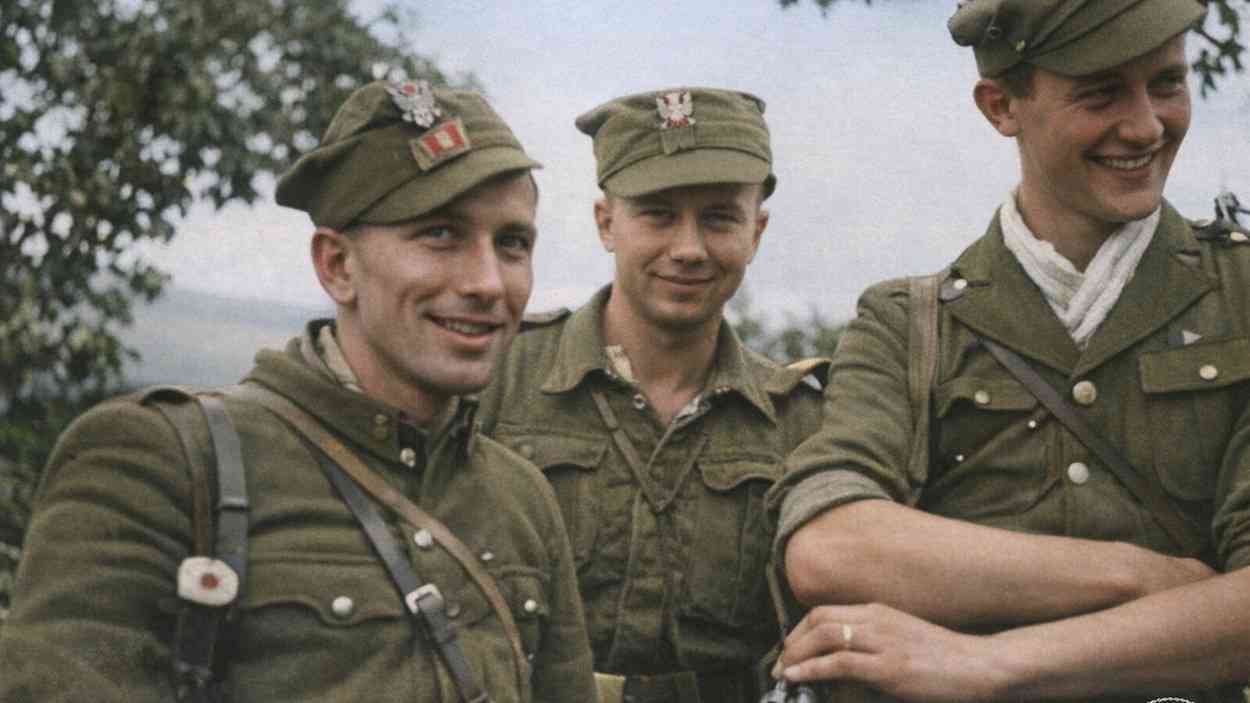
Colonel Łukasz Ciepliński, codenamed “Pług,” a soldier of the Polish Army and president of the Freedom and Independence (WiN) association, was arrested in November 1947. He spent nearly three years in a living hell. Beaten, starved, and isolated from his wife Wisława and son Andrzej, he never broke. Executed on March 1, 1951, by a shot to the back of the head, he became a symbol of “double death”: physical execution followed by a historical erasure imposed by communist propaganda.
A similar fate befell General August Emil Fieldorf (“Nil”), Captain Witold Pilecki, Stanisław Sojczyński (“Warszyc”), and countless other soldiers of the Anti-Communist Underground. Those who refused to cooperate with their communist captors endured tortures more sadistic than those used by the Gestapo before facing the dark cells of prisons in Warsaw, Wronki, Lublin, or Rawicz.
If only they just beat you… He could take you, with your hands cuffed behind your back, and hang you. Your arms would dislocate. He had this rope with a hook, and he’d pull you up, ask questions, and pull harder, wrenching your arms further. You couldn’t hold on. In those moments, a man would admit to anything. If they told me I murdered Lenin, I would have said yes,
– recalled Lt. Kazimierz Poray-Wybranowski, codenamed “Kret.”
His fellow inmate at the Stalinist prison in Wronki, the renowned General Jan Podhorski, shared memories of interrogations with me:
One of those who beat us was Jan Młynarek. Sometimes he kicked so hard that he said he ‘had to take off his boots because he got tired.’ I was lucky; he loved to kill. Sometimes, just for fun, he would shoot a departing prisoner in the back of the head.
What makes a person prefer death over betrayal? From a pragmatic standpoint, the resistance of these “Cursed Soldiers” against the imposed communist regime was irrational and illogical. Yet, the latest neurological studies indicate that honor, courage, and sacrifice are not romantic delusions. Instead, they are components arising from “sacred values“—mechanisms deeply rooted in the human psyche.
These are beliefs, ideas, or principles that individuals or groups treat as absolute, untouchable, and priceless. They exist outside the realm of profit and loss. These sacred values allow a nation or a society to survive as a unified community.
Experiments in neurobiology and psychology show that the human brain processes moral dilemmas in two distinct ways. We make the vast majority of our decisions in a “calculative” mode. We weigh pros and cons: “Will this benefit me?”
However, as anthropologist Scott Atran pointed out, a specific mechanism activates the brain when values such as national freedom, independence, or personal dignity face a threat. He coined the term “Devoted Actor” to describe this state. This refers to an individual guided by values that they cannot exchange for material gain. In such scenarios, attempts to bribe or intimidate often backfire, producing the opposite of the intended effect.
Scott Atran and his team revisited this theory over several years. In a 2012 study focused on neural evidence for a non-utilitarian approach (Berns et al., The Price of Your Soul: Neural Evidence for the Non-Utilitarian Representation of Sacred Values), researchers offered American volunteers from Emory University in Atlanta money to “sell” their deep convictions. For instance, they were asked to sign a document stating they supported abortion, even if it contradicted their personal views.
The scientists wanted to know: does the brain treat values like ordinary “merchandise” or as rigid moral rules? Most participants refused to change their views for money. As researchers noted in their work published via PubMed:
Values that people refused to sell (sacred values) were associated with increased activity in specific brain regions: the left temporoparietal junction and the ventrolateral prefrontal cortex. These regions are known for processing semantic rules.
The 2012 study by Berns, Atran, and their colleagues demonstrated that in these moments, the brain regions responsible for logic and economic calculation almost completely shut down. A moral imperative replaces them. The question is no longer “is this profitable?” but rather “who will I be if I don’t do this?”
While Atran’s analysis often included Muslim communities and individuals linked to radicalization, his scientific scope was much broader. His findings apply to people of various cultures, religions, and political beliefs.
Ultimately, the concept of sacred values describes a universal psychological phenomenon: a situation where values like freedom, honor, faith, sovereignty, or loyalty to a community become non-negotiable. From a neurobiological perspective, this is a fundamental human trait.
In this light, we can analyze the actions of the “Cursed Soldiers” through the lens of sacred values. This focuses purely on the psychological readiness to sacrifice everything for fundamental principles. It is a study of human resilience, not a comparison to any modern extremist movements.
In a 2026 world dominated by algorithms and digital consumerism, do honor and the courage to defend one’s principles still matter? Recent studies across Poland and Europe suggest they do.
Research from the University of Łódź indicates that honor remains one of the three key patriotic values for modern Poles. Looking broader, analyses from the West show that today, honor and bravery less often require taking up arms and more often demand “civil courage”—the bravery of daily life.
In 2026, honor doesn’t have to mean a romantic cavalry charge. It can simply mean staying true to your principles when it is unprofitable. In an age of political correctness, “cancel culture,” and attempts to limit free speech under the guise of fighting “hate speech,” it takes courage to speak one’s mind in defense of sacred values.
Speaking up can be inconvenient for friends, colleagues, or superiors, risking ostracism. Thus, in times of relative peace, honor becomes the act of defending moral principles in an environment that promotes conformity at the cost of peace and career advancement.
History provides evidence that societies devoid of sacred values become fragile. Simply put: if everything can be calculated and sold, everything can be bought. Does this mean everyone must be a hero or a modern-day “Cursed Soldier”? No. Neuroscience doesn’t “prove” we are all programmed for heroism. Rather, it shows that the human brain is capable of elevating values above survival or comfort.
This realization helps us understand that the choices made by those tortured in Warsaw or imprisoned in Lublin and Rawicz were not irrational madness. They were the consequence of recognizing that some things must never be for sale. Understanding the connection between sacred values and the brain gives us the ultimate tool to appreciate the true weight of human dignity.
Reda the original article in Polish: Honor silniejszy niż strach? To dzieje się w naszym mózgu


A journalist, columnist, and commentator, he is a devoted fan of the Lech Poznań soccer team, Polish fantasy literature, and unhealthy high-calorie cuisine.
Truth & Goodness
24 March 2026


Zmień tryb na ciemny