Science
Galaxy from 13.5 Billion Years Ago Discovered. It Shouldn’t Be This Bright
16 March 2026





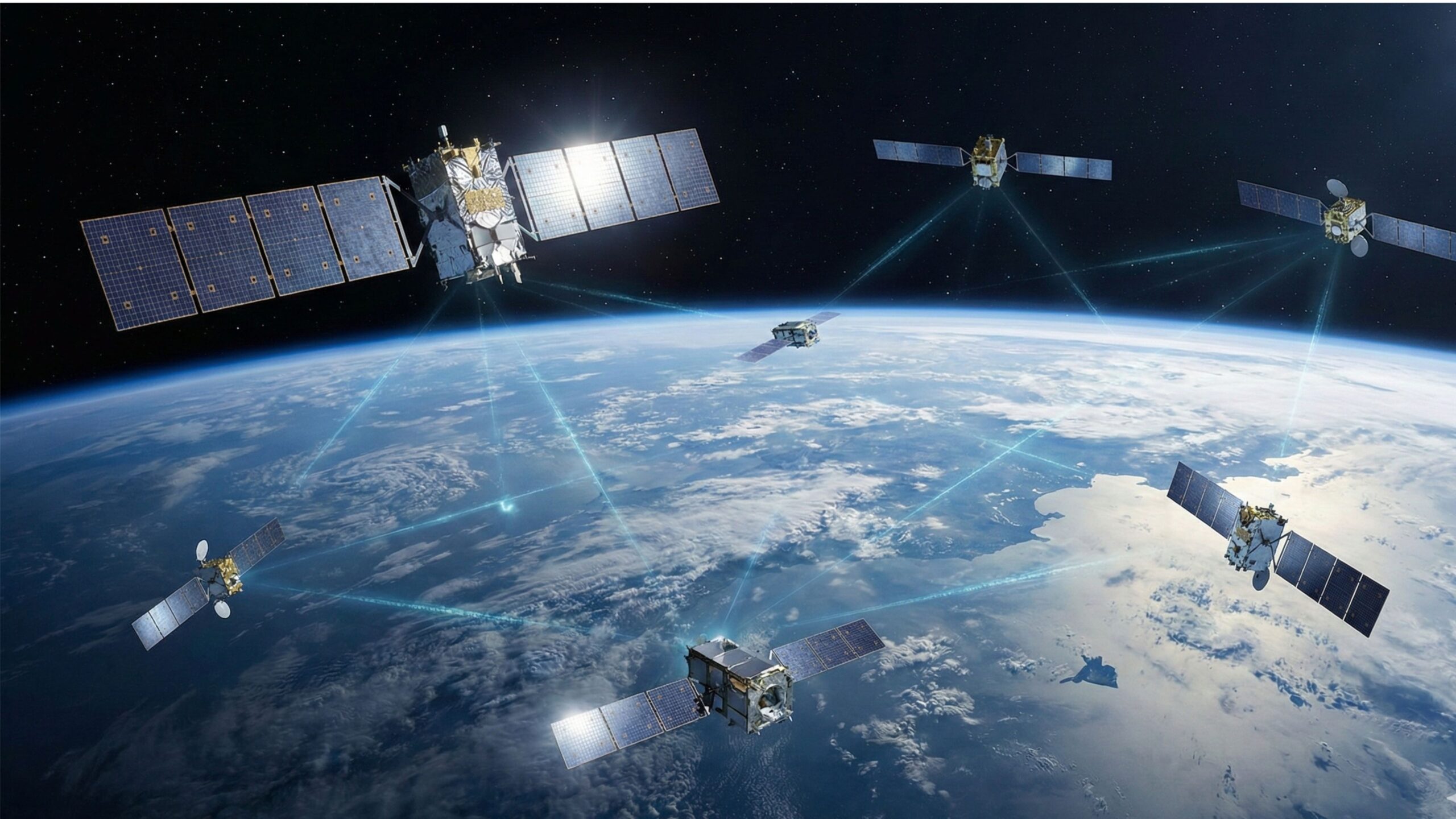
In a few years, over half a million satellites will enter orbit, scientists at NASA alarm. This is a pace that could literally change the way we look at the sky. This growing fleet of objects is disrupting astronomical observations, making it difficult to detect cosmic threats, and now, research confirms the serious satellite observation impact and risks to ecosystems on Earth.
For years, we have used satellites almost invisibly: they provide the internet, television, weather forecasts, and thousands of services we take for granted. Simultaneously, their number is growing at a rate nobody—not even the builders themselves—predicted.
In 2019, there were about 2 thousand active satellites in orbit. Today, there are already around 15 thousand. Moreover, according to an analysis published in Nature, in five years, that number will reach 560 thousand. This is a scale that was not seriously considered in any forecast a decade ago.
Scientists have warned for years that light reflections from thousands of satellites create an “artificial glow” in the sky that could hinder astronomical observations. Today, we know this is not just an obstacle—it is a real threat.
NASA studies show that with a projected number of 560 thousand objects:
This effect comes from reflections off increasingly large and numerous satellites entering the field of view of instruments observing space.
Alejandro S. Borlaff, co-author of the NASA study, notes that the problem does not end with spoiled images. Astronomers may have difficulty distinguishing between satellites and natural objects—including asteroids that could pose a threat to Earth.
In practice, the noise generated by thousands of objects can obscure signals we genuinely need to spot. That is why finding a solution that prevents satellites from posing a threat to sky research is necessary.
The simplest way is to launch fewer satellites. However, the current pace of the commercial race makes solutions harder to implement than to propose. Competition between companies offering satellite internet is intense.
Especially since only one network—Starlink—currently holds a 75 percent market share, and in a few decades, this may be just 10 percent. This suggests that the competition is just beginning to ramp up.
The growing number of satellites is a double-edged sword. It brings faster internet, better communication, and global access to services, but at the same time, it:
NASA and the scientific community are stating ever more clearly: if we do not find a solution now, future generations may see a sky that cannot be “saved.” Therefore, urgently finding solutions that protect both technological development and minimize the satellite observation impact is essential for the safety of our planet.
Read this article in Polish: Rekordowy wzrost liczby satelitów. NASA ostrzega przed zagrożeniem


A graduate of journalism and social communication at the University of Rzeszów. She has been working in the media since 2019. She has collaborated with newsrooms and copywriting agencies. She has a strong background in psychology, especially cognitive psychology. She is also interested in social issues. She specializes in scientific discoveries and research that have a direct impact on human life.


Zmień tryb na ciemny