Truth & Goodness
Mexico Before the World Cup: 400,000 Victims and the Gangs Ruling the Streets
12 March 2026





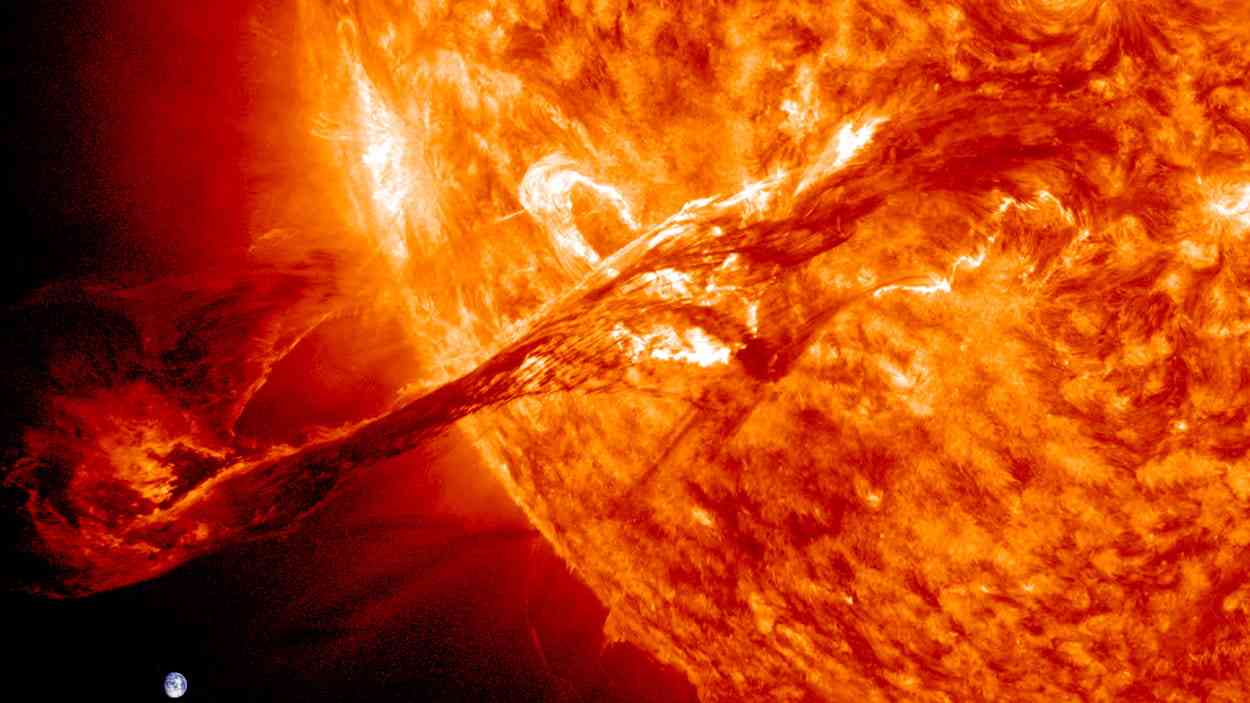
While brilliant auroras painted the night sky, a far more significant phenomenon was unfolding high above Earth. A massive solar radiation storm struck our planet with an intensity not witnessed in decades, marking a historic moment in cosmic observation.
As the world marveled at the spectacular light displays, an event of historic proportions was occurring—invisible to the naked eye but profound in its cosmic scale. Our planet crossed paths with an exceptionally intense solar radiation storm, surpassing even the legendary “Halloween” storms of 2003.
While this event posed no direct threat to humans on the surface, it triggered a real alarm in space. Satellites, aviation, and astronauts stationed beyond the protective umbrella of the magnetosphere were suddenly at risk.
This is one of the most violent phenomena in the solar system. When a massive explosion occurs on the Sun’s surface, the released energy accelerates charged particles—primarily protons—to unimaginable speeds.
Consequently, these particles can cover the 150 million-kilometer distance to Earth in just dozens of minutes. On a cosmic scale, this is nearly instantaneous—a flash reaching from the center of the solar system to the boundaries of Earth without warning.
Upon reaching Earth’s vicinity, the most energetic protons can penetrate the magnetosphere and are funneled toward the planet’s poles. There, they enter the upper layers of the atmosphere, triggering processes that extend far beyond beautiful auroras.
The Space Weather Prediction Center rates the intensity of such events on a five-level scale, from S1 to S5. The most recent solar radiation storm reached an S4 level, classified as “extreme.” Although it remained nearly imperceptible to the general public, its consequences were far more serious than they appeared.
For those on the ground, the situation remained safe. This phenomenon did not directly threaten the life or health of the planet’s inhabitants. Earth’s dense atmosphere and powerful magnetic field acted as a shield, absorbing the radiation before it could reach the surface.
The nature of the storm also played a crucial role. It was characterized by a “soft” particle spectrum—meaning the protons did not reach energy levels high enough to bypass Earth’s natural defenses and cause tangible damage on the ground.
However, this does not imply the event was weak. On the contrary, its scale was historically significant and powerful enough to disrupt the technological infrastructure surrounding our planet.
At high altitudes, Earth’s magnetic protection weakens. Because the natural shield is less effective there, astronauts and spacecraft crews are exposed to much higher doses of radiation. A similar risk applies to pilots and passengers on polar flight routes, where the magnetic cover is particularly thin.
However, the impact of a severe solar radiation storm is not limited to human safety.
Satellites stood on the front lines of the impact. Energetic particles can cause temporary malfunctions, errors in onboard electronics, and even damage to sensitive sensors or overloads of scientific instruments.
During this latest solar radiation storm, several space weather monitoring centers reported sudden data gaps. Evidence suggests these were caused by intense proton streams interfering with the measurement devices in Earth’s orbit.
Although this event was safe for people on Earth, it clearly demonstrates our deep dependence on space and the fragility of our technological infrastructure. While the Sun sustains life, it can also serves as a stark reminder of who truly governs the Solar System.
Read this article in Polish: Ziemię uderzyła burza ze Słońca. Tak silnej nie było od 20 lat


A graduate of journalism and social communication at the University of Rzeszów. She has been working in the media since 2019. She has collaborated with newsrooms and copywriting agencies. She has a strong background in psychology, especially cognitive psychology. She is also interested in social issues. She specializes in scientific discoveries and research that have a direct impact on human life.
Truth & Goodness
12 March 2026

Science
11 March 2026


Zmień tryb na ciemny