Truth & Goodness
More Than a Moral Virtue: The Hidden Power of Letting Go
29 March 2026





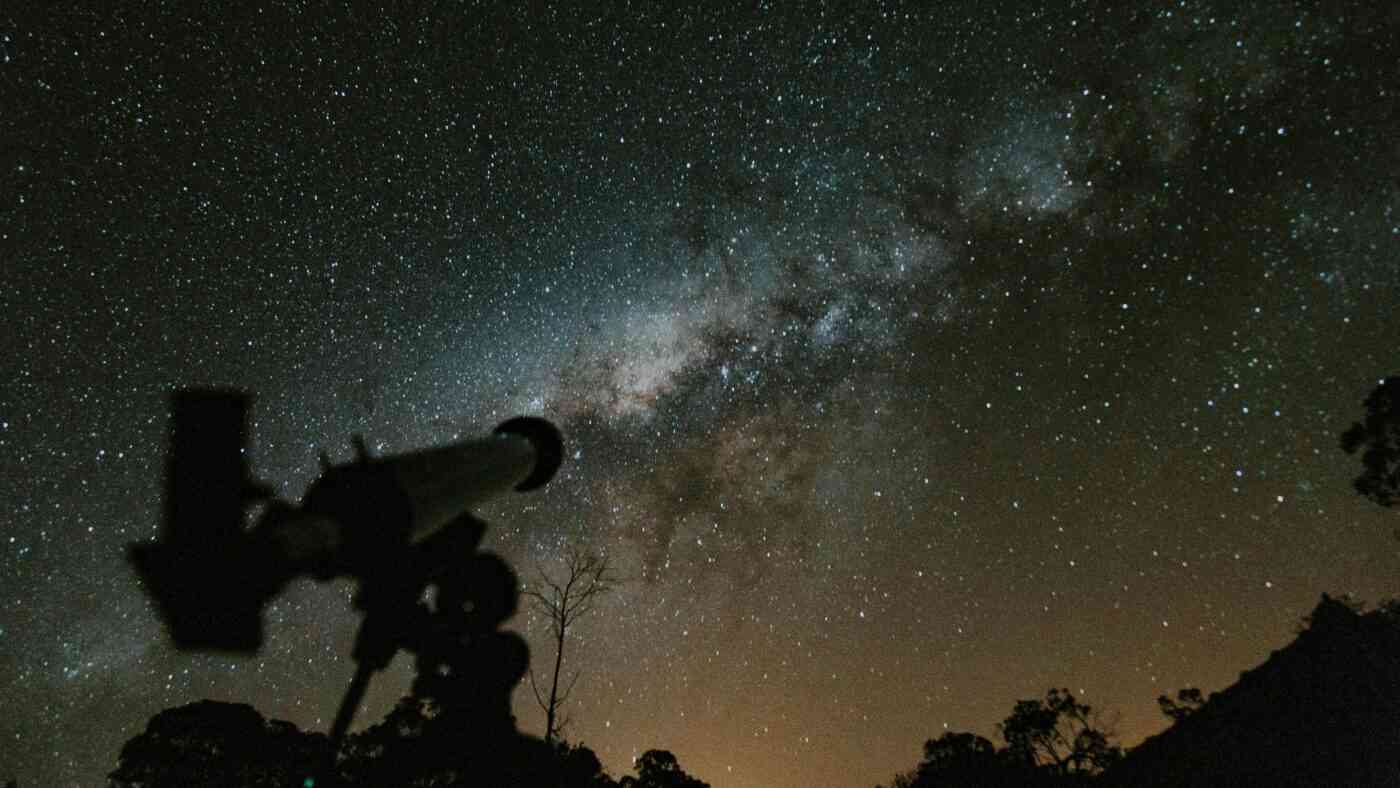
For 9 months, a Sun-like star appeared to switch off: in September 2024, J0705+0612 dimmed to about 1/40 of its normal brightness, then returned to normal by May 2025. In the best explanation so far, a vast dust-and-gas cloud — bound to an unseen companion — drifted across our line of sight. Star went dark isn’t just a dramatic headline here; it’s the key clue.
The 2024–2025 dimming was extreme and unusually long-lasting.
Stars like the Sun don’t just stop shining for no reason. So dramatic dimming events like this are very rare.
– said Nadia Zakamska, a professor at Johns Hopkins University.
Archival work also suggests this wasn’t a one-off: similar dips were seen in 1937 and 1981, pointing to a repeating pattern on roughly a 44-year timescale.
Follow-up observations with Gemini South telescope revealed the likely culprit: an enormous, slowly drifting cloud of gas and dust that temporarily blocked the star. The team estimates the cloud was about 2,000,000,000 km from the star and roughly 200,000,000 km across — large enough to hide most of the starlight from our viewpoint.
Crucially, the cloud doesn’t appear to be free-floating. Instead, the data indicate it is gravitationally bound to a second object orbiting far out in the system. The companion must be hefty: at least several times the mass of Jupiter, possibly more — consistent with a giant planet, a brown dwarf, or a very low-mass star.
To probe the cloud’s composition, the team used Gemini’s high-resolution spectrograph GHOST.
When I started observing the occultation with spectroscopy… the result exceeded all my expectations,
– Zakamska said. The spectra showed winds of vaporized metals in the gas (including iron and calcium), and — for the first time in such a system — the team could measure internal gas motions in 3D.
The sensitivity of GHOST allowed us to not only detect the gas in this cloud, but to actually measure how it is moving. That’s something we’ve never been able to do before in a system like this,
– she added.
The star also shows excess infrared emission — often associated with dusty disks — but J0705+0612 is more than 2,000,000,000 years old, which makes a long-lived “leftover” protoplanetary disk unlikely. That’s why the team points to a more dramatic scenario: a major collision between two outer-system planets could have blasted huge amounts of rock, dust, and gas into orbit around the surviving companion, creating the disk-like structure that later crossed our view.
If the repeating pattern holds, the next deep dimming would be expected around 2069 (44 years after 2025). Until then, this system is a rare laboratory for studying how violent events can still reshape mature planetary systems — and a vivid case study of exactly why a star went dark.
Read this article in Polish: Gwiazda zniknęła i rozbłysła znowu. Co się działo przez 9 miesięcy?


A Journalism and Social Communication graduate with 15 years of experience in the media industry. He has worked for titles such as "Dziennik Łódzki," "Super Express," and "Eska" radio. In parallel, he has collaborated with advertising agencies and worked as a film translator. A passionate fan of good cinema, fantasy literature, and sports. He credits his physical and mental well-being to his Samoyed, Jaskier.



Zmień tryb na ciemny