Humanism
In the Mountains of Madness: Science Confronts the Legend of the Halny
28 March 2026





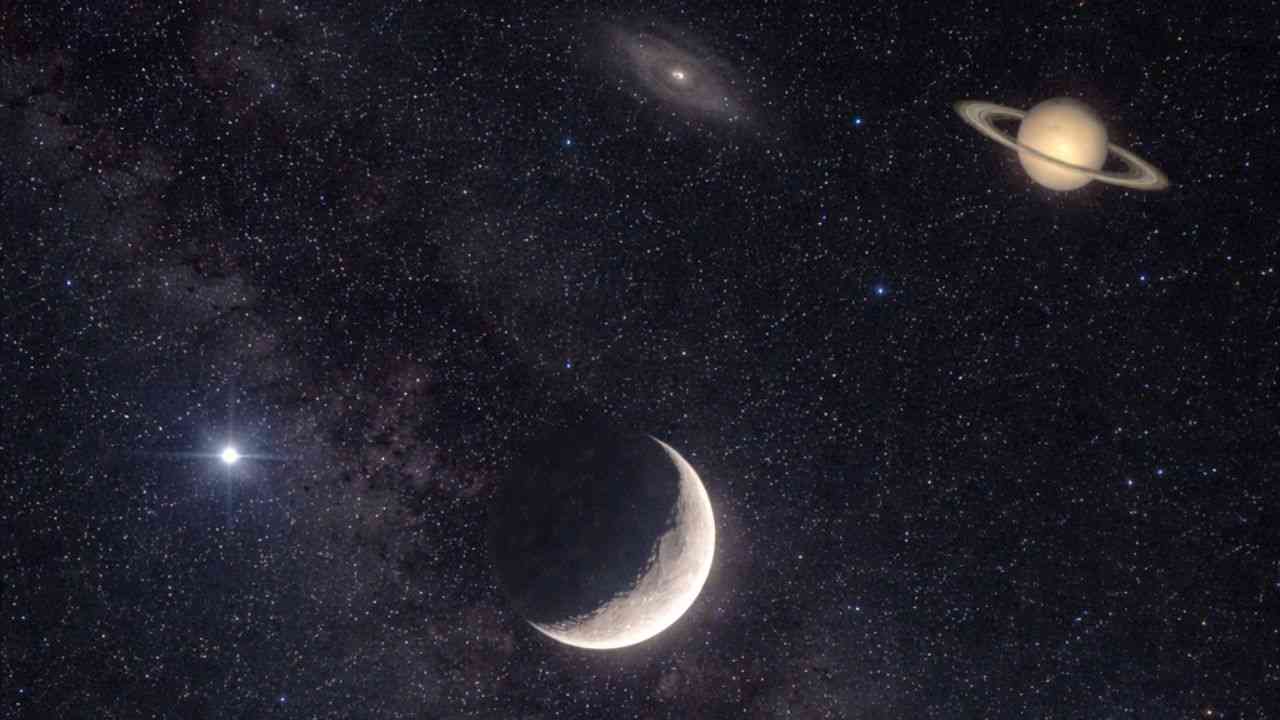
A full moon, intimate planetary alignments, and the lingering winter constellations define the celestial calendar this month. Stargazing in March promises a wealth of experiences for those willing to brave the crisp air. Here is your step-by-step guide to the heavens, ensuring you don’t miss a single cosmic beat.
We begin our astronomical journey by catching the final, fading glimpses of the planetary parade. This rare alignment of six celestial objects, appearing as if drawn in a single line across the firmament, will persist through the first few days of March, overlapping with other remarkable events.
Starting March 2, look toward the eastern horizon before dawn to witness a close encounter between Venus and Saturn. If atmospheric conditions remain clear, these two planets will emerge low in the sky. This serves as merely the opening act for the month’s early attractions.
On the night of March 2 into the early hours of March 3, a total lunar eclipse—famously known as the “Blood Moon“—will take place. During this event, the Earth casts its shadow over the Moon, bathing it in a haunting, reddish hue. The total phase will last approximately 60 minutes, with the entire cycle spanning over five hours. Across the U.S., visibility will depend on your time zone and the Moon’s position in the sky—many viewers will catch it in the late-night to pre-dawn hours.
March 11 marks a red-letter day for astrophotographers. The Moon will reach its last quarter, leaving exactly half of its surface illuminated. You will spot it primarily in the early morning hours—a perfect time to capture the dramatic interplay of light and shadow across its cratered landscape. But the Moon isn’t the only star of the show that morning.
Jupiter will also make a grand appearance, shining with a brilliance that commands attention. While its brightness makes it easy to find, you will need a telescope to truly appreciate its majesty. Through the lens, you can resolve the planet’s iconic cloud bands and its four largest Galilean moons. Keep your equipment ready, as you’ll need it for the observations yet to come.
For the most dedicated fans of galaxies, nebulae, and other “deep-sky” objects, March 18 is the night you’ve been waiting for. With the Moon entirely absent from the sky, the darkness will provide a pristine canvas for observing faint phenomena that are usually drowned out by lunar glare.
As we cross into the second half of the month, the spring equinox arrives. This celestial milestone marks the official beginning of spring—a day when light and dark stand in perfect balance. While not a “night sky” event in the traditional sense, the equinox symbolizes the return of longer days and a shift in the celestial guard.
Throughout the entire month, however, the winter constellations still dominate the stage. You can still admire Orion the Hunter, as well as Taurus with the sparkling Pleiades star cluster. These winter icons provide a sense of continuity as the seasons begin to turn.
To successfully witness all the astronomical events this month, preparation is paramount. First and foremost, dress in warm, layered clothing and gather your equipment. The lingering cold and the faintness of certain objects demand both patience and optical aid—at least a pair of binoculars, though a telescope is often preferred.
Seek out a location far from the invasive glow of city lights, where the horizon remains unobstructed by tall buildings or trees. If you struggle to locate specific objects, utilize mobile stargazing apps to help navigate the nocturnal map.
By many standards, stargazing in March is a relatively calm period in terms of astronomical intensity. However, this is no reason to put your telescope away. On the contrary, seasoned skywatchers should view this month as a critical warm-up. It is a time to refine your techniques and sharpen your eyes before the spectacular, high-octane celestial events scheduled for April.
Read this article in Polish: Księżyc, Jowisz i pożegnanie planet. Marcowe niebo pełne atrakcji


A graduate of journalism and social communication at the University of Rzeszów. She has been working in the media since 2019. She has collaborated with newsrooms and copywriting agencies. She has a strong background in psychology, especially cognitive psychology. She is also interested in social issues. She specializes in scientific discoveries and research that have a direct impact on human life.



Zmień tryb na ciemny