Humanism
In the Mountains of Madness: Science Confronts the Legend of the Halny
28 March 2026





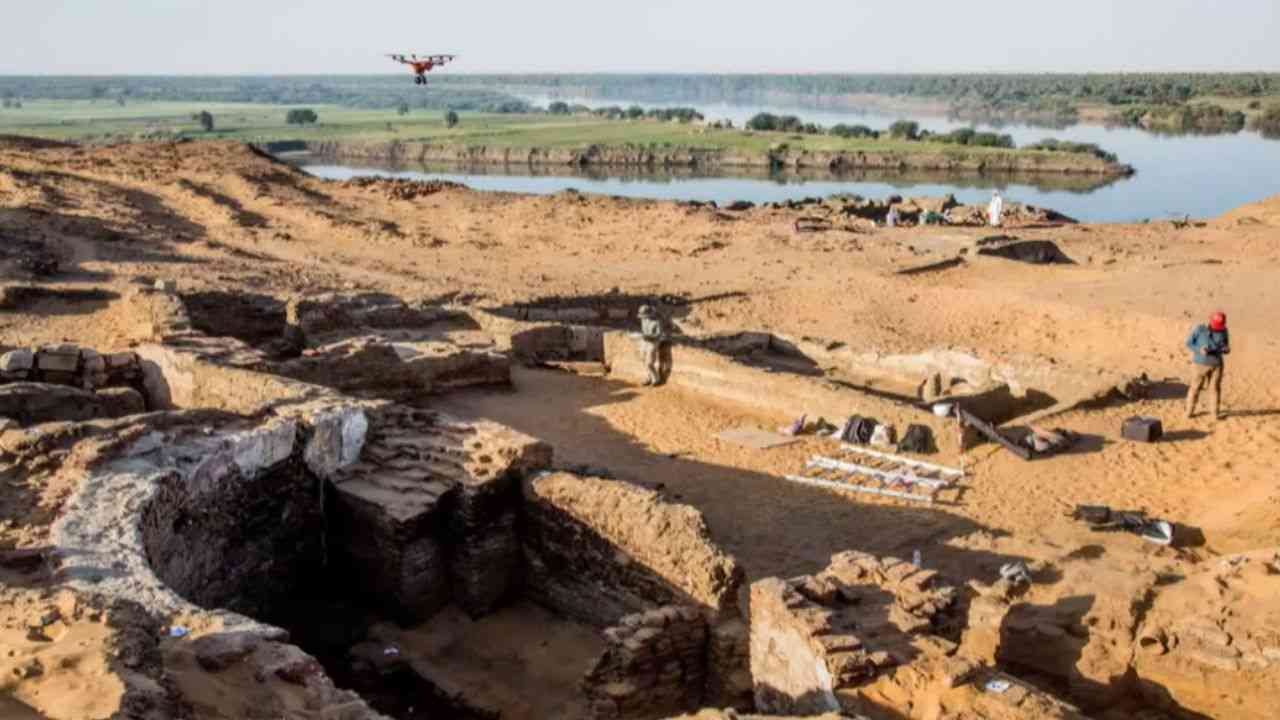
Deep within a pile of ancient refuse, a Polish-led archaeological team working in Sudan uncovered tangible proof of Qashqash, the legendary ruler of Old Dongola. A 17th-century Arabic order signed with his name constitutes the first material evidence that this figure—previously known only through oral tradition—was a real historical person. This stunning Sudan archaeology discovery bridges the gap between folklore and fact.
The find was thin and brittle, appearing utterly ordinary at first glance. It lay where discarded items had accumulated for years, buried under layers of dust and waste. Only when researchers carefully unfurled the scrap of paper inscribed with Arabic did they realize this was no random text. It contained a few brief commands and specific names. Among them was one name that had echoed through local legends for generations—ironclad proof that King Qashqash, known only from oral histories, truly ruled Old Dongola.
To understand why this find is so significant, one must travel back several centuries and examine the site where the earth gave up its secret.
Old Dongola was the former capital of Makuria, located in present-day northern Sudan. In the 14th century, it lost its status as a power center and became a mystery to historians for years. This period, known as the Old Dongola “Dark Ages,” was a time of profound transformation about which surprisingly little is known. To this day, there is no definitive answer as to why the inhabitants of these lands gradually abandoned Christianity in favor of Islam. However, one thing is certain.
Nubia, which included Old Dongola, did not undergo this transformation abruptly. The stages progressed slowly, likely aided by the region’s attractive location—a corridor connecting sub-Saharan Africa with the Mediterranean world and a vital trade route. Merchants, pilgrims, and messengers traveled these paths, bringing not just goods, but ideas, religions, and new political orders.
The Dark Ages brought other consequences as well. The city began to shrink. Over the years, it lost territory until life concentrated solely around the central citadel and its immediate surroundings. The former capital gradually ceased to be a sprawling hub, becoming a closed space of diminishing importance.
Despite its centuries-long history, surprisingly little is known about its leaders. Sources are silent. In fact, only one name consistently appears: Qashqash.
According to dictionaries compiled from oral traditions, Qashqash was more than just a ruler; in local tradition, he rose to the rank of one of the most important holy figures in Sudan. His name survived the centuries and remains a cornerstone of the region’s collective memory.
For years, stories of this early modern ruler functioned strictly as legends. There was no “hard evidence” to separate oral tradition from historical fact. Although international teams have been conducting excavations in the region for decades, this specific Sudan archaeology discovery represents a true breakthrough. The latest finds have confirmed what had been spoken of for generations.
According to a report in Azania: Archaeological Research in Africa, scientists discovered a building that ancient accounts identified as the residence of the rulers of Dongola. What they found inside was far from ordinary. The rooms yielded linen, leather shoes, cotton, and ivory. They also found a gold ring and a dagger handle carved from rhinoceros horn. However, something else held even greater significance: the team discovered 23 Arabic texts.
This final find proved to be the turning point. One of the Arabic documents became the tangible evidence of King Qashqash’s existence. The key was a specific order drafted for his subjects.
The inconspicuous fragment of paper turned out to be an official command delivered by the ruler through his servant. The text was written in “broken” Arabic, mixing spoken and written forms as if composed in a hurry. The document read:
“From King Qashqash to Khidr, son of ŠHDT/ŠHB(T?). As soon as Muḥammad al-ʿArab comes to you, take from him three ʾRDWYĀT and give him a sheep with its young, and receive from ʿAbd al-Jābīr a sheep with its young; and return them to their master without delay. Do not hesitate! This is my letter/response to you. Written by his scribe Ḥamad. Greetings. And you, Khidr, give ʿAbd al-Jābīrowi three cotton cloths and a head (or three cotton head coverings) and receive the sheep with its young for their master.”
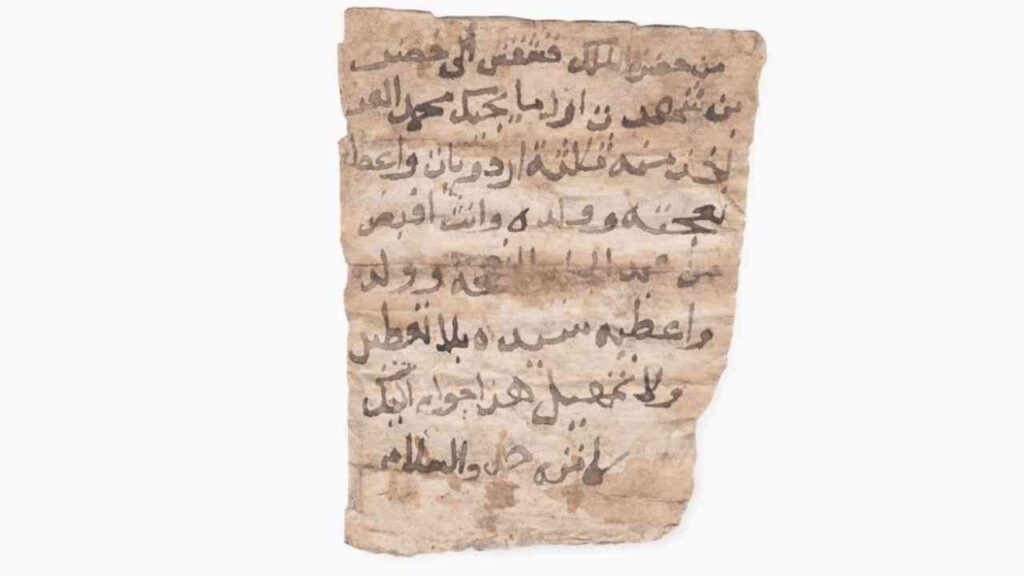
The order, drafted in Arabic, concerned the exchange of goods and the established rules for such practices. Evidence suggests that the exchange included a head covering—a gift usually reserved for the highest Nubian nobility and the rulers themselves.
While the content of the document might seem mundane, the mention of the ruler is revolutionary. It unequivocally confirmed the existence of a figure who had previously lived only in stories. Furthermore, the world might never have known that Qashqash ruled Old Dongola if not for the specific circumstances of the find.
This precious artifact was not waiting in a vault or a hidden chamber. The scrap surfaced during work by Polish archaeologists excavating at Old Dongola. Archaeologists stumbled upon it while searching a trash heap where the Arabic ruler’s written order had been tossed along with other refuse. For years, it was considered a worthless scrap of paper; in reality, it was evidence waiting more than 300 years to see the light of day again.
The discovery of this seemingly inconspicuous scrap of paper, in the context of the culture of gifting and traditional royal patronage in local micropolitics, provides a vivid example of how archaeological work continues to provide materials linking material culture with written history,
– said Tomasz Barański, one of the study’s authors.
This find may just be the start. Evidence suggests that the discovered writing opens a much broader history. Analyses of the letters showed that the building functioned as a communication hub, linking administrative and religious elites, and likely the leaders of nomadic groups grazing herds in the surrounding regions.
This recent success is not the first time the region has made headlines. In 2023, excavations were recognized as one of the ten most important discoveries on the globe. At that time, researchers revealed a hidden chamber with 13th-century wall paintings.
Despite the passage of time, the walls featured images of the Archangel Michael, scenes from the life of Mary, King David of Makuria (who ruled during the Christian era), and an image of Christ himself. This clearly demonstrates that Christianity was deeply rooted in northern Sudan despite later Islamization.
The year 2023 was a landmark for research for another reason. It was then that archaeologists found sandstone blocks decorated with figural scenes and Egyptian hieroglyphs. It quickly became clear that this was no ordinary find.
The elements turned out to be part of a temple from the 25th Dynasty, dating back to the 8th–7th century BCE, linked to the reign of the so-called “Black Pharaohs.” This discovery suggests that settlement in these areas may date back roughly a thousand years earlier than previously assumed.
This finding is more than just another scientific success. It is the material proof that Qashqash existed and held power in Old Dongola. It confirms that the stories preserved through generations were not merely legends, but testimonies of a real person whose memory has endured to this day. This Sudan archaeology discovery has finally given a face to a ghost of the “Dark Ages.”
Read this article in Polish: Był legendą. Polacy udowodnili, że słynny król żył naprawdę


A graduate of journalism and social communication at the University of Rzeszów. She has been working in the media since 2019. She has collaborated with newsrooms and copywriting agencies. She has a strong background in psychology, especially cognitive psychology. She is also interested in social issues. She specializes in scientific discoveries and research that have a direct impact on human life.



Zmień tryb na ciemny