Humanism
When Goodness Becomes Procedure. How Generosity and Solidarity Fade
07 April 2026





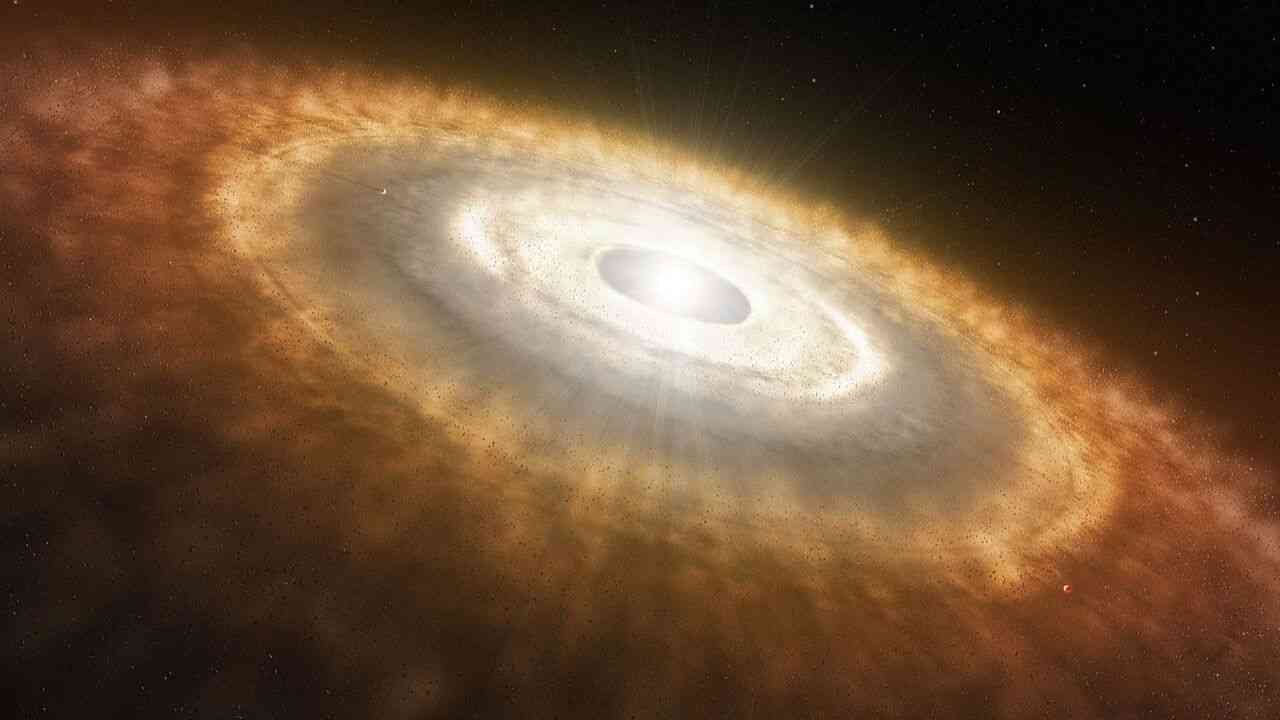
For years, science taught us that we owe our oceans to icy celestial wanderers. However, a groundbreaking experiment replicating the conditions of a planet's birth suggests a different story: water can form naturally, without any help from comets. This discovery suggests that the presence of water in space might be a fundamental part of a planet's origin story.
Until recently, water seemed like Earth’s exclusive cosmic privilege. Later, reports of water traces on Mars began to shake that conviction. Now, science is taking it a step further. Latest findings indicate that planets can produce water independently—right at the moment of their birth. If this scenario holds true, it could mean that potentially habitable worlds are far more common than we ever imagined.
For decades, the consensus held that planets acquire water from the outside, delivered by comets and asteroids bombarding their surfaces. Yet, a study published in Nature points to a different mechanism: a planet can generate its own water when molten rock reacts with the hydrogen present in its young atmosphere. If this process scales as the results suggest, many worlds—from super-Earths to sub-Neptunes and rocky planets with dense primordial hydrogen atmospheres—could be hiding life-sustaining elements deep within.
To test this theory, a team from the University of Pavia and the University of California conducted a series of controlled experiments. In the lab, they recreated the hellish conditions of a planet’s birth: extreme pressure, scorching temperatures, and a hydrogen-rich environment.
The researchers subjected rocks to the massive forces that accompany the formation of young worlds. The result was unequivocal: water can form naturally during the earliest stages of a planet’s development. These findings overturn the traditional image of planetary formation. They also raise fresh questions about the origins of Earth’s own oceans—specifically, whether we truly needed a cosmic “delivery service” to become an ocean world.
The debate over Earth’s water source has raged for decades. As mentioned, one hypothesis credits cosmic bombardment by icy bodies from the outer reaches of the Solar System. The second, more intriguing theory, suggests that the very matter that formed Earth already contained the ingredients necessary to produce water from the inside out.
While this theory remained purely speculative for years, it lacked laboratory verification—until now. These new experiments significantly bolster the argument that water can form naturally during the planetary assembly process.
To better understand this phenomenon, researchers turned their attention to sub-Neptunes—exoplanets larger than Earth but smaller than Neptune. While they don’t exist in our own Solar System, they serve as an invaluable model for studying how and when water originates.
In their experiment, the team modeled a sub-Neptune and subjected it to extreme conditions: temperatures reaching 4,000 degrees Celsius and crushing pressure. These parameters mirror the reality of a young, forming planet. Under these extreme conditions, hydrogen easily penetrates molten rock, where it reacts with iron oxides. The result? The production of significant quantities of water.
The results confirm that water can form spontaneously as a natural byproduct of chemical processes within young planets, without needing external deliveries from asteroids or comets. This leads to a broader conclusion: water in space may not be a lucky coincidence or a cosmic exception, but a standard consequence of planetary formation itself. If so, life-sustaining environments may be far more prevalent throughout the galaxy than we once dared to hope.
Read this article in Polish: Woda w kosmosie to nie wyjątek? Zagadka narodzin planet


A graduate of journalism and social communication at the University of Rzeszów. She has been working in the media since 2019. She has collaborated with newsrooms and copywriting agencies. She has a strong background in psychology, especially cognitive psychology. She is also interested in social issues. She specializes in scientific discoveries and research that have a direct impact on human life.



Zmień tryb na ciemny