Humanism
In the Mountains of Madness: Science Confronts the Legend of the Halny
28 March 2026





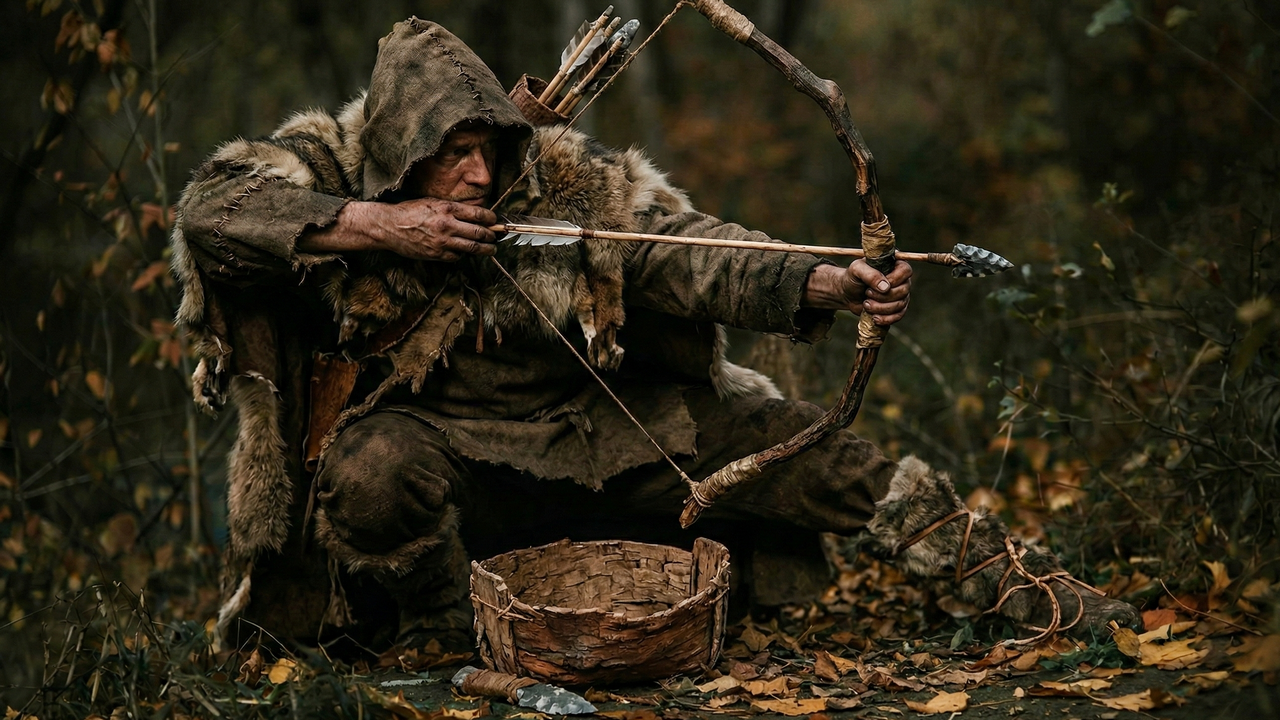
For our ancestors, it was a standard source of energy and survival. Today, most people wouldn't be able to even look at it. New research shows that the prehistoric diet looked vastly different than what we have believed for years. To truly understand human evolution, we must take a closer look at what cavemen ate—and the answer might be harder to swallow than expected.
In the era of early humans, long before our ancestors mastered the art of the hunt, they did whatever was necessary to endure. They began with patience and opportunism, seizing every chance to secure food. In this way, carrion—the decaying flesh of dead animals—became an inseparable part of what cavemen ate.
Scavenging was not merely a desperate last resort to stave off starvation. It was a strategic choice practiced over many generations. It served as a source of survival, but also a symbol of human ingenuity. According to a study published in Science Direct, carrion consumption was not limited to the pre-hunting era; it remained a part of the human diet well into modern times.
Researchers from the University of Granada and the University of Alicante analyzed the prehistoric diet and proved that our bodies are better adapted to digesting “rotten” meat than we might care to admit.
The secret lies in the high acidity (low pH) of our stomachs. This acidic environment evolved as a primary defense against pathogens and toxins that could lead to deadly infections. Furthermore, the risk of illness plummeted when humans learned to use fire for cooking.
High temperatures increased the bioavailability of energy from meat and marrow while killing dangerous bacteria. Our ability to travel long distances with low energy expenditure also played a crucial role, allowing us to efficiently scout for the remains of animal carcasses across vast landscapes.
It is no surprise that despite modern taboos, scavenging persisted for centuries. Carrion was a surprisingly vital resource—rich in fats, protein, and marrow. It acted like a nutritional safe full of calories and energy, providing a way to survive for long periods with relatively low effort.
For comparison, the marrow from a single femur of a large animal provides up to 4,000 kcal. Obtaining the same amount of energy from plants would require a dozen hours of intense gathering. During off-seasons or droughts, such a concentrated “calorie bomb” meant the difference between life and death for the group.
This functioned as a highly refined system. Though primitive, stone tools were perfectly suited for processing these finds. Human communication provided a vital information network, signaling where to find food and coordinating group efforts. Consequently, scavenging functioned alongside plant gathering and hunting as a core pillar of what cavemen ate.
The discoveries of Spanish researchers call the traditional “hunter” narrative into question. When it was discovered in the 1960s that early humans in Africa consumed animal remains, scientists debated: were they skilled hunters or primarily scavengers?
One thing is certain: for years, scavenging was viewed as an “inferior” way of obtaining meat, something humans supposedly abandoned as soon as they learned to hunt. However, current evidence suggests otherwise. Nearly all carnivorous species consume carrion. Furthermore, many modern hunter-gatherer tribes still utilize scavenging as a food source, proving it remains an effective and practical strategy.
Everything indicates that the foundations of our species were not forged during the first spectacular hunts, but rather when we began to calculate our survival coldly. We approached a dead animal, processed the meat, and shared the spoils with others. This wasn’t a moment of cinematic glory; it was a display of cunning and advanced thinking that represents a vital chapter of our history. Perhaps this dark and somewhat “embarrassing” stage was the very bedrock of our modern existence. Understanding what cavemen ate allows us to see the true brilliance of human adaptation.
Read this article in Polish: Dziś byś tego nie zjadł. Dla ludzi pierwotnych to był rarytas


A graduate of journalism and social communication at the University of Rzeszów. She has been working in the media since 2019. She has collaborated with newsrooms and copywriting agencies. She has a strong background in psychology, especially cognitive psychology. She is also interested in social issues. She specializes in scientific discoveries and research that have a direct impact on human life.


Zmień tryb na ciemny