Education
What Does It Take to Keep a Child Curious?
28 September 2026





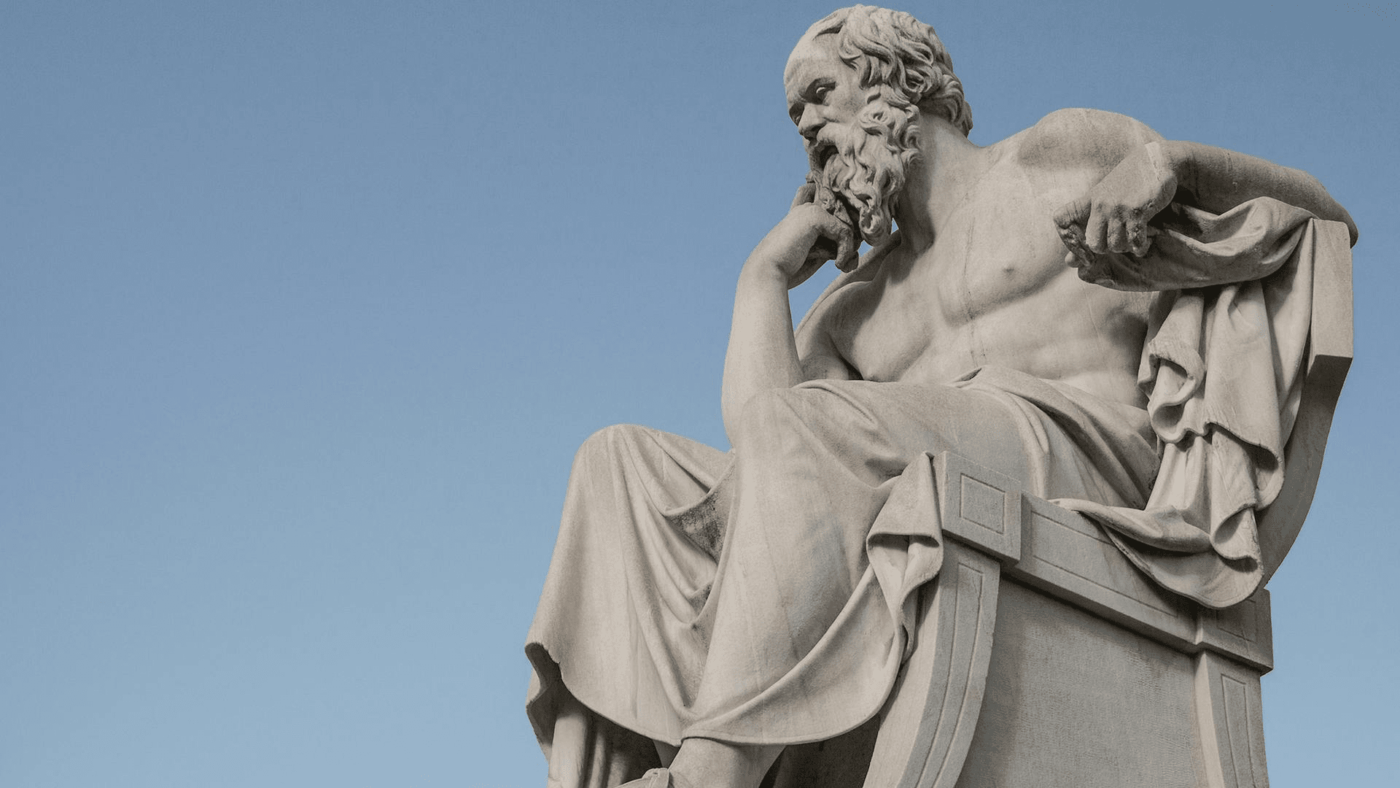
Only a few years ago, a standard physics classroom taught us that the atom was the smallest particle of existence—a simple trio of protons, neutrons, and electrons. Today, we know these subatomic particles are merely the surface of a deeper quantum world, revealing even smaller elements that ignite the human imagination. Yet, this fascination with the fundamental building blocks is far from a modern obsession; it is a fire that has burned since the dawn of philosophy—and it begins with the search for the ancient Greek arche.
If we go back not a dozen years, but more than 2,000, we meet the precursors of contemporary science. Without modern technologies, tools, or calculations, they used reason and the senses to arrive at remarkable conclusions about the beginnings of the world.
Philosophy—the great-grandmother of science, grounded in reflection, argument, and inquiry—was born in ancient Greece, specifically in the region of the Ionian Islands. Some people say, a little mockingly, that it arose in the minds of those who had enough money and time to do nothing but think. We can be grateful for that leisure, which people like Thales, Pythagoras, and Anaximander had.
We know Thales and Pythagoras from mathematical theorems. Few have heard of the others. Yet their contribution to scientific thought—and the extraordinary ideas that formed in their minds—still offers something we can return to today. First, to admire the sharpness of the human intellect, and second, to draw inspiration for asking the most basic question of all: why?
The first philosophers set themselves a primary task in their reflection on the world: to find the original principle of existence, the arche. This was the primal substance from which the entire world was supposed to have been created—the first particle, the source of everything we see and experience. Religious and mythological explanations no longer satisfied these thinkers. They understood that such stories were only images, and that the gods did not necessarily live on Mount Olympus. They were the first to commit to interpreting what can be known through the senses. In modern research, a distant echo of observations made 2,000 years ago still resonates.

Thales (7th/6th century BCE), associated with the mathematical theorem that bears his name, stands as the first of these philosophers. He advanced the thesis that there is one principle of everything that exists—and he claimed that principle is water. Although he left no writings, we know his ideas from Aristotle. In the Metaphysics we read:
Thales, the founder of this kind of philosophy, said that water is the principle (which is why he also claimed that the Earth floats on water). He presumably reached this conclusion by observing that nourishment is moist, and that heat itself arises from moisture and lives by it (and that from which something comes to be is the principle of that thing). On this basis, and on the fact that the seeds of all things have a moist nature, he formed the view that water is the natural origin of all moist things.
According to Greek mythology, the world was supposed to come from Oceanus and Tethys—deities responsible for water. Thales steps away from that mythic conviction and focuses on observation. Notice that contemporary cosmological research devoted to finding life on other planets or asteroids also treats water as almost certain evidence that life exists—or once existed—in a given place.
Heraclitus of Ephesus (around 540–480 BCE) arrived at different conclusions. His observations focused on the dynamic character of reality. He claimed that things come into being and pass away only through constant change. Nothing remains unchanged or motionless. Only becoming endures.
In his philosophy, the arche from which everything else derived was fire:
All things are exchanged for fire, and fire for all things, just as goods are exchanged for gold, and gold for goods,
– we read in one of his few surviving aphorisms. Modern science, too, draws attention to ceaseless change, evolution, and natural selection. If there were no death, destruction, and passing away, nothing new would come into being.
The fire Heraclitus refers to in his idea of the world’s origin is energy. Today, many scientists place the beginning of the universe in the Big Bang. According to this theory, a primordial mass exploded, releasing enormous quantities of energy and matter. Through ongoing change, collisions, and impacts, the world we know took shape.
The concepts built on water and fire, which Thales and Heraclitus invoked, may seem very simple. Anaximander (around 610–546 BCE) reached entirely different conclusions. He stated that the arche of the world is the apeiron. We can translate this word as “indefinite nature,” “boundlessness,” something that has no limits—internal or external. The apeiron is infinite because it contains infinitely many worlds, bringing about their birth and destruction.
It is worth noting that Anaximander was the first to introduce the concept of eternity: the existence of something without a beginning and without an end. In doing so, he opposed the common Greek belief in a temporal beginning of a single world.
He also claimed that thanks to the infinite apeiron, infinitely many worlds exist—worlds that are born and die in an unending cycle. Their beginning and end connect to the struggle of opposites. “And that from which existing things arise is also, of necessity, that into which they perish. For they pay penalty and retribution to one another for their injustice according to the order of time,” we read in Simplicius (Aristotle’s Physics), who quoted Anaximander. This is a very difficult sentence to interpret. Most historians of philosophy argue that Anaximander explains the presence of opposites in the universe—heat and cold, dry and wet. In the language of modern physics, it would be matter and antimatter. New entities form on the basis of the clash between opposing elements.
Besides the Big Bang theory, another popular hypothesis today proposes infinitely many cosmoses. It enjoys enormous interest—but we should remember that its beginnings reach back to the ancient philosopher Anaximander, who was the first to suggest such a possibility.
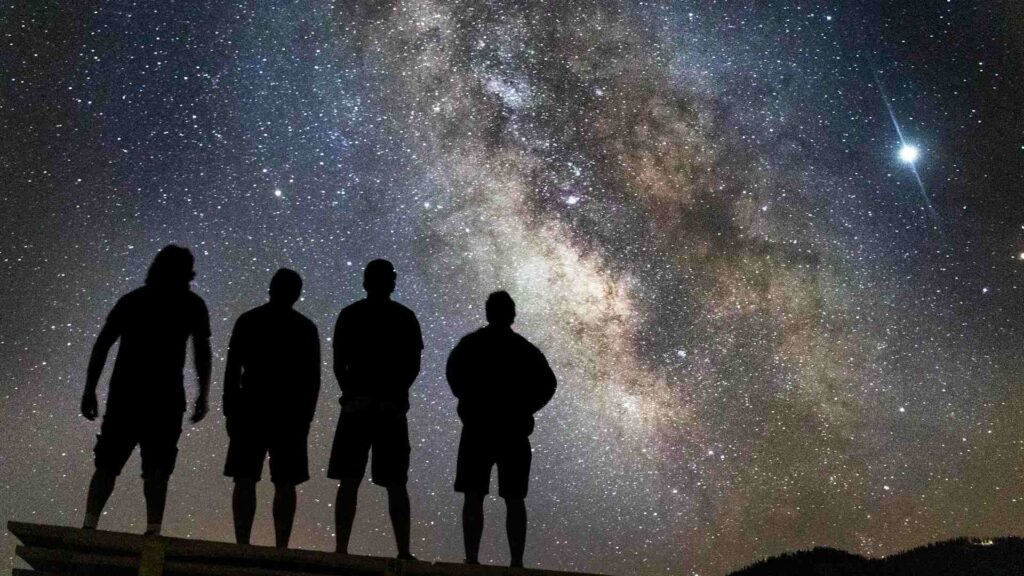
Another philosopher we associate mainly with mathematics is Pythagoras (around 572–497 BCE). Together with his school, he focused attention on numbers. It is worth stressing that the ancients viewed numbers differently than we do. For them, numbers were real, existing objects, not a product of the mind. According to the Pythagoreans, the arche of the world was precisely number. Aristotle writes in the Metaphysics:
The so-called Pythagoreans were the first to take up the mathematical sciences; they advanced them, and having been trained in them, they supposed that their principles were the principles of all things. Since the numbers hold the first place among these principles, and since in numbers, more than in fire, earth, and water, they believed they could see many likenesses to things that exist and come to be, and since they also saw in numbers the properties and proportions of harmony—since, then, all other things seemed to them in their whole nature to be modelled on numbers, and numbers seemed the first things in the whole of nature, they supposed the elements of numbers to be the elements of all things, and the whole heaven to be harmony.
Number is arguably the most essential aspect of contemporary research. We use it to record information and laws that govern the world we study.
These are only a few of the philosophers who investigated how the world came into being and by what principle it was formed. They drew attention to matter, energy, the possibility of infinitely many worlds, and the mathematical rules that govern the cosmos. Although science long ago overturned their specific claims, the ideas they reached through reflection still inspire us when we analyse reality—and they keep the ancient question of ancient Greek arche alive as a way of thinking about what the world is made of.
Read the original article in Polish: Woda, ogień i liczby. Tak starożytni filozofowie postrzegali świat


Editor and copywriter who majored in theology. Interested in self-development and psychology. Always on the lookout for new amazing ideas.

Zmień tryb na ciemny