Culture
A Life Spent Becoming Someone Else’s Ideal
12 October 2026





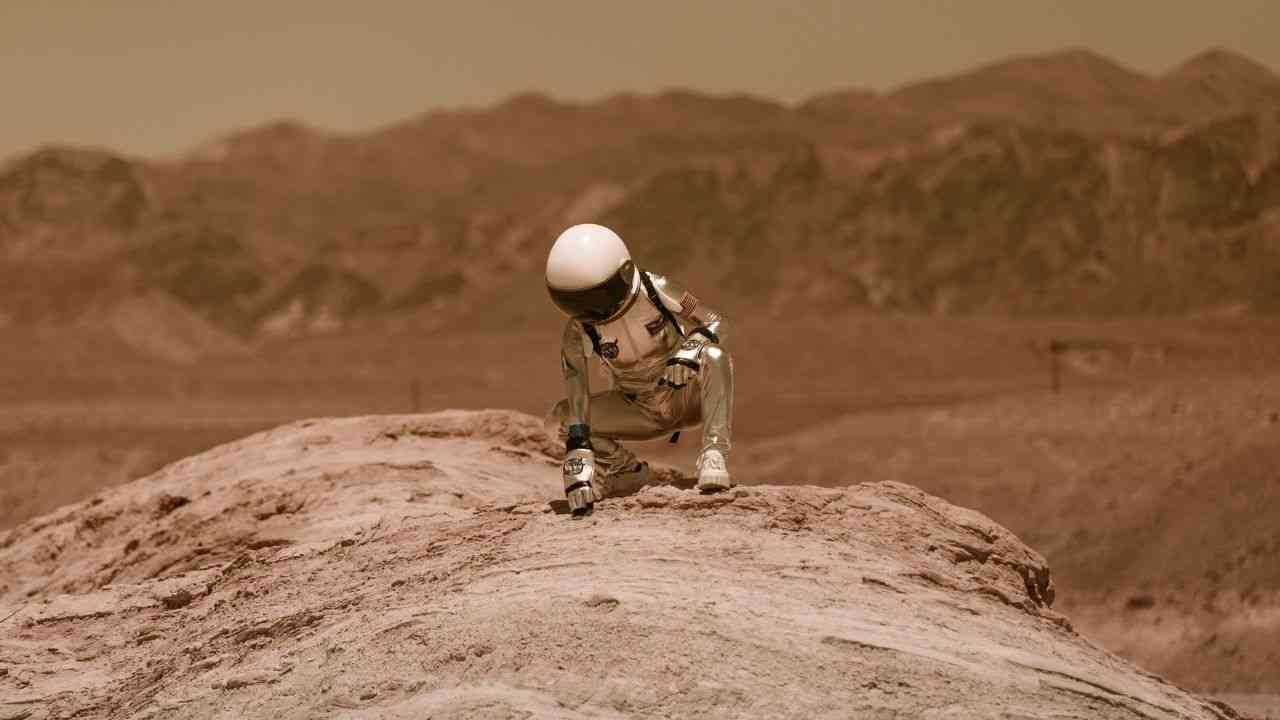
This isn’t a cinematic vision of the future; it is a concrete scientific roadmap. Two specific strains of bacteria could soon transform Martian dust into a durable building material similar to concrete. If these ambitious plans succeed, the first Mars habitat may rise from the red sands much sooner than we anticipated.
We are witnessing a moment that could redefine the very boundaries of human presence in the cosmos. Scientists have unveiled a plan to construct a permanent home on Mars—a place that could eventually serve as humanity’s second address. Interestingly, the foundation of this entire concept rests not on heavy machinery, but on bacteria.
Mars is currently a sterile graveyard for life, plagued by a thin atmosphere, lethal UV radiation, and a total lack of liquid water. Nevertheless, researchers from the Polytechnic University of Milan and the University of Central Florida propose transporting terrestrial microbes to the Red Planet. According to a study in Frontiers in Microbiology, the key lies in biomineralization—a natural “trick” where microbes effectively turn loose sand into solid stone.
The selected strains are extremophiles, organisms that thrive in the most punishing environments on Earth:
These microbes do more than just stabilize the ground. Their presence could kickstart oxygen production, enabling the creation of closed-loop agricultural systems and life-support networks, ultimately making the planet more hospitable for long-term exploration.
The study authors emphasize that biomineralization is remarkably energy-efficient, occurring at ambient temperatures without massive electricity requirements. We are already testing similar “self-healing” concrete on Earth. On Mars, autonomous robotic rovers equipped with nozzles could 3D-print structures, while the bacteria bind the regolith into a solid shell capable of weathering violent dust storms. Consequently, this biological mortar could be a practical route to the first Mars habitat.
Significant hurdles remain. These bacteria must survive the vacuum of space and the brutal Martian climate. While simulator tests show that strains like Bacillus subtilis can endure extreme radiation and drought, they still require closed cultivation systems fed by Martian ice and nutrients brought from Earth.
Furthermore, Tersicoccus phoenicis—a hardy microbe discovered by NASA—possesses the ability to “play dead,” entering an ultra-low metabolic state for years. This dormancy could be the secret to surviving the long journey through deep space. In 2026, researchers will conduct advanced simulations at the KAUST facilities, exposing 26 new bacterial species to simulated Martian conditions to find the ultimate survivors.
While the biological potential is high, replicating Martian gravity on Earth remains nearly impossible. Gravity is a critical factor for 3D-printing and structural stability; therefore, every terrestrial experiment is merely an approximation. This limitation significantly narrows the scope of our current construction tests.
Beyond gravity, Mars remains a fundamentally hostile environment for humans. The challenges are daunting:
Despite these obstacles, the pace of innovation is accelerating. With space agencies planning crewed missions within the next decade, the biological solutions being engineered today must be ready for deployment faster than many skeptics believe. Ensuring a safe Mars habitat is no longer a matter of if, but when.
Read this article in Polish: Dom na Marsie to już nie science fiction. Pomogą w tym bakterie


A graduate of journalism and social communication at the University of Rzeszów. She has been working in the media since 2019. She has collaborated with newsrooms and copywriting agencies. She has a strong background in psychology, especially cognitive psychology. She is also interested in social issues. She specializes in scientific discoveries and research that have a direct impact on human life.


Zmień tryb na ciemny