Culture
A Life Spent Becoming Someone Else’s Ideal
12 October 2026





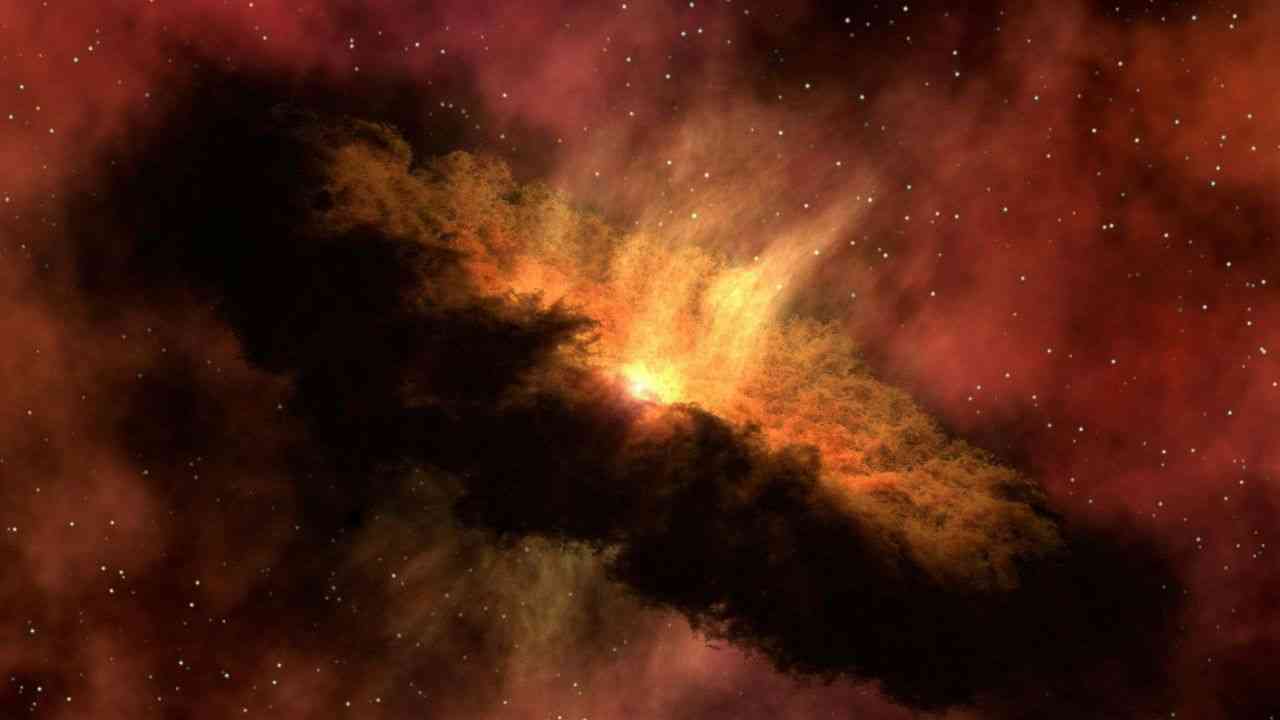
For decades, astronomers cataloged every object that caused its star to wobble as an exoplanet. However, a startling new theory suggests some of these shadows are far more extreme: primordial black holes, ghost-like remnants dating back to the very dawn of time.
Although billions of years have passed since the universe’s violent birth, echoes of that era may still haunt our modern cosmic neighborhood. Mysterious objects drift through deep space, either unnoticed or misidentified as common exoplanets. The confusion stems from a simple overlap: these entities possess the mass of a planet and exert an identical gravitational tug on their host stars. Now, researchers at Cornell University have uncovered a far more fascinating alternative to the standard planetary model.
In a recent study (currently awaiting peer review) hosted on the General Relativity and Quantum Cosmology server, researchers propose that these mystery objects could be primordial black holes. Unlike “standard” black holes formed by collapsing stars, these ancient relics emerged from the chaotic, high-pressure energy “soup” of the infant universe.
Interestingly, these newly identified candidates are roughly the size of a grapefruit, yet they pack the crushing mass of Earth or Jupiter. This identity crisis exists because our current detection methods excel at measuring mass but often fail to capture an object’s physical dimensions. As reported by Live Science, the scale of the object is the only thing that separates a distant world from a cosmic sinkhole.
Consider a planet and a black hole, both sharing the mass of Neptune. Both would cause an identical “wobble” in their parent star’s movement. To solve this, American scientists have developed a clever diagnostic tool.
The team focused on exoplanets detected via the radial velocity method (the star’s wobble) that never appeared during a “transit”—the moment an object passes in front of its star and temporarily dims its light. A transit reveals an object’s true size. If an object pulls on its star but fails to block any light during its predicted transit, we aren’t looking at a traditional planet. Instead, we are likely observing a microscopic, ultra-dense point of mass—a black hole.
Researchers already have several “prime suspects,” including Kepler-21 Ac, HD 219134 f, and Wolf 1061 d. While these objects remain invisible to our telescopes, they possess enough mass to hurl their stars into a rhythmic dance. Experts are also looking for another clue: microlensing.
Microlensing occurs when a massive object passes in front of a distant background star, acting like a magnifying glass. These brief, intense flashes of light serve as potential hideouts for ancient, dark objects that don’t emit or block light in the traditional sense.
Despite the excitement, we shouldn’t assume every “missing” planet is a relic of the Big Bang. In fact, the three candidates mentioned might simply be ordinary planets with tilted orbits, making them impossible to see from our vantage point on Earth.
However, the hunt for primordial black holes is far from over. By 2027, NASA’s Nancy Grace Roman Space Telescope will begin its mission to survey the deep sky. This advanced observatory will use microlensing to test whether any of these “missing” planets are actually planet-mass primordial black holes—ancient relics hiding in plain sight.
Read this article in Polish: Sądzili, że to planety. Ukrywały się od początków Wszechświata


A graduate of journalism and social communication at the University of Rzeszów. She has been working in the media since 2019. She has collaborated with newsrooms and copywriting agencies. She has a strong background in psychology, especially cognitive psychology. She is also interested in social issues. She specializes in scientific discoveries and research that have a direct impact on human life.


Zmień tryb na ciemny