Education
What Children Learn When They Count on an Abacus
25 September 2026





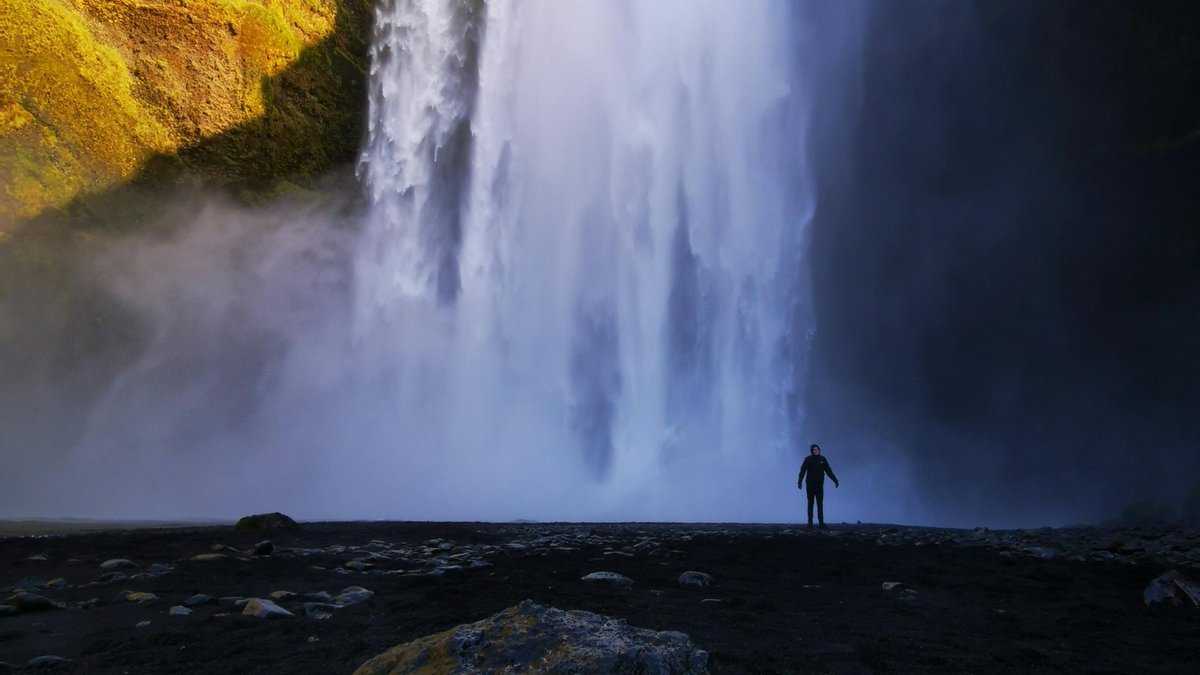
It makes no sound, tumbles over no visible cliff, and attracts no tourists. Yet, it dwarfs every other waterfall on the map. Hidden in the depths between Greenland and Iceland lies a colossus that dictates the climate of our entire planet. Scientists warn that the future of this silent giant may very well decide our own.
Imagine a waterfall three times taller than Venezuela’s Angel Falls, which stands at nearly 1,000 meters. But this giant doesn’t roar or spray mist; it remains submerged more than half a kilometer below the ocean’s surface. As it turns out, the world’s largest waterfall lies within the frigid waters of the Denmark Strait, specifically between Iceland and Greenland. It’s known as the Denmark Strait cataract (the Denmark Strait overflow). It is invisible, yet its dimensions are staggering.
In this corridor, cold, dense water from the Nordic Seas plunges into the warmer depths of the Atlantic, dropping by on the order of 2–3.5 kilometers, depending on how it is measured. It flows at an incredible rate of over 3 million cubic meters of water per second—a volume greater than the Amazon, Nile, and Mississippi rivers combined.
This underwater titan exerts a massive influence on our planet’s climate. It helps sustain deep ocean circulation that redistributes heat and nutrients across the globe. Without it, weather patterns and marine ecosystems could shift in ways we are only beginning to understand.
This incredible flow is far more than a geographical curiosity; it is a pillar of the Atlantic Meridional Overturning Circulation (AMOC). This system is responsible for the global transport of heat and vital nutrients. It is the reason Europe enjoys mild winters, Africa receives its rainfall, and plankton thrives in the oceans. However, this delicate equilibrium is now under threat.
The coast of Catalonia is a good example. A decrease in the number of days with the Tramontane [a cold, northerly wind in the Mediterranean] weakens the processes that are crucial for the climate and deep-sea ecosystems,
– says Dr. Anna Sanchez Vidal, an oceanographer quoted by the Daily Galaxy.
If the world’s largest waterfall slows down or shifts its course, the consequences could reach as far as the paths of hurricanes and the temperature distribution across Europe. This isn’t a distant, abstract problem—the changes have already begun.
The cataract in the Denmark Strait is just one piece of a much larger system that begins at the poles. It is there that sea ice creates dense masses of water that sink rapidly to the ocean floor. This process drives the global thermohaline circulation. These movements are the lifeblood of the seas; deep-sea currents carry essential substances to the surface, without which fish, plankton, and entire marine ecosystems could not survive.
The warming of the Arctic is already altering the temperature and salinity of the waters feeding this underwater cataract. The smaller the density difference between these water masses, the weaker the flow becomes. In an extreme scenario, this subaquatic giant could slow so dramatically that its stabilizing influence on ocean circulation would diminish.
The world’s largest waterfall exerts its power over the entire planet. It works silently and in total secrecy, yet it shapes the air we breathe, the food we eat, and the weather we experience. We may never see it with our own eyes, but its fate may ultimately seal our future.
Read this article in Polish: Podwodny wodospad napędza Ziemię. Co nam grozi, gdy się zatrzyma?


A Cracovian by birth, choice, and passion. He pursued radio and television journalism, eventually dedicating himself to writing for Holistic.news. By day, he is a journalist; by night, an accomplished musician, lyricist, and composer. If he's not sitting in front of a computer, he's probably playing a concert. His interests include technology, ecology, and history. He isn't afraid to tackle new topics because he believes in lifelong learning.


Zmień tryb na ciemny