Culture
A Life Spent Becoming Someone Else’s Ideal
12 October 2026





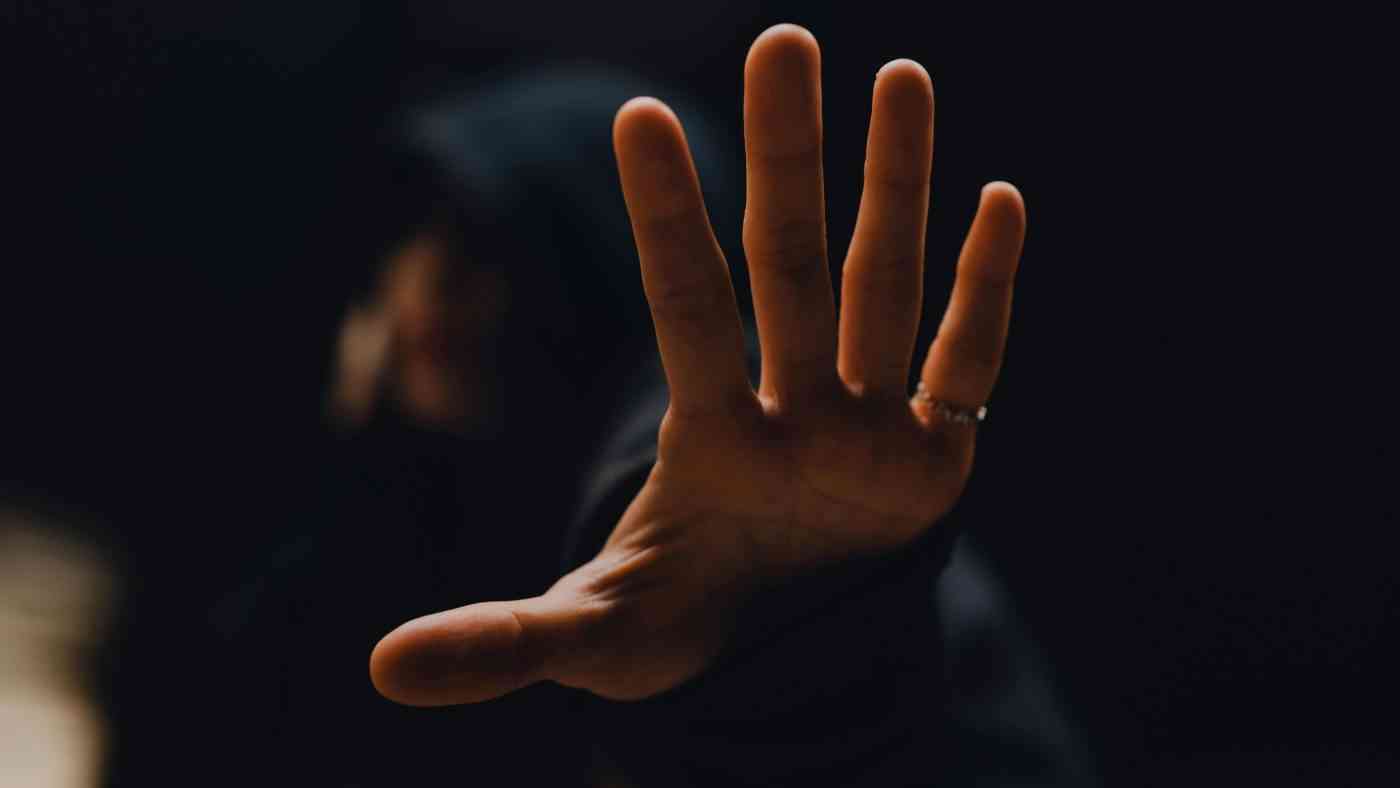
In theory, the rules seem clear: you have the right to defend yourself. Yet in practice, a single decision can determine whether you remain a victim or become a defendant. The limits of self-defense often reveal themselves only after the fact—when it is already too late.
On April 10, 2026, a 27-year-old firearms instructor fatally shot a 26-year-old man, claiming he had acted in self-defense. Prosecutors, however, charged him with homicide rather than exceeding the limits of self-defense.
For some, this is proof that the case does not qualify as self-defense at all. For others, it symbolises a state that places more trust in the aggressor than in a citizen defending against violence. The question returns once again: where, in fact, do the limits of self-defense lie? And does a law meant to protect victims sometimes turn them into the accused?
Under the Polish Criminal Code—Article 25—self-defense is defined with apparent clarity: a person does not commit an offence if they repel a direct, unlawful attack on any legally protected interest. This includes not only life, but also health, freedom, bodily integrity, and property. The key condition is that the threat must be real and ongoing. Self-defense is a right, not an obligation. The state does not demand heroism, but it allows individuals not to remain passive victims.
Yet this is only the beginning. The law also recognises the possibility of exceeding the limits of self-defense—particularly when the method of defense is “grossly disproportionate” to the danger posed. This is where doubt begins. Does defending one’s life truly justify taking the life of an attacker?
And what if the threat involves serious bodily harm, assault, or rape? Must one risk one’s own health and dignity in order to preserve the life of the aggressor? How should we judge a situation in which someone breaks into a home at night, and their intentions remain unknown? Are we allowed to assume the worst? Must we wait until the attacker raises a knife before acting?
The law, at least in part, recognises the dramatic nature of such moments. It provides that a person who exceeds the limits of self-defense under the influence of fear or agitation justified by the circumstances may not be punished at all. This is a tacit acknowledgment that a person under attack is not required to weigh values with cold precision—another’s life against one’s own safety or dignity.
In practice, however, it is the court and the prosecutor who decide whether the fear was “justified” and whether the response was proportionate.
Debates about the limits of self-defense have persisted for years. One side defends the principle of proportionality. According to this view, one cannot justifiably kill someone who did not intend to kill. If the attacker seeks only to beat, rob, or intimidate, the use of lethal force appears morally and legally indefensible.
This reasoning creates a troubling expectation: if you are not certain that your attacker intends to kill you, you should not use means that could kill them. In practice, this often amounts to asking the weaker party to endure harm—to accept violence, humiliation, or injury—so as not to violate the highest good, which is human life.
Opposing this view are those who argue that an aggressor, by initiating unlawful violence, removes themselves from the protection ordinarily granted by law and morality. In this perspective, the attacker steps outside the circle of mutual rights.
If someone attacks with a knife, is stronger, faster, and leaves me with only one realistic chance—neutralising them with a firearm—then the demand for “proportionality” begins to sound abstract, even cruel. Must I truly risk my own life because the attacker may have intended “only” to harm me?
Perhaps this is the paradox of evil. It relies on the assumption that good, constrained by its own scruples, will hesitate to act with full force.
Supporters of a broader understanding of self-defense often turn to classical liberal thinkers, including John Locke. In a key passage of the Second Treatise of Government, Locke argues that an attempt to dominate another person by force creates a “state of war” between the attacker and the victim.
One who attempts to get another man into his absolute power does thereby put himself into a state of war with him… and it is reasonable and just I should have a right to destroy that which threatens me with destruction.
Locke draws a clear distinction. The decisive factor is not the violation of property alone, but the use of violence. Where unlawful force is directed against a person, a state of war arises—and with it, the right to use even lethal means of defense.
In this sense, the question of whether one may kill an attacker who “only” intends to beat us becomes part of a much older dispute: whether an aggressor should still be treated as a protected citizen, or as someone who has already stepped outside that protection.
A well-known example of how complex these limits can be is the case of Bernhard Goetz. In 1984, Goetz shot 4 young men on a subway train in New York, convinced they were about to rob him. Having previously been seriously assaulted, he claimed he acted out of fear and in self-defense.
A jury acquitted him of the most serious charges. Yet many observers argued that he had exceeded all acceptable limits by acting without certainty that his life was in danger.
The controversy that followed closely resembles current debates elsewhere. Is a subjective sense of threat enough, or must fear meet an objective standard of reasonableness? Should the law stand with the victim who refuses to be beaten or robbed—or with the abstract protection of the aggressor’s life?
Cases like this do not settle the issue once and for all. They show instead that the answer cannot be reduced to a simple “yes” or “no.”
From a legal standpoint, each situation requires careful examination: whether the threat was real and immediate, whether the response was grossly excessive, whether the person acted under genuine fear. From a moral standpoint, it is difficult to demand that someone under attack—often weaker and unprepared—calculate, in a fraction of a second, whether their own safety is worth less than the life of the aggressor.
The law must leave space for self-defense. Otherwise, it risks becoming an ally of violence. At the same time, it cannot abandon the principle that every use of force—even in defense—demands responsibility and reflection.
Evil should not be able to rely on the passivity of good. But good, in defending itself, must also resist becoming what it seeks to oppose.
Read this article in Polish: Strach o życie nie wystarczy. Kiedy ofiara staje się oskarżonym


A Journalism and Social Communication graduate with 15 years of experience in the media industry. He has worked for titles such as "Dziennik Łódzki," "Super Express," and "Eska" radio. In parallel, he has collaborated with advertising agencies and worked as a film translator. A passionate fan of good cinema, fantasy literature, and sports. He credits his physical and mental well-being to his Samoyed, Jaskier.


Zmień tryb na ciemny