Education
What Children Learn When They Count on an Abacus
25 September 2026





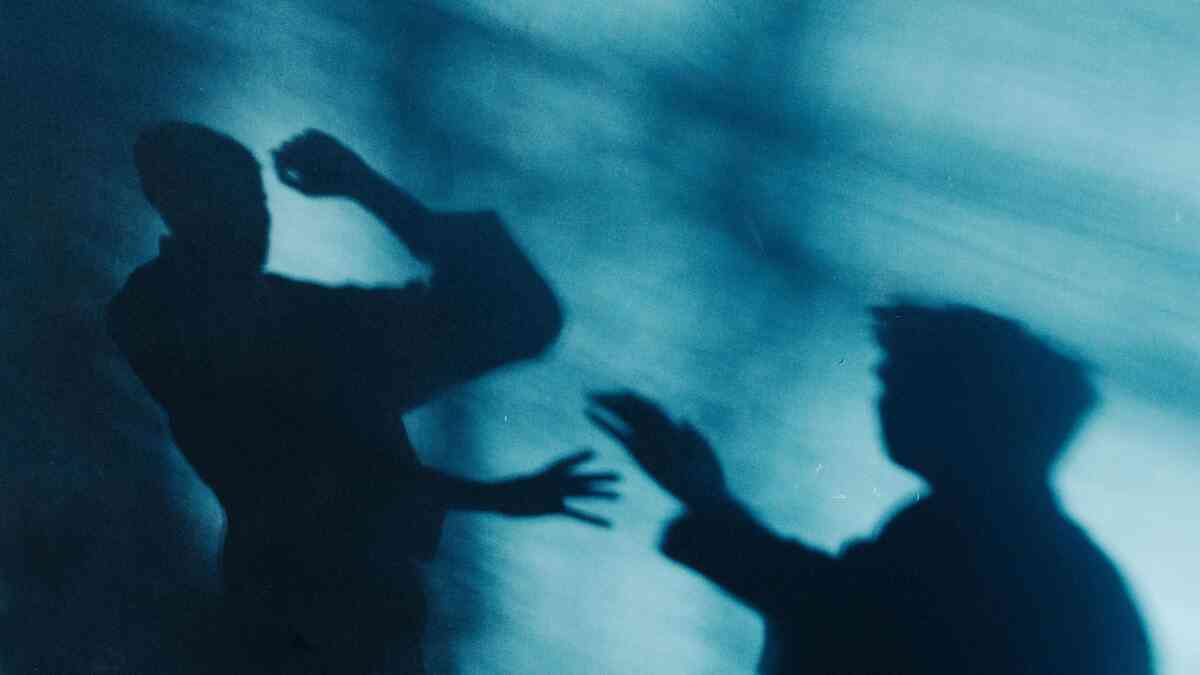
The fact that we often argue does not mean that we are condemned to kill one another. New research suggests that quarrels and violent crime arise from different sources. War and lethal violence are not inevitable expressions of human nature. That is why the claim that violence is not inevitable now deserves fresh attention.
Is the human being naturally inclined to kill, with everyday quarrels serving merely as the antechamber to war? The latest research published in Evolution Letters challenges that picture. A team from the University of Lincoln in the United Kingdom argues that low-level conflict and lethal violence follow distinct evolutionary pathways. The study was led by Professor Bonaventura Majolo in collaboration with Dr Samantha Wakes and Professor Marcello Ruta, and it analysed aggression across 100 primate taxa, including humans.
When the English philosopher Thomas Hobbes described the state of nature in Leviathan in the mid-17th century as a “war of all against all,” he created an image that shaped thinking about human beings for centuries. According to that vision, fear of violent death and constant rivalry formed our original inheritance. Only strong authority, in the form of the state, could restrain that aggression. Jean-Jacques Rousseau opposed him. The French philosopher saw the human being as naturally good and located the source of evil in civilisation and property.
For a long time, the debate moved between those 2 poles: nature or culture, an innate tendency toward evil or an original innocence corrupted by civilisation. Contemporary philosophers, however, have largely stopped asking the question in that form. It now appears that the question itself was badly framed.
The Lincoln study helps explain why. The researchers asked a crucial question: are the species that display more frequent mild, everyday aggression also the ones more likely to engage in lethal violence? They compared 5 forms of aggression across 100 free-ranging, group-living primate taxa: mild aggression within and between groups, adult killing within and between groups, and infanticide.
The conclusions are striking. As Phys.org reported in its summary of the study, the researchers found that the different forms of lethal violence, such as killing adult rivals or killing infants, showed no significant link to mild aggression. In other words, the fact that a species argues often does not mean that it kills more often. The paper itself likewise states that mild aggression is not closely linked to killing and that escalation follows more complex patterns than older models assumed.
That distinction matters enormously. If an everyday quarrel and a murder do not lie on one simple evolutionary continuum, then the old question “is the human being naturally brutal or not?” begins to lose its force. We do possess the capacity for aggression. But whether that aggression turns lethal seems to depend on something else. More specifically, it depends on the social and political conditions in which people find themselves.
This is where contemporary philosophy adds something that the classic dispute between Hobbes and Rousseau did not fully capture. The central question is not simply what lies “inside us,” but how we build relationships with one another.
Judith Butler, the American philosopher, argues that violence emerges from the way we decide who counts as “one of us.” Once we deny someone full humanity, once we place them beyond the circle of those whose suffering matters, almost anything becomes possible. That helps explain why the worst crimes do not erupt out of ordinary arguments. They appear where society divides itself into “us” and “them.” The Lincoln study supports that distinction indirectly: lethal violence appears to require conditions different from those underlying routine conflict. One of those conditions is often the dehumanisation of the opponent.
René Girard, the French anthropologist and philosopher, pointed to the mechanism of the scapegoat. It is a ritual of sorts, one that societies have long used to discharge internal tension. When a community becomes deeply conflicted, it may restore a sense of unity by selecting a victim to blame: a minority, a neighbour, a dissenter. Collective frustration then settles on that chosen target, and order returns at the excluded person’s expense.
Finally, Byung-Chul Han, the Korean-born philosopher based in Germany, reminds us that contemporary violence often takes a very different form from the one Hobbes or Rousseau described. Today, violence does not always work through physical force and fear of death. It may also operate through pressure, loneliness, overload and the absence of support. This too is violence, even if it is harder to measure in studies of primates.
All these approaches share one point. They move away from the old question about “human nature.” They do not search our evolutionary inheritance for one simple answer to why we kill. Instead, they ask which institutions, divisions and psychological mechanisms make some conflicts fade while others become tragedies.
The Lincoln study does not settle those philosophical debates. But it gives them a powerful argument. If the researchers are right that mild aggression and lethal violence are evolutionarily distinct, then we are not condemned to inevitable escalation. War is not simply a quarrel that slipped out of control. It is something that requires special conditions: dehumanisation, impunity and institutional breakdown. And if it requires conditions, then it can also be prevented.
As Professor Majolo noted in comments reported by Phys.org, understanding the evolutionary roots of violence matters not only for biology, but for the whole way we think about human behaviour. A philosopher might add: it matters above all when it frees us from the old opposition between Hobbes and Rousseau and redirects our attention where it belongs — toward the institutions that make peace possible, and toward the conditions that can turn calm into massacre.
Read this article in Polish: Nie jesteśmy skazani na przemoc. Nowe badania podważają mit

A graduate of Journalism and Social Communication at the University of Warsaw (UW), specializing in culture, literature, and education. Professionally, they work with words: reading, writing, translating, and editing. Occasionally, they also speak publicly. Personally, they are a family man/woman (head of the family). They have professional experience working in media, public administration, PR, and communication, where their focus included educational and cultural projects. In their free time, they enjoy good literature and loud music (strong sounds).


Zmień tryb na ciemny