Education
What Children Learn When They Count on an Abacus
25 September 2026





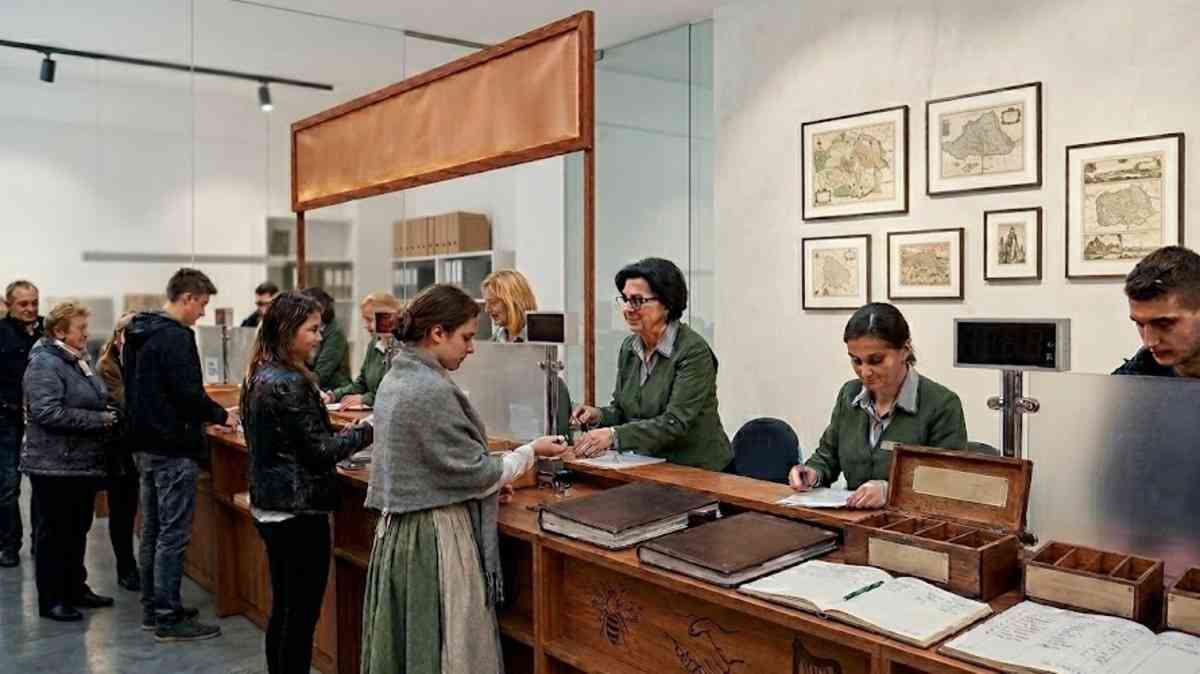
When we give someone alms, what exactly happens? We give away part of what we have. But we also recognise another human being in that act. We see their need. We assume that we can help without expecting anything in return. That is how a relationship begins. Once coercion enters the picture, generosity and social solidarity start to lose their human meaning.
In his book Abundance, Generosity, and the State, the German economist Jörg Guido Hülsmann asks a simple but unsettling question: what happens to that gesture when help stops being voluntary? What happens when almsgiving becomes a benefit, and care for one’s neighbour turns into a procedure?
A gift is voluntary by definition. If someone gives something away under threat of punishment, we cannot call it generosity. And yet contemporary language increasingly blurs that distinction. We describe taxes as a “contribution to the common good”, and public benefits as “help for those in need”. Hülsmann argues that these belong to two entirely different orders. In one, I give because I want to. In the other, I give because I must.
Why does that distinction matter? Because it concerns the very meaning of goodness. Can someone be forced to be good? And if so, is what we do under compulsion still truly good? Hülsmann does not offer a direct answer, but he clearly leads the reader toward one conclusion: once goodness becomes procedure, it loses its essence.
Hülsmann points to 19th-century England. For centuries, help for the poor had depended on local initiatives: parishes, guilds and neighbourly collections. In 1834, Parliament commissioned an inquiry into the public support system then in place, known as the Poor Laws. The resulting report revealed something surprising. The more state aid expanded, the less authentic solidarity remained. The system did not simply support those in need. It also demoralised them, weakened their motivation to remain self-reliant and eroded social bonds.
On the basis of those findings, the Poor Laws were reformed and public assistance was sharply reduced. Then something happened that today may seem paradoxical. As the state withdrew, private initiative in England began to flourish. Thousands of mutual-aid associations appeared — the Friendly Societies — bringing together millions of members. These were ordinary families who set aside money together in case of illness, death or unemployment. When someone fell ill, they received support. When someone died, their family was surrounded with care. The system worked because it rested on trust, reciprocity and shared responsibility.
Hülsmann knows that private aid was not perfect. But he argues that its weakness was not what caused its decline. What truly destroyed it was the expansion of the welfare state in the 20th century. Today, of the 27,000 mutual-aid societies that once existed, only around 200 remain. The rest were displaced by the public system, by state and local-government structures. That did not happen because the intentions of its architects were evil. It happened because the system altered the very foundations of human relations. Wherever the state takes over care, people gradually stop taking care of one another. And again, not because they become worse, but because the space in which they might act disappears.
At heart, Hülsmann is asking whether goodness that is commanded can still be called good. He is also asking whether it is worth paying for justice with a price that may prove too high — the loss of freedom to be for one another something more than petitioners and officials. That is why the question of generosity and social solidarity remains so important. Once the system replaces the gesture, both begin to fade.
Read this article in Polish: Gdy dobro staje się procedurą. Tak zanika hojność i solidarność


A graduate of Journalism and Social Communication at the University of Warsaw (UW), specializing in culture, literature, and education. Professionally, they work with words: reading, writing, translating, and editing. Occasionally, they also speak publicly. Personally, they are a family man/woman (head of the family). They have professional experience working in media, public administration, PR, and communication, where their focus included educational and cultural projects. In their free time, they enjoy good literature and loud music (strong sounds).


Zmień tryb na ciemny