Culture
A Life Spent Becoming Someone Else’s Ideal
12 October 2026





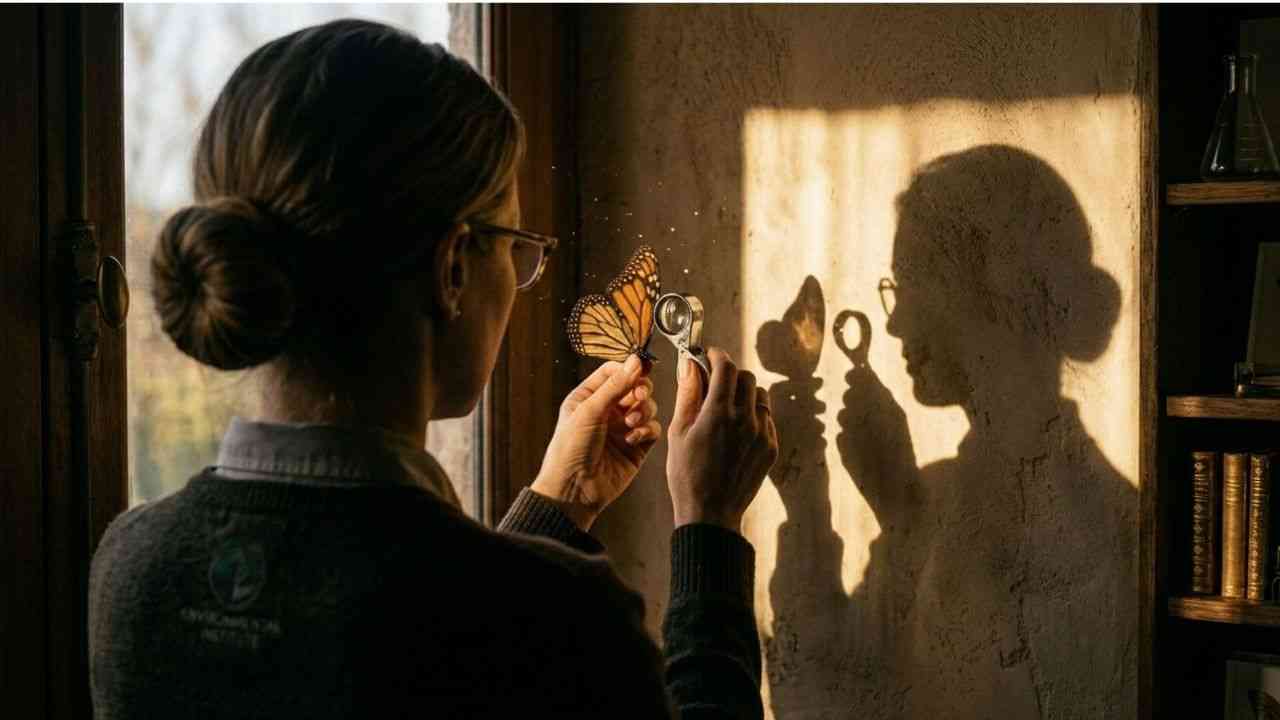
Butterflies and moths appear to be among the most fragile creatures on Earth, yet their wings have just betrayed something fundamental about life itself. New research demonstrates that evolution can return to the exact same genetic solutions even after 120 million years, shifting how we conceptualize the predictability of evolutionary biology.
We often conceptualize evolution as a grand chaos driven by random mutations, blind trials of nature, and species that survive purely by chance. However, recent studies on butterflies and moths reveal a more complex narrative. Nature possesses the capacity to recur to identical genetic mechanisms across vast epochs.
The wings of lepidopterans sometimes look as though nature painted them without a blueprint—a dash of color, a few streaks, a bright spot, a dark border. Yet researchers from the University of York, the Wellcome Sanger Institute, and other institutions investigated whether a deeper mechanism underpins this apparent randomness. The answer proved more compelling than the wing patterns themselves: evolution has been utilizing this specific strategy for millions of years.
An analysis of insects from South American rainforests—specifically one diurnal moth and seven distantly related butterfly lineages—led to this discovery. Despite their significant evolutionary distance, these species share strikingly similar wing coloration. This phenomenon is not merely ornamental; it serves as an explicit warning signal to avian predators that these insects are toxic and unpalatable.
At first glance, the similarity of these wing patterns might seem like a mere biological curiosity. The truly groundbreaking discovery, however, lay hidden not in the pigments but within the DNA. Deep in the genetic code, scientists detected the footprint of a mechanism that allowed disparate insects to achieve similar coloration using nearly identical biological infrastructure.
Furthermore, evolution did not always alter the genes themselves. Instead, it frequently modified their expression. To put it simply, no new mechanism emerged; nature merely deployed an architecture that had existed for millions of years, subtly shifting how it operates.
The investigation into moth evolution exposed an especially intriguing structural anomaly: a large segment of DNA was entirely inverted. The exact same genetic configuration appeared independently in one of the butterfly lineages. Professor Kanchon Dasmahapatra, one of the authors of the study, explained the significance of this finding in a publication by the University of York:
By analyzing seven butterfly lineages and one diurnal moth species, we demonstrate that evolution can be surprisingly predictable, and that butterflies and moths have repeatedly exploited the exact same ‘genetic tricks’ to obtain similar color patterns since the era of the dinosaurs.
Does this imply that the entire evolutionary process is deterministic, operating according to a few well-worn templates repeated over millennia? Not at all. The conclusions published in the scientific journal PLoS Biology reaffirm that evolution retains a powerful element of chance. Diverse mutations arise randomly, and only their subsequent confrontation with the environment determines which traits grant a species survival.
The core insight lies elsewhere. The researchers demonstrated that when nature faces an environmental challenge it has previously solved, the evolutionary process can retrieve ancient, highly effective blueprints. Consequently, as observed in this case, disparate species find a clear adaptive advantage in sharing similar warning colors. It remains crucial to emphasize, however, that these conclusions rest on the study of a specific group of insects. Professor Joana Meier elaborated on this in an interview for the University of York website:
“We show here that these warning colors are particularly ‘optimal’ because it appears relatively easy to evolve the same color patterns thanks to a highly conserved genetic substrate spanning 120 million years.”
These evolutionary insights offer valuable guidance for experts attempting to forecast how different species will respond to climate change and habitat transformation. If evolution tends to rely on a predictable repertoire of solutions under specific pressures, future biological adaptations may prove far more foreseeable than science previously assumed, fundamentally altering our understanding of the predictability of evolutionary biology.
Read this article in Polish: Czy ewolucję da się przewidzieć? Motyle ujawniły stary trik natury


A graduate of journalism and social communication at the University of Rzeszów. She has been working in the media since 2019. She has collaborated with newsrooms and copywriting agencies. She has a strong background in psychology, especially cognitive psychology. She is also interested in social issues. She specializes in scientific discoveries and research that have a direct impact on human life.



Zmień tryb na ciemny