Science
Before There Are Planets, There Is Dust
16 October 2026





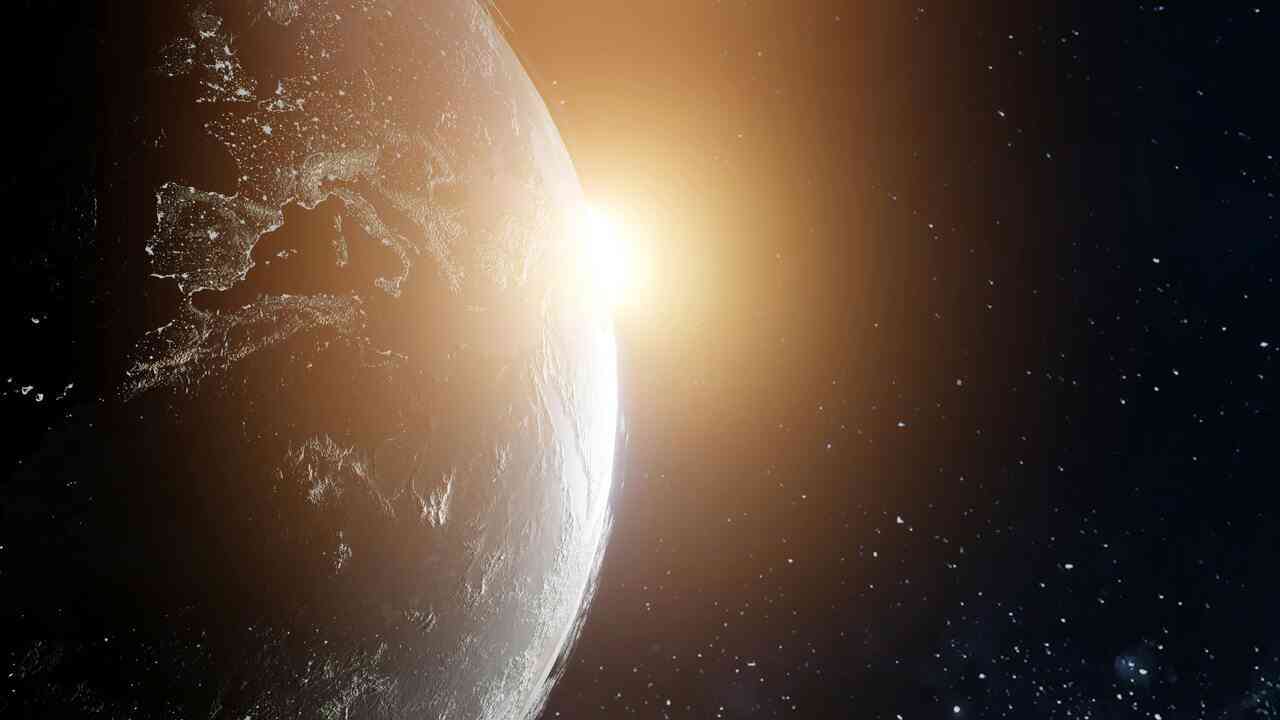
Perhaps the cosmos is not empty. Perhaps life in the universe exists and yet remains invisible to us. The trouble is that each of these possibilities is unsettling in its own way.
To understand the argument that follows, it helps to begin with a few basic astronomical facts:
What follows from these numbers, approximate though they are? One thing above all: the cosmos is vast beyond intuition and unimaginably old. We still do not know the full size of the whole universe, but the observable universe is commonly estimated at roughly 90 billion light-years in diameter. And we know quite well how large our own small galaxy is.
Light needs about 100,000 years to cross the Milky Way from one end to the other. By contrast, our current spacecraft move through space at a pace so slow, in cosmic terms, that interstellar travel remains almost absurdly difficult.
Once we count the galaxies and the stars, and assume that some of those stars have planets and some of those planets offer conditions suitable for organic life, the conclusion seems obvious: the cosmos should be inhabited by an enormous, perhaps staggering number of civilisations, including some far more advanced than our own.
And yet we cannot prove the existence of even one.
Modern science now allows us not only to discover planets, but also to search for so-called biosignatures and technosignatures — clues that life or advanced civilisation may exist on a given world. NASA’s exoplanet resources now describe more than 6,000 confirmed exoplanets, with archive updates in 2026 placing the count at 6,147. And still we have confirmed neither alien life nor alien civilisation.
Of course, we are only at the beginning of the journey. There are likely billions upon billions of planets, and we have detected only a tiny fraction of them. The ones we find most easily are often worlds far less hospitable than Earth, since Earth-like planets are harder to detect.
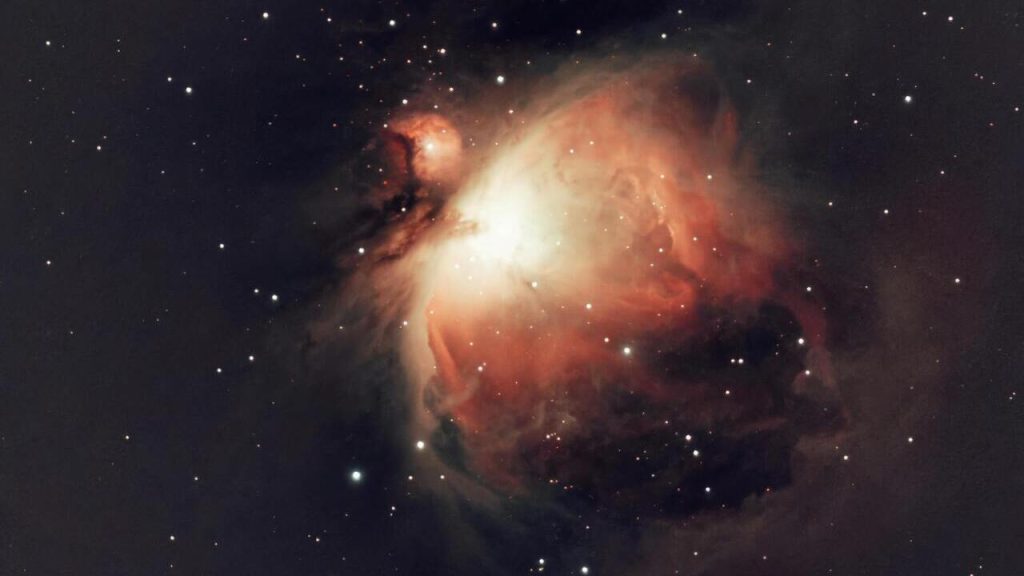
This is the question famously associated with Enrico Fermi: if the universe is so large and so old, and if even simple statistical reasoning suggests that intelligent life should be widespread, then why is the cosmos still silent?
Scientists have proposed many answers.
One of the most memorable is the dark forest theory, according to which civilisations deliberately hide because they fear destruction by others more advanced than themselves. The idea is gripping, but it requires us to believe in a near-universal conspiracy of silence across the cosmos, born of fear and sustained with extraordinary consistency. That would be not only strange, but statistically hard to credit.
Another possibility says that civilisations destroy themselves before they become truly advanced. But again, this would mean assuming that every civilisation carries within it the same drive toward self-annihilation before it manages to spread beyond its home world. That, too, would be a curiously repetitive fate.
There is also the possibility of a hyper-advanced civilisation that eliminates all competitors. But could any civilisation really wipe out every rival not only in our galaxy, but across the whole universe? To do so, it would need a level of development so far beyond ours that it would approach the godlike.
Another theory proposes that alien civilisations exist, but we are unable to recognise them because they are radically unlike us. Related to that is the cosmic zoo hypothesis, the idea that we have been deliberately isolated so as not to disturb our natural development, while more advanced beings quietly observe us.
If we lived on a planet that had formed soon after the birth of the universe, we might say: of course we are alone, the others simply have not had time to emerge. But Earth is young.
There are planets older than Earth by 1 billion, 2 billion, even much more. And our own technical civilisation is barely more than a blink: radio has existed for less than 150 years, and spaceflight for only about 70 years.
Do we really believe that, at this rate of change, we would not achieve some enormous technological breakthrough in a million years — a period that is trivial on the cosmic scale? If so, why has no one else done so already? Why has no civilisation born on a world older than Earth managed to leave a clearer trace?
Of course, we can always claim that we are a cosmic exception — not merely in the biological sense, but in a mystical one. God created rational beings only once, and that was the end of it.
But then another question follows: why create those billions upon billions of other stars, most of which we cannot even see?
In recent years, the simulation hypothesis has gained renewed popularity: perhaps we do not exist physically at all, but as part of an immensely advanced computational construct created by some superior civilisation. In that case, the answer to the question “Why is the cosmos empty?” becomes almost laughably simple: because the programmers never added anything else.
The idea appeared in science fiction long before it became fashionable in public debate, but it remains only one speculation among many.
The possibility that speaks to me most strongly is simpler. Intelligent life in the universe may exist elsewhere, but nowhere has it yet reached a level that allows contact with us. The universe may simply be too large, and advanced civilisations too sparse, for contact to come easily. At the same time, our own technical means remain far too primitive to detect the faint signs of alien societies.
And it seems entirely possible to me that some civilisations may have developed a form of intelligence utterly unlike our own — non-technical, contemplative, uninterested in engineering or space travel. Something like octopus-philosophers, brooding in an ocean over the mysteries of existence and communicating telepathically among themselves. When we finally reach them, perhaps they will teach us something. But they may never have felt the slightest interest in travelling anywhere at all.
Jacek Piekara
Read this article in Polish: „A może nikogo nie ma?” Jacek Piekara o samotności wśród gwiazd


Jacek Piekara: One of Poland's most popular fantasy writers, a journalist, and a columnist. He is the author of the widely acclaimed "Inquisitor Series" (Cykl Inkwizytorski), dozens of books, and numerous short stories. Piekara has also contributed to specialized and popular press, including the magazines Click! and Gambler. In addition to literature, he writes scenarios for computer games and works as a publicist.


Zmień tryb na ciemny