Science
The Uneven Geography of Compassion in Disaster Reporting
18 August 2026





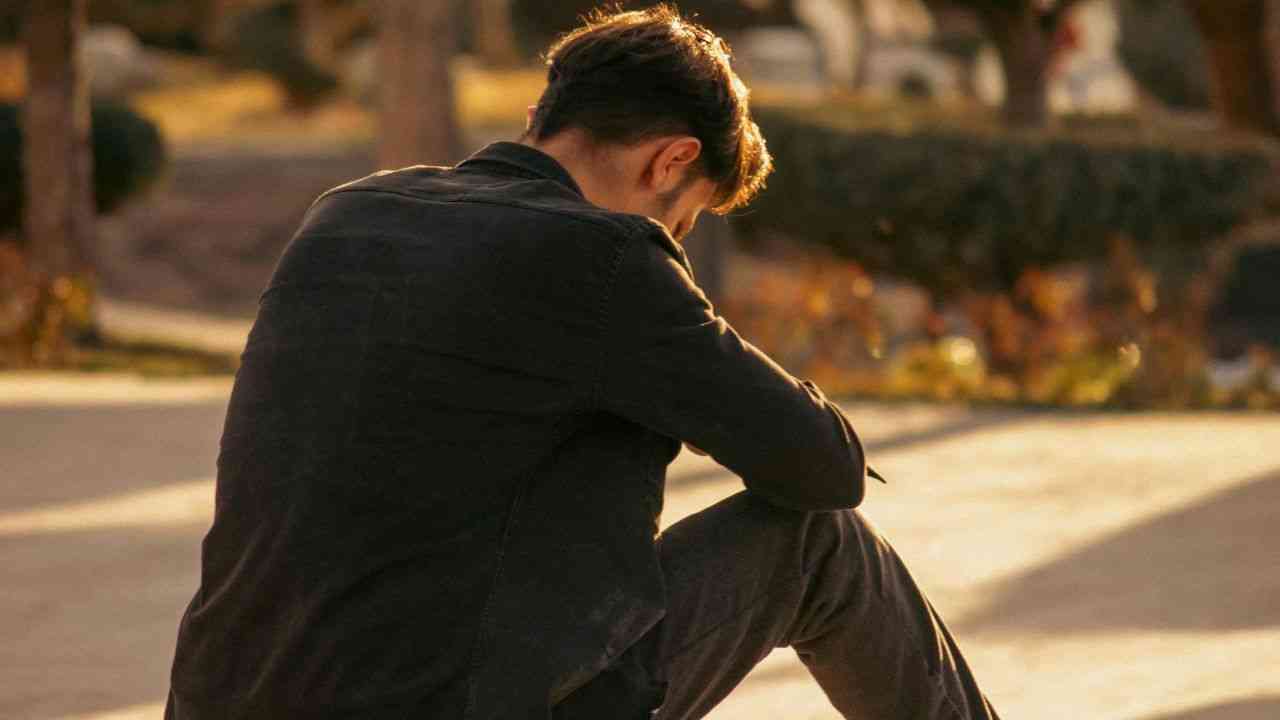
You have work, stability, and a life that ought to feel like happiness. And yet something fails to hold. More and more people reach that point and do something radical: they leave. So where to find hope when even a good life no longer seems able to bear its own weight?
Imagine a world in which everything works as it should. No wars, no hunger, no climate catastrophe. People live in balance with nature, and technology remains deliberately restrained. Even then, something unsettles you. At times it appears as a quiet restlessness. At others, as the suffocating rhythm of a bureaucratic life in which documents begin to matter more than people. Eventually, a question emerges: what if life could be otherwise?
4 years ago, The Guardian published an essay that resonated widely in Britain. Laura Barton framed it through what she called the Great Resignation. At a certain point, she herself left a prestigious newspaper job, separated from her husband, walked away from a beautiful home, and started over.
She did not limit herself to her own story. In that literary essay, she also traced the real lives of people who had abandoned the so-called good life: a career, a home, a marriage, stability. One of them, for instance, was a creative director who became a charcoal burner. They walked away not because they lacked comfort, but because they felt a growing emptiness and a loss of meaning.
As she writes in The Guardian:
For many years I tried to live in a way that made sense to others. From a prestigious university straight into a prestigious newspaper. I married young, to a man I had been with since I was 23. (…) All my life I tried very hard not to make a single mistake. And yet, inside, I felt permanently overwhelmed.
That confession cuts deeper than any statistic. It exposes the tension between a life that appears coherent from the outside and one that quietly collapses within.
This question—about hope in its smallest, almost invisible form—runs through 2 remarkable books. In The House in the Cerulean Sea and A Psalm for the Wild-Built, neither T.J. Klune nor Becky Chambers turns to spectacle or catastrophe. Instead, both suggest that hope works from within: quietly, almost imperceptibly, yet with enough force to alter the direction of a life.
Chambers published her novella during the pandemic, at a moment when the need for closeness felt particularly acute. The story unfolds on Panga, where robots once gained consciousness and then chose to withdraw from human society. At its centre stands a non-binary monk who spends their days serving tea and listening to others.
Outwardly, that life appears calm and ordered. Beneath the surface, however, something remains unsettled. A longing persists—for a world that no longer exists. In time, that longing leads the monk to break a taboo and enter the wilderness, where they encounter a robot—the first in a very long time to initiate contact with a human being.
What follows takes the form of a quiet philosophical exchange. The robot suggests that life does not require a grand purpose to justify itself. Existence may be enough, provided it retains the capacity for wonder. After years spent trying to be useful, the monk begins to question whether usefulness should define a life at all.
Hope appears here in a modest form. It does not promise transformation on a grand scale. Instead, it offers just enough movement to shift the direction of one person’s path.
A different, though equally quiet, form of hope shapes The House in the Cerulean Sea. At its centre stands Linus Baker, a pedantic and solitary caseworker responsible for overseeing orphanages for magical children. One day he receives an unusual assignment: to assess whether an orphanage for 6 children on Marsyas Island poses a threat to the world.
What he encounters resists bureaucratic language. The island is home to children with extraordinary abilities and to their guardian, a man who, despite his own difficult past, raises them with patience and care.
At first, Linus observes from a distance. Gradually, however, his perception shifts. The inhabitants of the island stop appearing as cases to be evaluated and begin to reveal themselves as people. That change leads him to write a report that no longer aligns with institutional expectations. In the end, he leaves his job and returns to the island—the first place that feels like a true home.
Both books revolve around a similar insight: hope does not arrive as revolution. It begins in a fracture. One can see it in the monk’s longing and in Linus’s quiet, destabilising question: what if?
Initially, that movement unfolds inwardly. Over time, however, it reshapes how a person relates to others.
Chambers suggests that meaning cannot be administered, even in the most orderly world. It must be discovered—often beginning with a renewed capacity for wonder. Klune, in turn, shows that systems built on control prove unexpectedly fragile when confronted with empathy.
In both narratives, hope resembles a small stone dropped into deep water. The gesture itself seems insignificant. Yet the ripples extend farther than expected. Nothing changes in a dramatic way. People change first—and through them, the world begins to shift.
The question therefore returns in a quieter, more demanding form: where does one find hope, and how does one change a life that already appears complete?
A beginning may lie in abandoning the illusion that productivity, usefulness, and obedience are sufficient. Something shifts when one allows longing to surface—whether for something lost, something unrealised, or something never experienced at all. Longing does not provide clear answers. It does not offer a finished path.
Instead, it creates a small opening.
From that opening, a decision becomes possible—not fully formed, not guaranteed, but real. Movement begins there, without certainty, without resolution, and without the reassurance that everything will make sense in the end.
Hope, in this sense, is not a solution. It is a direction.
And sometimes, that is enough to change everything.
Read this article in Polish: Porzucili „dobre życie”. Dlaczego to przestaje wystarczać


A graduate of journalism and social communication at the University of Rzeszów. She has been working in the media since 2019. She has collaborated with newsrooms and copywriting agencies. She has a strong background in psychology, especially cognitive psychology. She is also interested in social issues. She specializes in scientific discoveries and research that have a direct impact on human life.
Zmień tryb na ciemny