Culture
A Life Spent Becoming Someone Else’s Ideal
12 October 2026





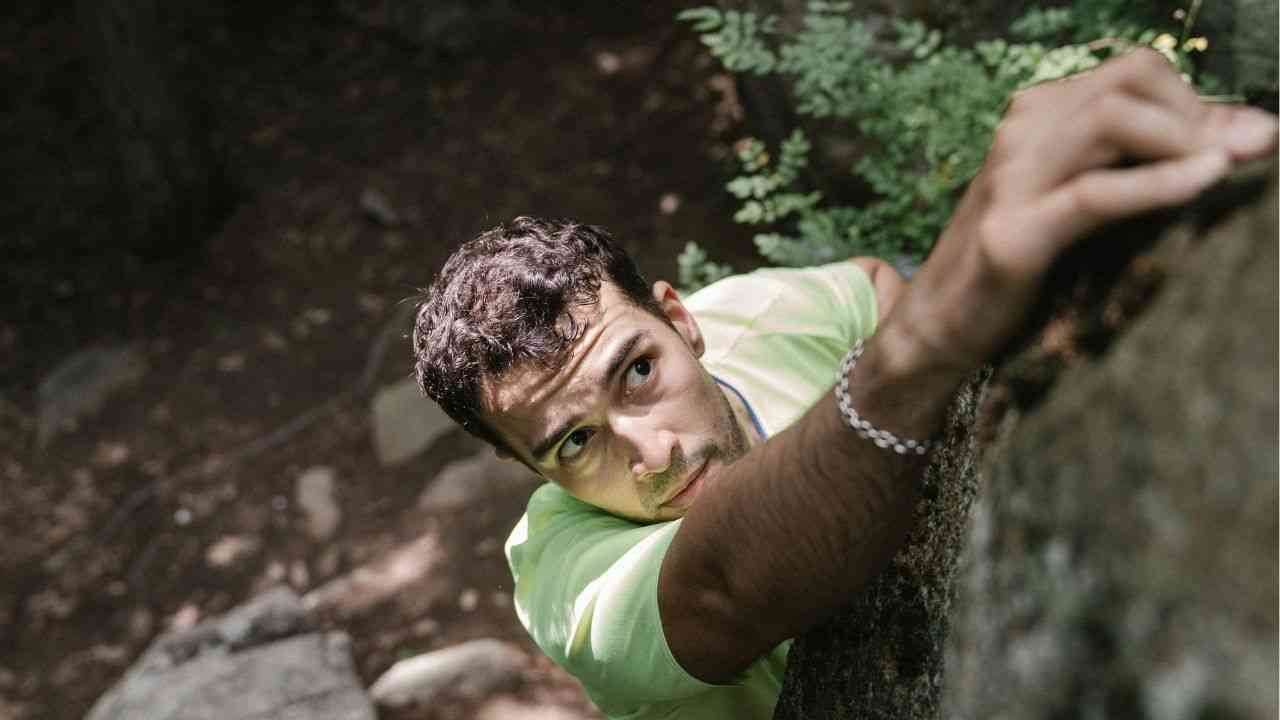
Overcoming limitations is not a single moment but a process. Weakness arrives slowly, sometimes unnoticed. The real question is not whether we face limits—but what we do when we do.
At the age of 21, he heard a diagnosis that felt like a verdict: amyotrophic lateral sclerosis. The prognosis was brutal. Doctors spoke of only a few years. He lived for more than half a century. Though his life was marked by illness and suffering, he did not give up. He built a family, raised three children, and, above all, redefined where the limits of human potential truly lie. He also proved, through his scientific work, that pain does not have to break a person. It is still possible to achieve extraordinary things—if one chooses not to surrender.
He showed that black holes are not entirely black and can emit radiation. He formulated the principle that the total surface area of a black hole’s event horizon never decreases, even during collisions. He contributed to our understanding of how the universe may have begun.
Stephen Hawking was both an outstanding scientist and one of the most recognisable people living with ALS. He survived far longer than anyone had expected. His life became a powerful example of overcoming limitations.
Beyond physics, he also wrote extensively—including a deeply personal autobiography, My Brief History. In it, he described his childhood, education, the moment of diagnosis, and the long years of balancing illness, fatherhood, and scientific work. It is one of his most intimate works—revealing the man behind the intellect.
There are many such stories. People with disabilities often achieve what others consider impossible. They enter demanding fields, take on challenges many would not even consider. Paralympic athletes are a striking example.
Poland has a strong national team in this field. At the Tokyo 2020 Games alone, Polish athletes won dozens of medals. Together, they show that a meaningful, fulfilling life is possible despite illness. Physical limitations do not have to mean the end of ambition.
Consider Jessica Cox. Born without arms, she became a licensed pilot, flying a plane with her feet. She drives a car. She trains in martial arts. Every day, she overcomes limitations that would seem insurmountable to others.
Perhaps this is the essence of it all. Not the spectacular achievements. Not the famous names. But a simple sentence, spoken quietly: I will try again. Despite pain. Despite doubt. Despite limits. It is easy to admire extraordinary lives from a distance. But their source is often surprisingly simple: the repeated decision not to give up.
Overcoming limitations does not always mean defeating them. Sometimes it means continuing despite them—allowing the mind to go further than the body ever could. And that, perhaps, is where true strength begins.
Read this article in Polish: Człowiek jest słabszy, niż myśli. Ale umysł idzie dalej niż ciało

A graduate of journalism and social communication at the University of Rzeszów. She has been working in the media since 2019. She has collaborated with newsrooms and copywriting agencies. She has a strong background in psychology, especially cognitive psychology. She is also interested in social issues. She specializes in scientific discoveries and research that have a direct impact on human life.


Zmień tryb na ciemny