Truth & Goodness
Played for Money. Gambling Addiction Was Taking a Life
13 September 2026





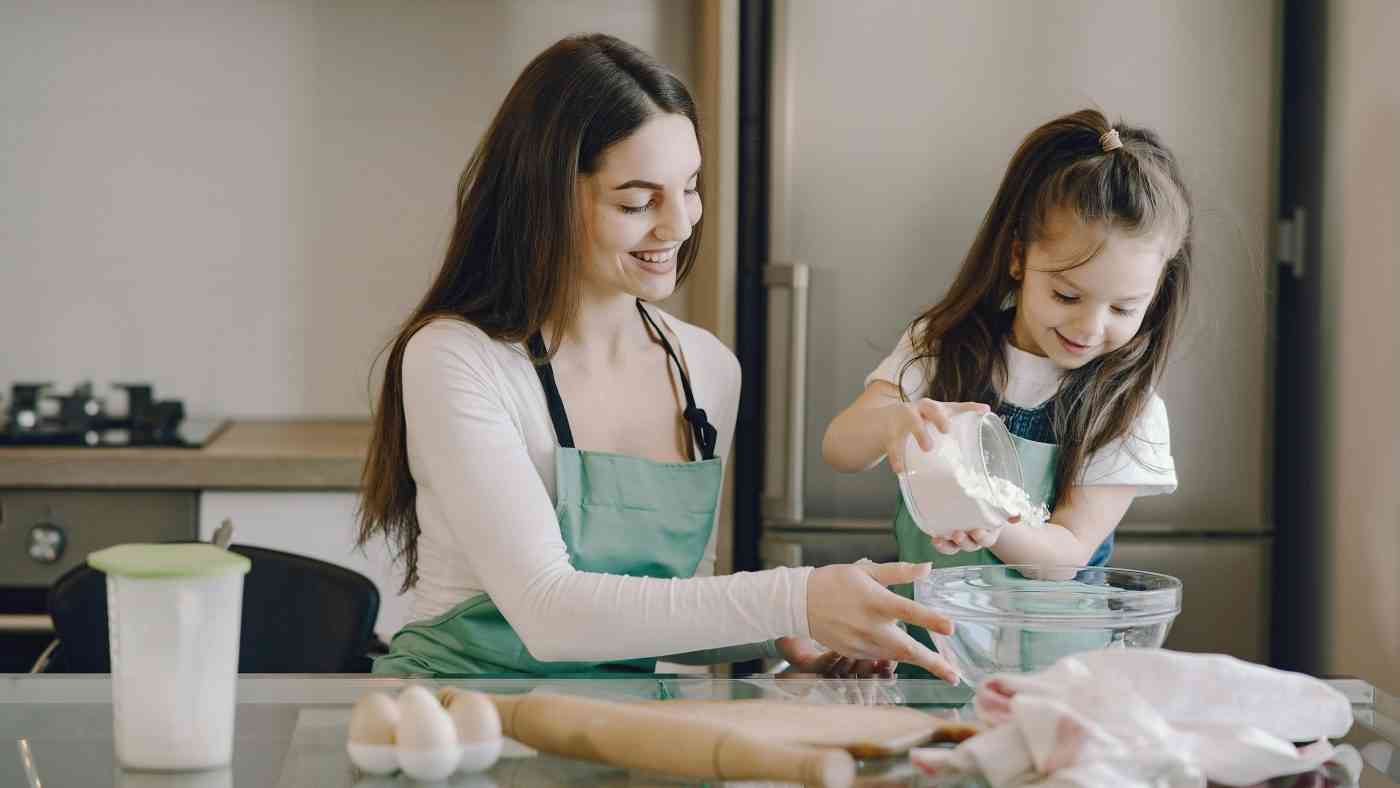
Childhood is not only an age. It is also a certain posture toward the world: spontaneity, curiosity, the ability to delight in small things. Children carry something that adults often lose along the way: the authentic joy of helping. It is easy to spoil that joy when we turn it into an obligation. Can we preserve in ourselves what is best in children?
6-year-old Marry runs into the kitchen on her own when she sees her grandmother carrying heavy bags of groceries. She stretches out her little hands, smiles widely, and helps unpack the food. She is radiant. The next day, the same situation repeats itself, but this time her mother manages to say first: “Marry, help Grandma!” The girl follows the instruction, but the enthusiasm disappears. Why does something that brought her joy yesterday feel like a duty today?
Researchers have found that the joy of helping in children clearly weakens the moment a good deed stops being their spontaneous choice and becomes a response to someone else’s expectation. International studies conducted among 686 children aged 6–11 from 5 countries showed that children understand very well that a request for help can “spoil” the pleasure of doing good.
The researchers drew on self-determination theory, which says that people need 3 things: a sense of autonomy, meaning that they decide for themselves how to act; competence, meaning that they feel able to perform the task; and connection with others. When autonomy comes under threat — when we feel that we are acting under pressure — our inner motivation weakens. The joy of helping stops being joy, because goodness turns into a task to complete, another item on a list of obligations.
Children are born with a natural reflex of empathy and a desire to cooperate. Yet adult culture quickly teaches them that helping is not a spontaneous movement of the heart, but a moral duty. When parents constantly remind a child, “You should help Grandma,” “You have to share with your brother,” or “Why aren’t you helping?”, the child begins to associate goodness not with the pleasure that comes from doing something kind for others, but with avoiding guilt and the feeling of being “bad.”
The command to help turns a space of freedom — “I can help” — into the burden of obligation: “I must help, or else I am a bad person.” People, and especially children, engage most willingly in actions they choose for themselves. When motivation comes from within, we feel satisfaction in the action itself, not in a reward or in avoiding punishment. But when motivation comes from the outside — when we act because “one must,” “one should,” or “someone told us to” — joy diminishes, and helping becomes a mechanical reflex.
True goodness cannot exist without freedom. A good deed performed under compulsion, even moral compulsion, loses its ethical core. It becomes merely the execution of an order. Emmanuel Kant argued that a moral act must result from an autonomous decision of reason, not from external pressure. In this context, constant requests and encouragements to help do not develop moral character. They produce well-conditioned reflexes instead: a pattern of learned behavior in which the child, and later the adult, does “good” because a cultural script demands it, not because the heart does.
Research confirms that supporting autonomy — creating a space in which children can decide for themselves how to act — strengthens their inner motivation toward prosocial behavior. When adults offer choice instead of command, when they encourage rather than force, children internalize the value of helping as part of their own identity, not as an external duty. The conclusion is simple: the less pressure, the more authentic empathy. The more freedom there is in doing good, the greater the joy of helping.
Contemporary educational and upbringing systems often rely on external mechanisms of motivation. We receive rewards for “good behavior,” points for volunteering, certificates for taking part in charity campaigns. On the surface, this sounds reasonable. After all, children need to learn empathy and responsibility. The problem is that this approach often produces the opposite effect. Instead of developing an inner desire to help, it teaches children to play the game of social expectations.
Helping becomes a currency, a way to gain approval, rather than something valuable in itself. If a child helps because they will receive a sticker, they feel pleased about the reward, not about the act of helping. When the reward disappears, the motivation disappears with it. If a child helps because “it is the done thing,” because “Mom is watching,” or because “otherwise people will think I’m selfish,” they learn to hide the absence of authentic willingness behind a facade of goodness. They may become perfectly polite — and at the same time indifferent to the real needs of others.
Children intuitively know something adults often forget: goodness that is not free stops being goodness. Perhaps, then, instead of correcting children, we should give them the space in which they can notice a need for themselves and respond to it freely. That means giving up excessive control and moral blackmail in favor of modeling empathy through our own example.
It also means allowing a child, at times, not to help. Only where there is a real possibility of refusal is there also a real possibility of choosing the good. When we respect autonomy, children develop inner moral compasses that work not because “one must,” but because they want them to.
Perhaps the key to raising empathetic people is not constantly reminding them that they should be good. Perhaps what matters more is protecting their innate, spontaneous joy in contact with another person. Zosia, helping her grandmother unpack the groceries, is happiest when no one asks her to do it. When she notices the need herself and responds spontaneously. Perhaps it is enough not to kill what is already there in children. And not to ruin the joy of helping by turning it into an obligation.
Read this article in Polish: Dzieci mają cechę, którą dorośli gubią. I mogą nas tego nauczyć


A Journalism and Social Communication graduate with 15 years of experience in the media industry. He has worked for titles such as "Dziennik Łódzki," "Super Express," and "Eska" radio. In parallel, he has collaborated with advertising agencies and worked as a film translator. A passionate fan of good cinema, fantasy literature, and sports. He credits his physical and mental well-being to his Samoyed, Jaskier.



Zmień tryb na ciemny