Science
Before There Are Planets, There Is Dust
16 October 2026





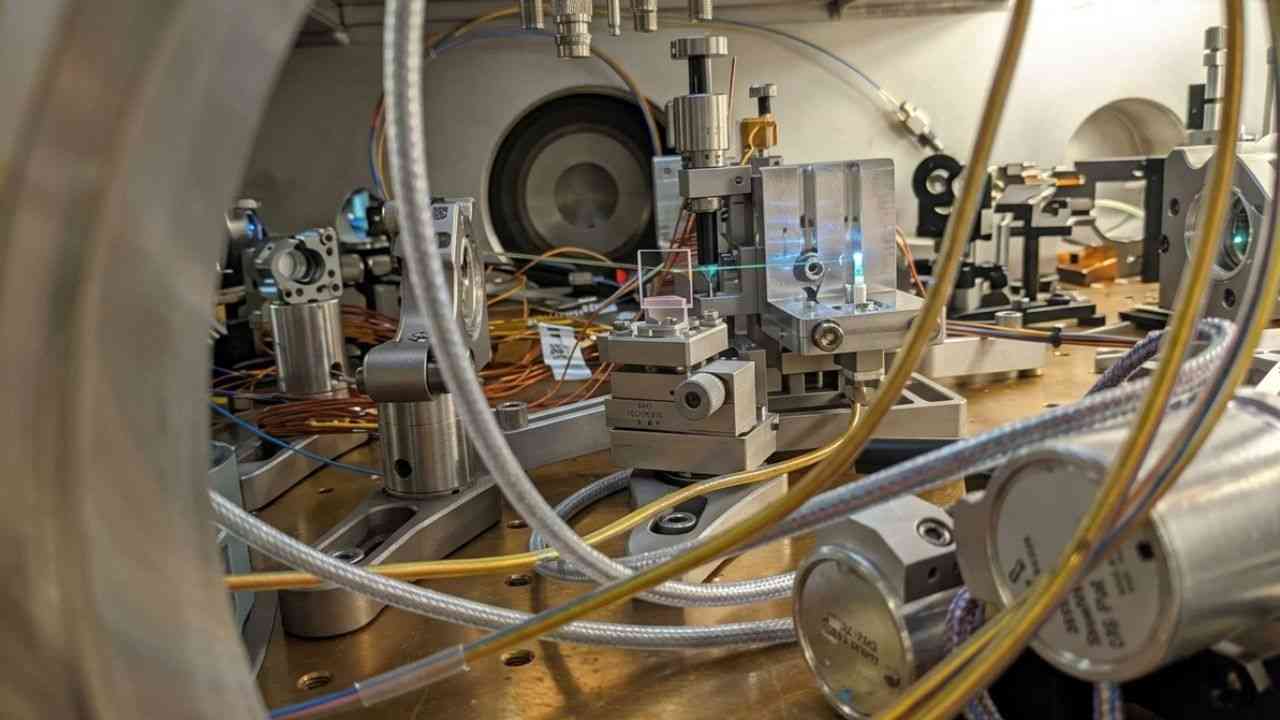
For decades, the nuclear clock was one of those ideas that looked elegant on paper but refused to work in the laboratory. Now two independent teams have brought it to life almost at the same time. If the technology fulfils its promise, it could mark a new frontier in precise timekeeping.
According to papers published in recent days, researchers have succeeded for the first time in creating a full nuclear clock. Scientists from Europe and China turned to thorium-229, an exceptional isotope that can serve as an extraordinarily precise “pendulum.” Instead of tracking the movements of electrons around the atomic nucleus, their clocks measure subtle changes taking place inside the nucleus itself.
A laser is continuously tuned to the energy transition in the thorium-229 nucleus, while the device operates in a closed loop: it corrects itself and keeps its rhythm. What is most surprising is that two teams on two different continents achieved this result almost at the same moment.
The idea of a nuclear clock appeared as early as the 1990s, and a concrete proposal was presented in 2003. For a long time, however, it remained theoretical. Today’s most accurate clocks are based on electronic transitions in atoms and ions. The problem is that electrons sit on the outer edges of the atom and can be relatively easily disturbed by magnetic fields, temperature, and other external factors. The nucleus is far more “quiet” and resistant to such interference.
In 2024, researchers managed for the first time to excite the nuclear transition in thorium-229 with a laser, and later showed that it could be controlled. But that still was not a full clock. Only now have teams including researchers from TU Wien, the Physikalisch-Technische Bundesanstalt, and Tsinghua University gone a step further: they have created a system in which the nucleus not only responds to the laser, but also helps maintain a constant frequency.
Scientists have already managed to use the nuclear clock for something genuinely fascinating: the search for dark matter. Because the thorium-229 nucleus is exceptionally “sensitive,” the clock can detect even extremely subtle changes in the laws of physics. In the study, it allowed researchers to set new limits on hypothetical ultralight dark matter. This shows that the clock does not merely measure time with great precision. Even now, it is helping us peer into one of the greatest mysteries of the universe.
For now, the first nuclear clocks are not yet better than their atomic counterparts. That is hardly surprising, since atomic clocks have been developed for 70 years. The most important point is different: a technology that remained a dream of physicists for decades has finally begun to work. If researchers’ forecasts prove correct, nuclear clocks may overtake atomic clocks within a few years.
Read this article in Polish: Czas można mierzyć jeszcze głębiej. Pierwszy zegar jądrowy już ruszył


A graduate of journalism and social communication at the University of Rzeszów. She has been working in the media since 2019. She has collaborated with newsrooms and copywriting agencies. She has a strong background in psychology, especially cognitive psychology. She is also interested in social issues. She specializes in scientific discoveries and research that have a direct impact on human life.



Zmień tryb na ciemny