Education
The Same Problem Feels Different in Another Language
15 October 2026



Every Telescope Sees the Universe Differently Space telescopes do not view the universe in the same way as the human eye. Each detects a particular type of light, revealing a different part of the cosmic story. Some allow us to observe distant galaxies; others track hot stars or the remnants they leave behind when they […]
Space telescopes do not view the universe in the same way as the human eye. Each detects a particular type of light, revealing a different part of the cosmic story. Some allow us to observe distant galaxies; others track hot stars or the remnants they leave behind when they die. Yet some phenomena remain difficult to capture, even with the most advanced instruments.
PRIMA, a new NASA telescope targeted for launch in 2033, aims to fill this observational gap. Like the James Webb Space Telescope, it will observe the universe in infrared light. Its purpose, however, is neither to replace Webb nor to compete with it. The two telescopes will address somewhat different questions.
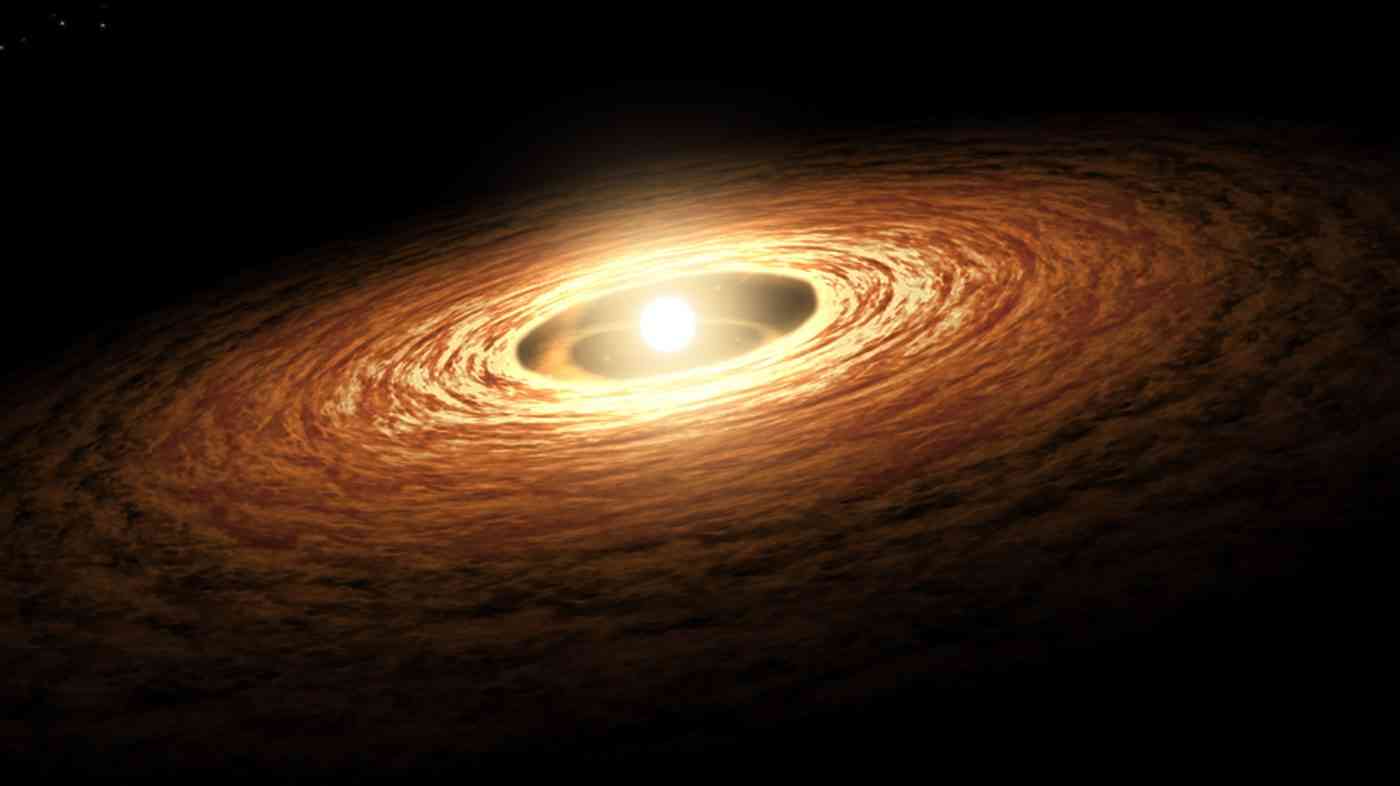
Webb allows researchers to study very distant galaxies, stars, and planetary atmospheres. PRIMA will be considerably smaller. Its mirror will measure 1.8 meters across, compared with Webb’s 6.5-meter primary mirror. But its design serves a different purpose: observing longer infrared wavelengths. Invisible to the human eye, these wavelengths carry information about materials such as cool gas and dust. Over time, this material, orbiting young stars, can give rise to planets.
These regions are particularly important to astronomers, but they are difficult to study. Dust obscures some of what lies behind it. At the same time, it can offer clues to the processes taking place inside these clouds. PRIMA aims to detect signals beyond the reach of today’s operating infrared telescopes. As NASA explains, the mission will help bridge the observational gap between infrared observatories such as the James Webb Space Telescope and radio telescopes.
One of the new telescope’s main tasks will be to examine the regions where planets form. Scientists want to determine how much water and gas these regions contain. They also want to understand the roles of carbon and oxygen, elements important to the formation of planets and their atmospheres. PRIMA aims to gather detailed data from about 200 disks surrounding young stars of different ages and masses.
Water is of particular interest to scientists. Detecting its traces is difficult because some signals that reveal its presence are accessible only in the far-infrared. The telescope will not search for life beyond Earth. Instead, it could help explain how water and other ingredients reach forming planets, and the conditions under which their atmospheres develop.
The new NASA telescope will also pursue a second goal: studying galaxies that took shape in the distant cosmic past. Dust does more than hinder observations of these galaxies. It also preserves clues to processes that have unfolded within them over billions of years. PRIMA aims to help establish how galaxies grew, how stars formed within them, and how these changes relate to the supermassive black holes at their centers.
Under the current plan, PRIMA will conduct observations for five years. During that time, the telescope will carry out detailed far-infrared surveys of the sky, gathering data on regions that remain less well understood.
A single mission alone can’t probe all the universe’s mysteries. But by extending the survey capabilities of our fleet into far-infrared wavelengths with PRIMA, we’re enabling an incredibly comprehensive look at the cosmos.
That is how Shawn Domagal-Goldman, director of NASA’s Astrophysics Division, describes the mission’s contribution.
Scientists do not expect a single discovery to answer every question about the formation of planets and galaxies. NASA’s PRIMA telescope could, however, complement the data gathered by Webb and radio telescopes, supplying information that is currently missing. If the mission proceeds as planned, astronomers will gain new ways to investigate both the birth of planets and the evolution of galaxies.
Read this article in Polish: NASA buduje nowy teleskop. Ma zajrzeć tam, gdzie rodzą się planety


A Journalism and Social Communication graduate with 15 years of experience in the media industry. He has worked for titles such as "Dziennik Łódzki," "Super Express," and "Eska" radio. In parallel, he has collaborated with advertising agencies and worked as a film translator. A passionate fan of good cinema, fantasy literature, and sports. He credits his physical and mental well-being to his Samoyed, Jaskier.



Zmień tryb na ciemny