Education
What Young People Remember When Adults Stop Assuming
22 July 2026






Education systems, recruiters, and corporations have treated the IQ test as an oracle for decades. Yet the belief that a formal intelligence test can fairly measure human potential is more a cultural superstition than a scientific fact. Research shows that our cognitive abilities are not a monolith and change over time, while practical wisdom, empathy, and intuition escape rigid test sheets altogether.
What does it really mean to say that someone is intelligent? Is it the ability to solve logical puzzles quickly? Or is it something deeper — the ability to make wise decisions in an uncertain world, build relationships, and cope with failure? These doubts matter especially today, when schools, companies, and institutions still treat test results as if they were final verdicts.
Contemporary culture loves numbers: exam points, percentages of effectiveness, scores in fitness apps, and of course the IQ test score. A number seems objective, neutral, and “fair,” because after all, everyone solves the same tasks and receives a result on the same scale.
The problem is that a human being is not a structure made of a few simple traits that can be counted once and for all. When we reduce someone to an IQ score, we treat that person as a one-dimensional number: “gifted,” “average,” or “weak.” This is convenient for the system. It makes it easy to set thresholds for admissions, scholarships, and diagnoses. Very quickly, however, it stops being fair to real people whose lives do not fit into a simple ranking.
A new study published in the journal Psychology and Aging shows how fragile these measures can be. Researchers analyzed the results of a popular intelligence test in people from early childhood to late old age, looking at how the structure of mental abilities changes across different periods of life.
It turned out that our various abilities — memory, speed of thinking, reasoning, knowledge — do not form one fixed “block of intelligence.” Instead, they arrange themselves in different configurations depending on age.
There are periods when these abilities “hold together” very strongly, and one general IQ score tells a relatively coherent story about them. But there are also phases when a person’s strengths and weaknesses clearly diverge, and one score becomes a simplified average that blurs important differences.
What is more, this divergence is especially visible among people with very high general abilities. Their profile is more varied, so a single IQ score reflects reality less accurately. That is why the study’s authors suggest that, in psychological practice, general results from this kind of test should be treated with greater caution.
These findings remind us that even the most popular tools for measuring intelligence have their limits. They do not include many important areas of the human mind, such as creativity, intuition, or the ability to cope in real life.
In practice, this means that intelligence measured by tests is primarily the efficiency of cognitive tools: speed of thought, logic, and ease of learning. It is not the same as wisdom.
Wisdom is something much broader. It is the ability to use this efficiency in everyday life: in making sound decisions, building relationships, and dealing with difficulties. It is prudence in choices, empathy toward others, and humility before what we still do not know.
To be wise means to see the broader context. A wise person takes into account not only facts, but also values, emotions, and long-term consequences. Such a person understands that life is not a test with one correct answer, but a continuous process of learning and choosing. This kind of wisdom is usually born not in an examination room, but in everyday experiences, relationships, and sometimes also in hardship and failure.
That is why judging a person solely through the lens of an IQ test score is not only scientifically incomplete, but simply unfair. Ignoring life experience, character, relationships, trauma, values, the body, and the spiritual dimension leads to mistaken judgments.
We label children as “weak” or “brilliant,” discriminate against employees, and simplify human relationships. The fetishization of the intelligence quotient only strengthens these tendencies. Education systems sort students, companies look for “high potential” in numbers, and the media promotes a cult of geniuses with record-breaking scores.
Meanwhile, history knows many people with average or even poor results in formal education and tests who changed the world through perseverance, empathy, and practical wisdom. Thomas Edison, whose teachers considered him “limited” and “unsuited to learning,” became one of the most prolific inventors thanks to thousands of failed experiments and extraordinary determination.
Richard Branson, who struggled with reading because of dyslexia and left school, built a business empire on intuition, courage, and the ability to build relationships with people. Mahatma Gandhi and Nelson Mandela did not stand out because of exceptional academic scores, but their wisdom, moral courage, and ability to build bridges between people changed the fate of entire nations.
The new study only confirms what humanists have long emphasized: intelligence is neither fixed nor uniform. It changes throughout life and looks different in different people. Instead of asking about an IQ test score, then, we should look at the human being more broadly.
A person does not fit into boxes, and human wisdom cannot be reduced to a number. The sooner we understand this, the easier it will be to judge people by what truly matters: their actions, their relationships, and the way they deal with life. An IQ test may tell us something, but it will never tell us everything.
Read this article in Polish: Najbardziej ceniony test na świecie. I najbardziej niedoskonały

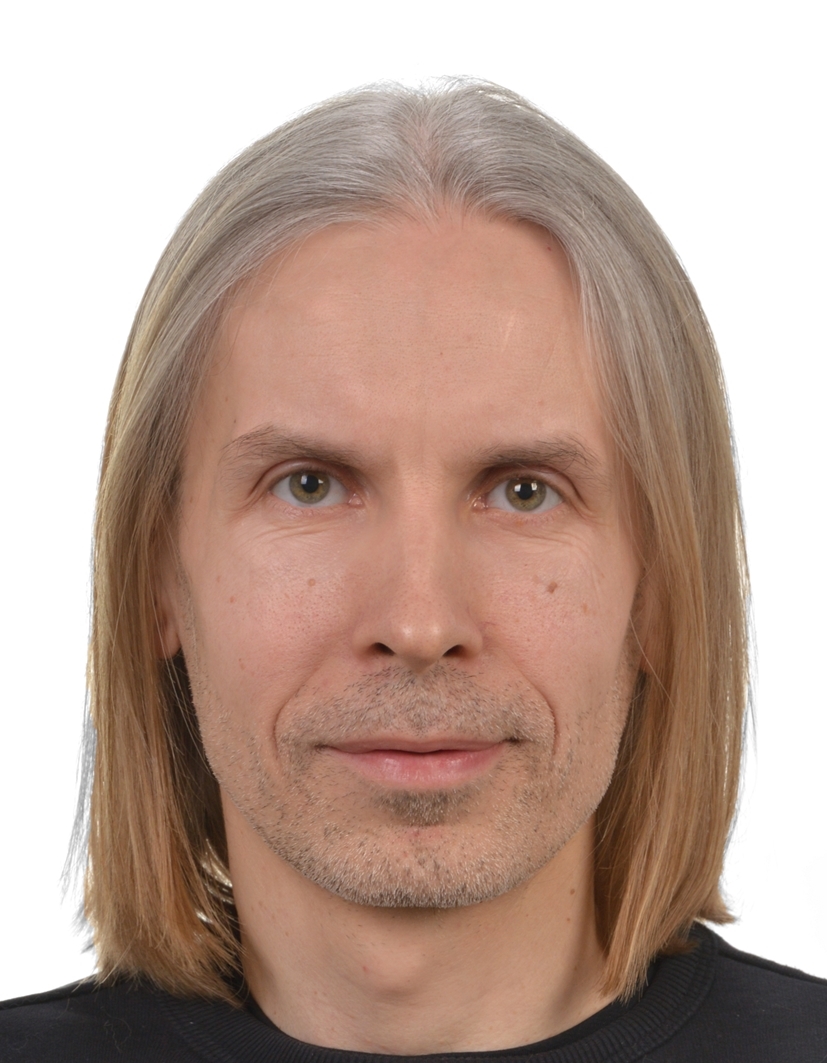
A Journalism and Social Communication graduate with 15 years of experience in the media industry. He has worked for titles such as "Dziennik Łódzki," "Super Express," and "Eska" radio. In parallel, he has collaborated with advertising agencies and worked as a film translator. A passionate fan of good cinema, fantasy literature, and sports. He credits his physical and mental well-being to his Samoyed, Jaskier.



Zmień tryb na ciemny