Culture
A Life Spent Becoming Someone Else’s Ideal
12 October 2026





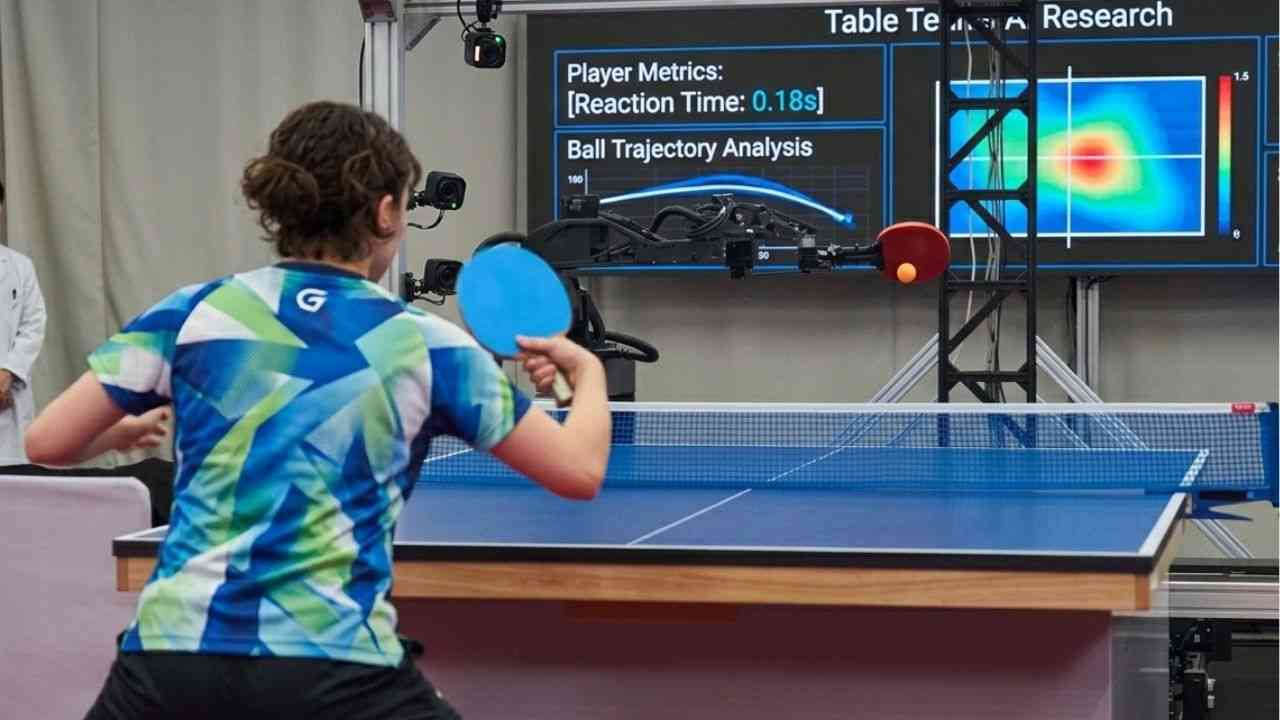
Controlled by artificial intelligence, the robot Ace played professional table tennis matches and defeated experienced players. The machine tracked balls, analysed spin and answered almost instantly with precise serves. It is one of the first cases in which AI in sports has performed so well in a real, fast-moving game.
Ace was created by a team at Sony AI, and the results of the experiment were described in the prestigious journal Nature. In the study, the robot did not face amateurs. 5 excellent players stood against it, including competitors with more than 10 years of training experience and 2 professionals. They played 5 matches. The result? The machine won 3 of them.
It might seem that this is nothing new in table tennis. Nothing could be further from the truth. This marks another step in the development of AI in sport. In practice, table tennis is an exceptionally brutal test for robotics. At a high level, the ball can travel at more than 20 metres per second. The time between shots often falls below half a second. Then there is spin, which radically changes the ball’s flight path and bounce. A robot cannot simply swing a paddle. AI has to predict, and the machine has to react almost instantly. Until now, this posed a huge problem in robotics. Artificial intelligence has overcome those difficulties.
This research breakthrough shows the potential of physical AI agents to perform interactive real-time tasks and represents an important step toward creating robots with broader applications in fast, precise and interactive activities with humans,
said Peter Dürr, director of Sony AI in Zurich and head of the Ace project, quoted by ScienceAlert.
Table-tennis-playing robots are not new. Similar devices have been built for decades, and researchers note that the first attempts date back to the 1980s. The problem is that many earlier machines worked under simplified conditions, with a limited playing area. Sony AI’s Ace is the first to cope in a real robot-versus-human contest.
The secret of this achievement lies in its design. Ace rests on 3 main pillars: perception, learning and hardware. The robot uses a camera system that allows it to locate the ball in space and estimate its spin. It makes decisions using deep reinforcement learning methods, previously trained in simulations. Supporting all this is an 8-axis robotic arm.
As we read in the article published in the scientific journal Nature, Ace’s effectiveness rested mainly on precision, not force. It is worth noting that, in the testing phase, the same robot lost 2 matches against elite players, winning only 1 set in those encounters. Later, however, it performed better.
But the robot did not become “better than humans” in the broad sense of the phrase. It learned to become good enough to compete with them, and even to win. To put it simply, it was not taught to think and make independent decisions. It was taught to analyse thousands of variants in the blink of an eye and choose the best action.
This is a milestone moment in AI research, showing for the first time that an artificial intelligence system can effectively perceive, reason and act in complex, fast-changing real-world environments that demand precision and speed. When AI reaches expert level in such conditions, it will open the door to an entirely new class of real-world applications,
concludes Sony AI chief scientist Peter Stone.
Although his words are, for now, only a promise of a bright future for AI in sport, we can already see that, in many respects, artificial intelligence and robotics can match humans and learn at extraordinary speed.
This raises the question of whether there is any boundary to the development of artificial intelligence in robotics, and how the human role in the world will change in the future. And finally: what happens when machines learn to act just as effectively in other situations where reflexes, precision and split-second decisions matter as much as they now do for AI in sports?
Read this article in Polish: Robot pokonał doświadczonych zawodników. AI robi kolejny krok


A graduate of journalism and social communication at the University of Rzeszów. She has been working in the media since 2019. She has collaborated with newsrooms and copywriting agencies. She has a strong background in psychology, especially cognitive psychology. She is also interested in social issues. She specializes in scientific discoveries and research that have a direct impact on human life.



Zmień tryb na ciemny