Science
Before There Are Planets, There Is Dust
16 October 2026





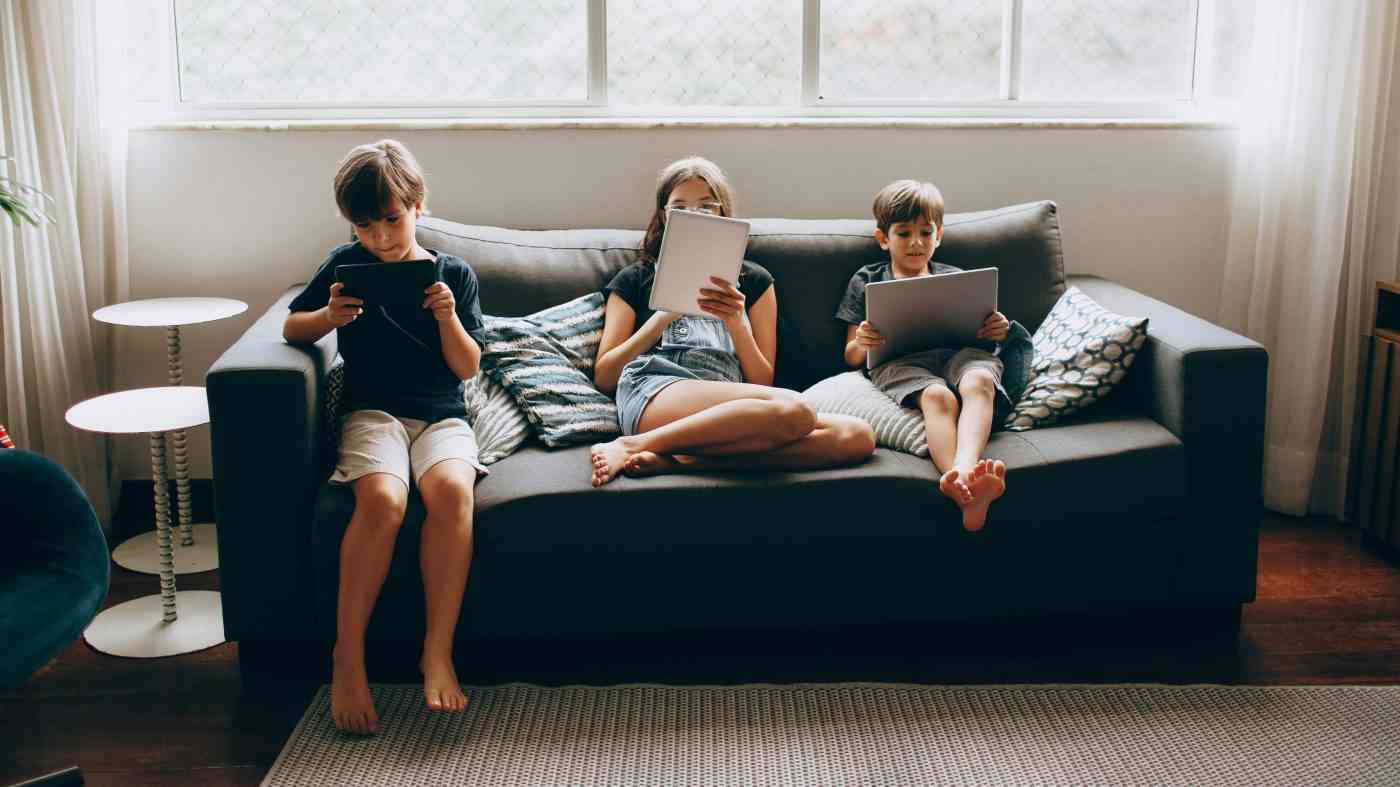
Children born after 2022 will not remember a world without ChatGPT. Chatbots explain emotions to them, generate bedtime stories and suggest solutions. Is Generation AI being raised by artificial intelligence, with parents and teachers slowly pushed aside?
For these children, artificial intelligence is not a futuristic curiosity. It is becoming something increasingly obvious, like electricity or the telephone. Children born after 2022 are the ones who make up Generation AI. Gregory Stock describes them as the first people to grow up “in a world of immersive artificial intelligence, intelligent robots, and blurry boundaries between the innate and the made.” Their future will not merely continue our world. It will lead into an entirely new shape of human nature.
In Generation AI and the Transformation of Human Being, Stock proposes a reversal of the usual perspective. Instead of asking what artificial intelligence and other advanced technologies may become, we should ask who we ourselves will become. This shift in emphasis is fundamental. Technology itself does not stand at the centre. What is at stake is the transformation of human nature: the way we learn, build bonds, develop identity and understand our own uniqueness.
Generation AI will not be a “user” of technology. It will grow up inside it. A child from this generation may ask a chatbot about homework, ask an image generator for an illustration for a story, or ask an intelligent assistant to explain an emotion — all before turning to a parent or teacher.
This is where the most important educational question appears: who is really raising children born at the turn of the second and third decades of the 21st century — adults or algorithms? The answer is no longer as obvious as we would like to believe. A study by The Alan Turing Institute showed that 22 percent of children aged 8 to 12 already say they use generative AI tools, and 72 percent of that group use them at least once a month. The most common uses include finding information, creating images for fun, entertainment and help with homework.
This is not yet full symbiosis, but its beginnings are clearly visible. For Generation AI, which from infancy may have access to a perfectly responsive agent, the boundary between “help” and “upbringing” blurs with extraordinary speed.
Artificial intelligence also increasingly helps parents. In many small parenting decisions, we already rely on AI “quietly.” We ask an algorithm to choose a bedtime story, to explain a biology concept more simply, to prepare a study plan, or to suggest a creative game. Some parents and teachers do this intentionally. Others do it reflexively, because an intelligent system can be faster, more patient and more available than a tired adult.
Stock asks, however, not only what artificial intelligence does for the child. He also asks what the child may stop doing because of it. A child’s brain develops through effort: solving problems, coping with frustration, building attention. When AI instantly provides a ready-made explanation, organises the world and translates it into easier terms, the human mind loses part of its training. And that training used to be necessary for developing patience, independent thought and cognitive resilience.
The data suggest that this fear is not abstract. In The Alan Turing Institute study, 76 percent of parents and almost the same share of teachers feared that children may trust technology too much and fail to think critically about the information it provides. At the same time, teachers reported that where pupils use AI for schoolwork, more than half also use it to submit generated content as their own. The problem, then, is not the tool itself, but the risk that the boundary between help and cognitive substitution will shift.
This leads to an even more difficult question: will Generation AI be wiser, or merely more efficiently served by intelligent tools? Research does not yet offer a final answer, but it does reveal ambivalence. On the one hand, AI can support creativity, personalise learning and help children with additional educational needs.
On the other hand, teachers notice a decline in some pupils’ engagement with their own work and a narrowing of the variety of ideas they submit. In other words, Generation AI may become wiser in the sense of having access to knowledge, while at the same time becoming less trained in independent thinking, creativity and coping with uncertainty.
The question of bonds is even more intriguing. If artificial intelligence becomes a permanent element of a child’s everyday life, it can easily turn into a source of psychological dependence. As a result, it may weaken the chance to develop real resilience. A child who, from the earliest years, interacts with an agent that is always available, polite, responsive and perfectly adapted to their needs may begin to treat this model of relationship as the norm.
But people do not work that way. A parent gets tired. A teacher has no time. A friend misunderstands an intention. A conversation sometimes hurts more than it soothes. It is precisely these frictions that teach patience, empathy, negotiation and psychological resilience. If a system that constantly smooths reality over takes over a significant part of cognitive and emotional contact, children may become less able to bear the imperfection of real relationships.
This does not mean that we must protect children from technology at all costs. But it is essential to teach them to use it consciously. If the future of Generation AI is to be something more than a drift toward convenience, children must learn that AI is neither an oracle nor a substitute caregiver. It is a tool that requires distance, interpretation and clear boundaries.
Adults should therefore not ask only how to protect children from artificial intelligence. The crucial question is how to raise them so that they can use it without losing their own agency.
That is why the question of Generation AI is, at its core, a question about the future definition of the human being. If, from the earliest years, we think with machines, create with machines, learn with machines and confide in machines, the boundary between support and the co-shaping of humanity will become less and less clear.
Perhaps the children of Generation AI will be more technologically competent than any previous generation. It is not certain, however, that they will be equally well trained in what is most difficult and most human: independent thinking, patience with others and maturing without ready-made answers. That is why today it is no longer enough to ask what we teach children about artificial intelligence. We must begin to ask what artificial intelligence teaches children about being human.
Read this article in Polish: Rośnie pokolenie AI. Kto naprawdę wychowuje te dzieci?


A Journalism and Social Communication graduate with 15 years of experience in the media industry. He has worked for titles such as "Dziennik Łódzki," "Super Express," and "Eska" radio. In parallel, he has collaborated with advertising agencies and worked as a film translator. A passionate fan of good cinema, fantasy literature, and sports. He credits his physical and mental well-being to his Samoyed, Jaskier.

Zmień tryb na ciemny