Science
Before There Are Planets, There Is Dust
16 October 2026





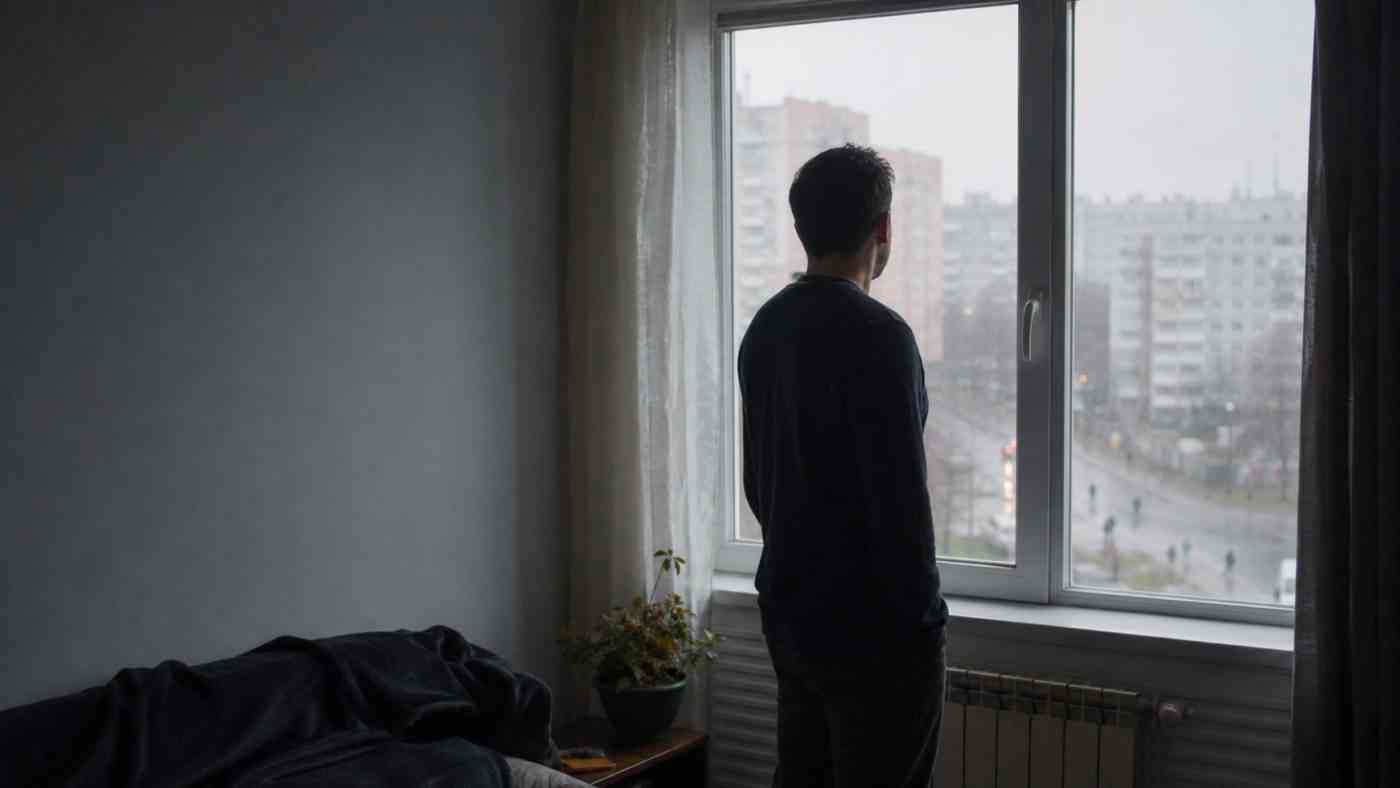
Hikikomori has long been associated with fear of people and withdrawal from contact. Those affected by the phenomenon may spend months, and sometimes years, barely leaving home, giving up work or education, and limiting relationships. Yet a new study suggests that this picture is incomplete — and that most people living in isolation do not fit the dominant stereotype.
Hikikomori is a term that originated in Japan, but it is increasingly no longer described only as a Japanese peculiarity. The classic definition refers to prolonged social withdrawal lasting at least 6 months. During that time, a person barely leaves home, does not work or study, and keeps contact with people outside their closest surroundings to a minimum. This is not introversion, a temporary need for quiet, or a brief period after a life crisis. In this case, isolation begins to organize an entire life.
For years, the phenomenon was linked above all to educational and professional pressure, high social expectations, and the particular nature of Japanese family relationships. Over time, however, similar cases began to be described in other parts of Asia, Europe, the Americas, Oceania, and Africa.
The scale of the phenomenon is difficult to capture precisely, because it depends on the definition used. According to a 2023 report by Japan’s Cabinet Office, as many as nearly 1.5 million people aged 15 to 64 may have been living in a state of long-term social withdrawal. That is slightly more than 2 percent of people in this age group, or roughly 1 person in 50. European studies, including data from the European Social Survey, also point to a similar proportion of people living in severe social isolation.
Traditionally, hikikomori was associated mainly with a strong fear of people and fear of negative judgment. A new study by Japanese researchers, published in 2026 in Psychiatry Research, changes that perspective. The researchers examined 400 Japanese adults — 200 people who met the criteria for hikikomori and 200 participants in a comparison group — and identified 3 clearly different profiles.
The first profile included 11 percent of people with hikikomori and was associated with milder withdrawal and fewer difficulties in everyday functioning. The second — the largest, accounting for 52 percent of the participants — was characterized by clear difficulties in daily life, but without particularly heightened fear of negative evaluation. The third profile, comprising 37 percent of participants, came closest to the popular image of the phenomenon. There, severe isolation went hand in hand with high levels of social anxiety, stress, and limited support from the surrounding environment.
The most surprising finding was that the largest group, which accounted for 52 percent of participants with hikikomori, did not have particularly strong social anxiety. Despite serious difficulties in daily life, their fear of negative evaluation by others was not high.
This is what Shunsuke Nonaka, co-author of the study, said in an interview with PsyPost.
The study does not determine the original cause of hikikomori. Nor does it create ready-made diagnostic categories. It does, however, challenge the stereotype according to which every case of extreme withdrawal is simply caused by fear of people.
Two people may function similarly from the outside. They may not leave home for months, stop working, stop studying, and limit contact. Yet they may have found themselves in that situation for different reasons. For 1 person, fear of judgment may play the central role. For another, it may be overload, difficulties in everyday functioning, or the sense of safety provided by isolation.
Behind isolation that looks similar at first glance, the same problem is not always hidden. And therefore, the same needs are not necessarily hidden there either. The study does not indicate a ready-made method of support, nor does it determine what was the cause and what was the consequence of withdrawal. It does show, however, that before reducing hikikomori to a single stereotype, it is worth noticing that different mechanisms may stand behind the same external picture of isolation.
Read this article in Polish: Miesiącami nie wychodzą z domu. Nie chodzi tylko o lęk


A Journalism and Social Communication graduate with 15 years of experience in the media industry. He has worked for titles such as "Dziennik Łódzki," "Super Express," and "Eska" radio. In parallel, he has collaborated with advertising agencies and worked as a film translator. A passionate fan of good cinema, fantasy literature, and sports. He credits his physical and mental well-being to his Samoyed, Jaskier.



Zmień tryb na ciemny