Culture
A Life Spent Becoming Someone Else’s Ideal
12 October 2026





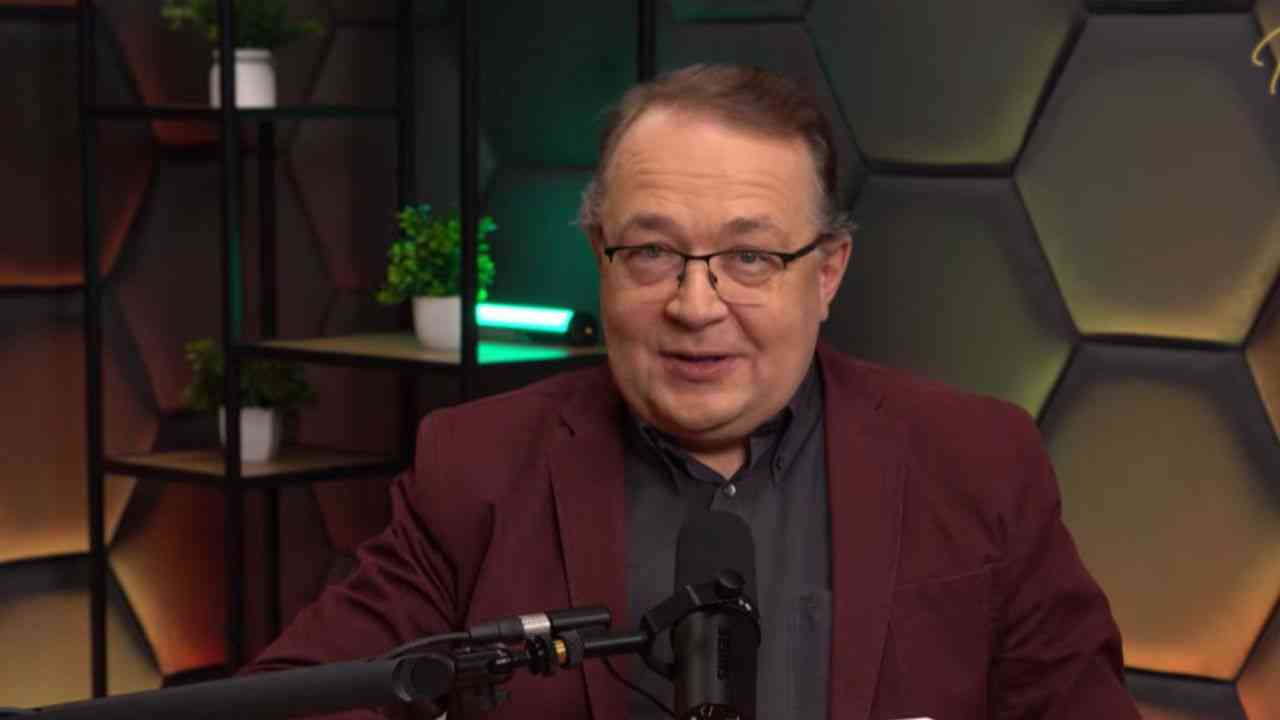
Can literature still help us understand a world where truth blurs and power shifts quietly? In this conversation, a Polish thinker reflects on imagination, morality, and the rise of a new Evil Empire.
Patrycja Krzeszowska: What makes a radio or print journalist start writing books—novels and poetry?
Piotr Gociek: In my case, it was the other way around. I began with poetry and short stories. Poetry—because I fell in love. Stories—because I loved speculative fiction. It offered not only respite and a form of escapism in the late communist period, but also a kind of education. Among fans of speculative fiction, those who read it often feel, sooner or later, the urge to try writing themselves.
I have always thought of myself as a writer, but writing alone was not enough to make a living. So throughout my life I had to do other things: radio, television, journalism. These days I run my own YouTube channel, Piotr Gociek Zaprasza, where I talk about literature with interesting people—writers, translators, critics.
Is there anything specific that inspires your work? If you had to point to a single moment—or perhaps books you have read?
It would certainly be easier for me to point to writers than to individual poems or novels. The poetry of Zbigniew Herbert, the sung poetry of Jacek Kaczmarski, the prose of Philip K. Dick. A little later, I was profoundly struck by the poetry and essays of Joseph Brodsky. When I was young, I fell in love with the prose of Kurt Vonnegut and Mario Vargas Llosa. An immensely important book for me was The Lord of the Rings. Every Christmas, I return to Tolkien.
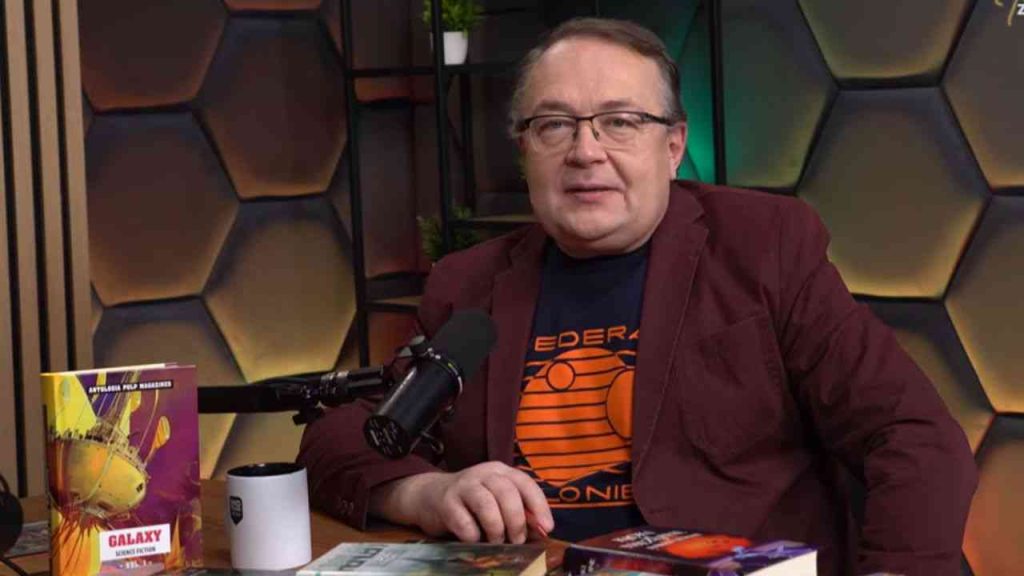
Many people believe fantasy is just bedtime reading—pleasant, but lacking deeper value or ideals. Do you agree?
Of course not. When Theodore Sturgeon heard that 90 percent of science fiction was rubbish, he replied: “But 90 percent of everything is rubbish!” And he was right. Most poetry, prose, and non-fiction is quickly forgotten. Fantasy is not an exception.
The time when it was treated with disdain is over. Writers such as Ray Bradbury, Ursula Le Guin, William Gibson, or Philip K. Dick are now recognised simply as outstanding authors.
Fantasy is becoming more and more popular. What are we looking for in it?
There are three reasons. The first is the need for rest and escapism. The second is the need for wonder—for fairy tale, for enchantment. But there is also a third reason.
Fantasy provides an excellent metaphor for describing our world—what it is like, what traumas afflict us, what we fear. There is a strong current in fantasy that warns against various dangers, and another in which authors ask what might happen if society were subjected to far-reaching change. What would life look like after a great catastrophe? What if an invention appeared that turned our everyday existence completely upside down?
Human beings do not change. We remain the same as we were thousands of years ago. The same impulses that drove the people of ancient Greece and Rome to war still drive us today. Everything else is merely changing scenery. That is why we should always ask what truth about human beings these stories reveal.
Do you think literature can help people understand themselves better—and each other—even when they disagree?
I believe so, because literature operates through metaphor and parable. By their nature, they invite reflection—provided they are not written in an overly tendentious way. Persuasion cannot be the primary aim of literature.
Parables, fairy tales, moral stories, or stories that warn against a world in which morality has ceased to exist reach people more naturally. They encourage deeper reflection.
In your books, the world often appears as a place of sharp ideological and civilisational conflict. How, in such a vision, do we avoid forgetting that a political opponent is still a human being?
Sharp conflicts are not only present in my books—they exist in all good literature, because they exist in the world. Even in children’s literature we find a fundamental conflict between good and evil. In fairy tales, this conflict is as stark as it can be.
I believe a writer should stand on the side of the good. And evil? Evil must be analysed in order to be understood.
When we describe a complex world where different perspectives collide, we often find that the most compelling characters are those who are morally ambiguous. Characters like Kmicic from Sienkiewicz’s The Deluge, of whom Wołodyjowski said that as much good as evil resides within him.
Such characters are not meant to justify evil, but to reveal the human being in all their complexity—to show the depth of their fall. A writer should observe from a distance, almost like a researcher, and judge both sides with severity. That is what distinguishes purely escapist literature from literature that changes us. It has a purpose.
In today’s world—looking at media and politics—do people still have the freedom to choose between good and evil?
Each of us still has that freedom. But we live in a time when media create enormous confusion in people’s minds. We are constantly bombarded with messages—political, ideological, but also purely commercial ones.
The greatest problem today is not access to information, but its selection. The best way to preserve common sense is not to rely on a single source, but to compare different ones.
That may sound utopian, because we all suffer from a lack of time. Time has become both our greatest resource and our greatest deficit. That is precisely why we must manage it wisely. This is one of the reasons I follow contemporary literary trends less and less. I do not regret spending time returning to the classics—to The Magic Mountain, The Doll, Dune, or my beloved The Lord of the Rings. As it turns out, these old stories have not aged at all.
Does writing help you organise the world, or better understand people?
Writing is a fascinating process, but one that is extremely difficult to describe, because much of it takes place beyond our conscious awareness. Certain things simply do not begin to happen until you sit down and write.
Let me give an example. Very often we need a conversation with another person, because only when we begin to explain something, to tell a story, do we suddenly realise that it is through the act of telling that we fully understand it. By sharing it, we discover meanings and answers that were previously hidden. Literature is such a conversation.
How do you understand the search for truth? Is it a goal—or a path that constantly changes?
My goal—not only as a writer—is to become a better human being. And there is only one way to achieve that: one must stand in truth.
Truth is a path, not a goal in itself. One of the great misfortunes of contemporary society is that, overwhelmed by countless often trivial pieces of information, we cannot find the time for self-reflection—to stand in truth, to look at ourselves honestly, even mercilessly, and… well, first to accept the current state, and then to try to change, to improve. And to understand why we made the choices we made.
Of course, this does not mean that a writer must write only truth. Fiction can be extremely helpful in discovering truth. It may sound paradoxical, but I will defend it—as a writer of speculative fiction and as a poet: it is precisely invention, fairy tale, parable, myth that often allow us to show something more clearly.
The same is true of great poetry. Over the course of a few lines, a poet can express something that less gifted writers need volumes or long analyses to convey.
Everything can be compressed—into a single metaphor, a single poem, a few sentences that capture the essence. The more one sees this, the more one grows weary of excess—of meaningless informational noise. One feels the need to push aside what is unimportant and return to what is essential. Great poetry, philosophy, myths, and fairy tales help us understand the world.
Is it that in fantasy, good and evil are more obvious? Is this a longing for times when good was good and evil was evil—not relative?
In that question, you touch on two different issues. The first is that, indeed, fantasy in its classical form is a moral parable—a story about the clash between good and evil, as in Tolkien or traditional fairy tales.
We should also note that certain genres of modern popular culture have inherited this structure—for instance, the Western. In essence, the Western is a kind of fantasy story about good and evil, where we root for the good to defeat the bad.
Crime fiction, from the very beginning, has also been moral literature in the sense that it tells the story of a detective who restores moral order by solving a mystery and identifying the culprit. Evil is uncovered, condemned, punished, and the world returns to balance.
The second issue is that today we feel a deep longing for such simple stories, because contemporary culture does not offer them. There is too much deconstruction, postmodernism, subversion, transgression, and pervasive irony. We need to restore order—to reward the good and punish the evil. Audiences increasingly return to older stories with clear moral structure.
Do you believe communism—this totalitarian system of evil—collapsed under its own weight? And if so, why does it still exist in North Korea?
I reflect on this in different ways. The problem of evil is central here. Where does evil come from, and how can it be overcome?
In my novel Demokrator, I tried to construct a perfect nightmare—a dystopia with no escape, combining Orwell’s 1984 and Huxley’s Brave New World. It became truly inescapable only when I removed God and all metaphysics from it. Yes, in the fictional land of “Gorodopolis” there is an organised church—but it resembles the Moscow Patriarchate more than a spiritual community. It functions as a branch of the state, with little to do with genuine faith.
Empires of evil rarely collapse because they fall apart internally. Much more often, they end when they collide with a powerful external force. Adolf Hitler’s empire collapsed when it encountered the equally brutal force of Joseph Stalin’s. The Soviet system fell only when confronted with a determined opponent like Ronald Reagan.
But this story has not ended. Evil has an extraordinary capacity to survive—it can change form and return in a new shape. Like Sauron in Mordor. If we look at Putin’s Russia today, we see a disturbing mosaic of different incarnations of an empire of evil.
This state carries traces of tsarist power, Stalinist terror, and Leninist ideology, while at the same time using the tools of modernity—social media, the internet, pervasive propaganda—to construct its own version of truth.
The question of communism remains unresolved. In our part of Europe, it did not collapse so much as it was dismantled and gradually adapted to new realities. It did not disappear—it became one of the elements of the modern world.
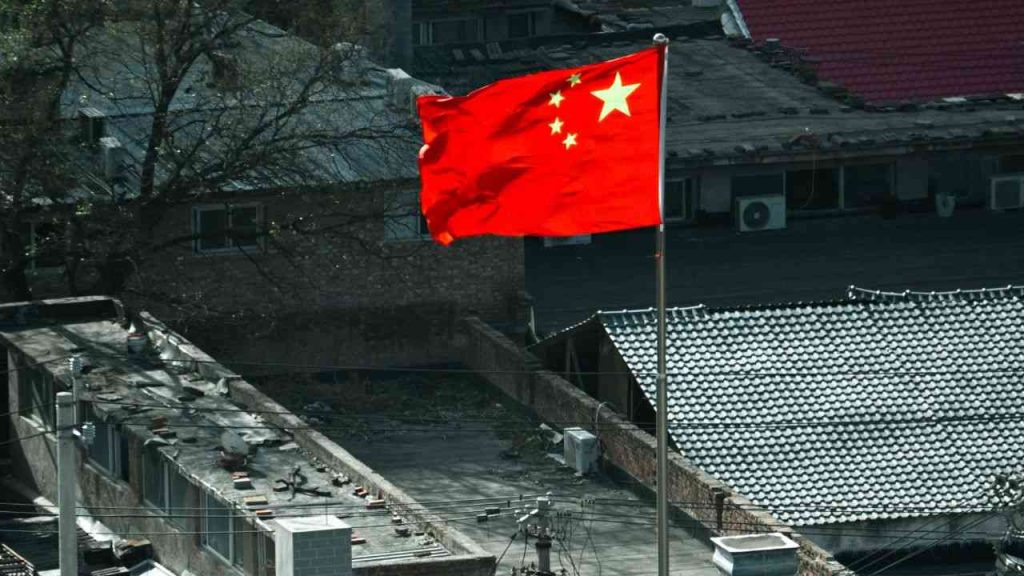
What is happening in China today is something we cannot ignore. Communism is changing form. It is transforming itself, absorbing modern inventions and the latest technologies in order to build a new kind of empire. This is one of the most fascinating—and at the same time most ominous—experiments of our time, and it demands careful attention.
If countries like China succeed in combining capitalist efficiency with communist control of minds—supported by advanced identification systems, extensive surveillance, and social credit mechanisms—we may witness the birth of a new form of evil. One for which the world still has no answer.
Communism in North Korea, meanwhile, persists not because it is invincible, but because dismantling it serves no one’s immediate interest. Such a process would be possible and could happen quickly—but it raises two fundamental questions. Would the regime, in its final desperate reflex, reach for nuclear weapons?
And who would then take responsibility for millions of people? How would they be fed? How would they find work? The costs would be enormous, the risks immense. No one is willing to take that on. Communist evil in North Korea persists through inertia and blackmail. What is happening in China is far more troubling.
When can readers expect your new work?
My next volume of poetry, King Skeleton, is ready and will be published in the autumn. In June, a collection of my essays on speculative fiction titled The Sparrow of the Galaxy will be released. It will also include interviews with writers such as George R. R. Martin, Orson Scott Card, Mike Resnick, and Jonathan Carroll.
At the same time, I am working on a new novel—a kind of nested narrative composed of multiple shorter stories. It will be a reflection on Russia’s war against Ukraine, filtered through speculative fiction. The working title is The Bee Operator. And of course, I invite readers to my YouTube channel.
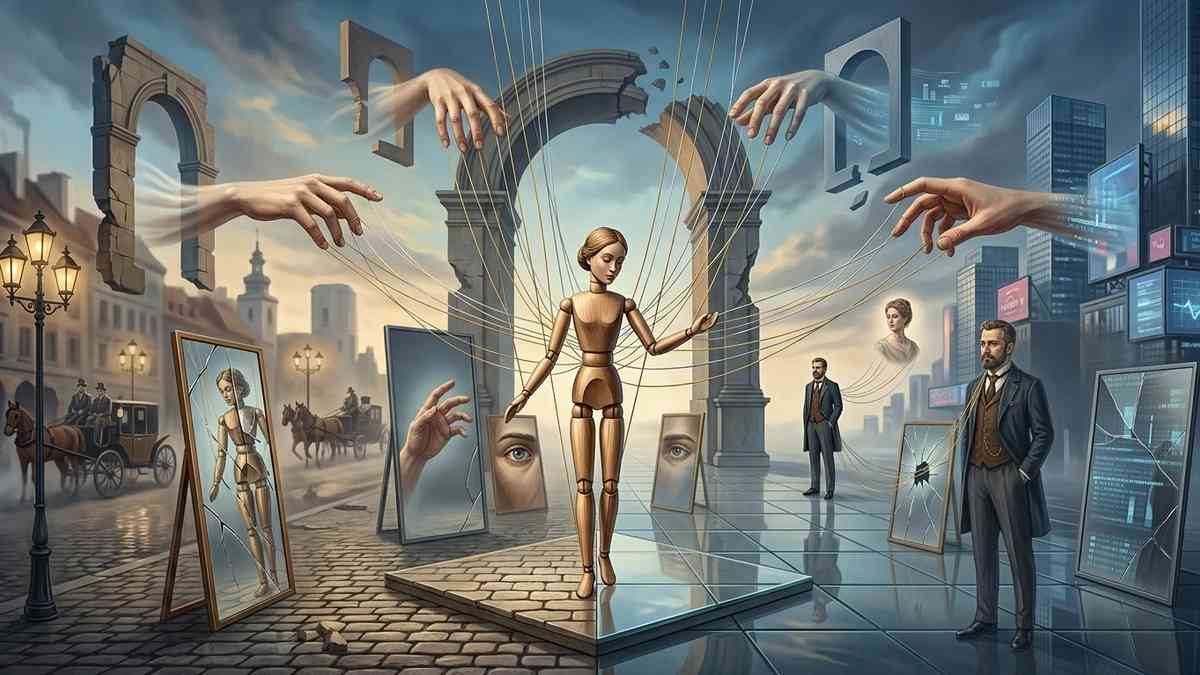
We tend to imagine evil as something obvious—loud, brutal, unmistakable. Yet the most dangerous forms of power no longer announce themselves in that way. They evolve, adapt, and embed themselves in the structures of everyday life.
To speak of a new Evil Empire is not exaggeration. It is an attempt to recognise a form of power that does not conquer openly, but quietly reshapes the conditions in which we live—and the way we understand truth itself.
Read this interview in Polish: Piotr Gociek: rodzi się nowe Imperium Zła. Nie chodzi o Rosję


A graduate of journalism and social communication at the University of Rzeszów. She has been working in the media since 2019. She has collaborated with newsrooms and copywriting agencies. She has a strong background in psychology, especially cognitive psychology. She is also interested in social issues. She specializes in scientific discoveries and research that have a direct impact on human life.

Zmień tryb na ciemny