Science
Before There Are Planets, There Is Dust
16 October 2026





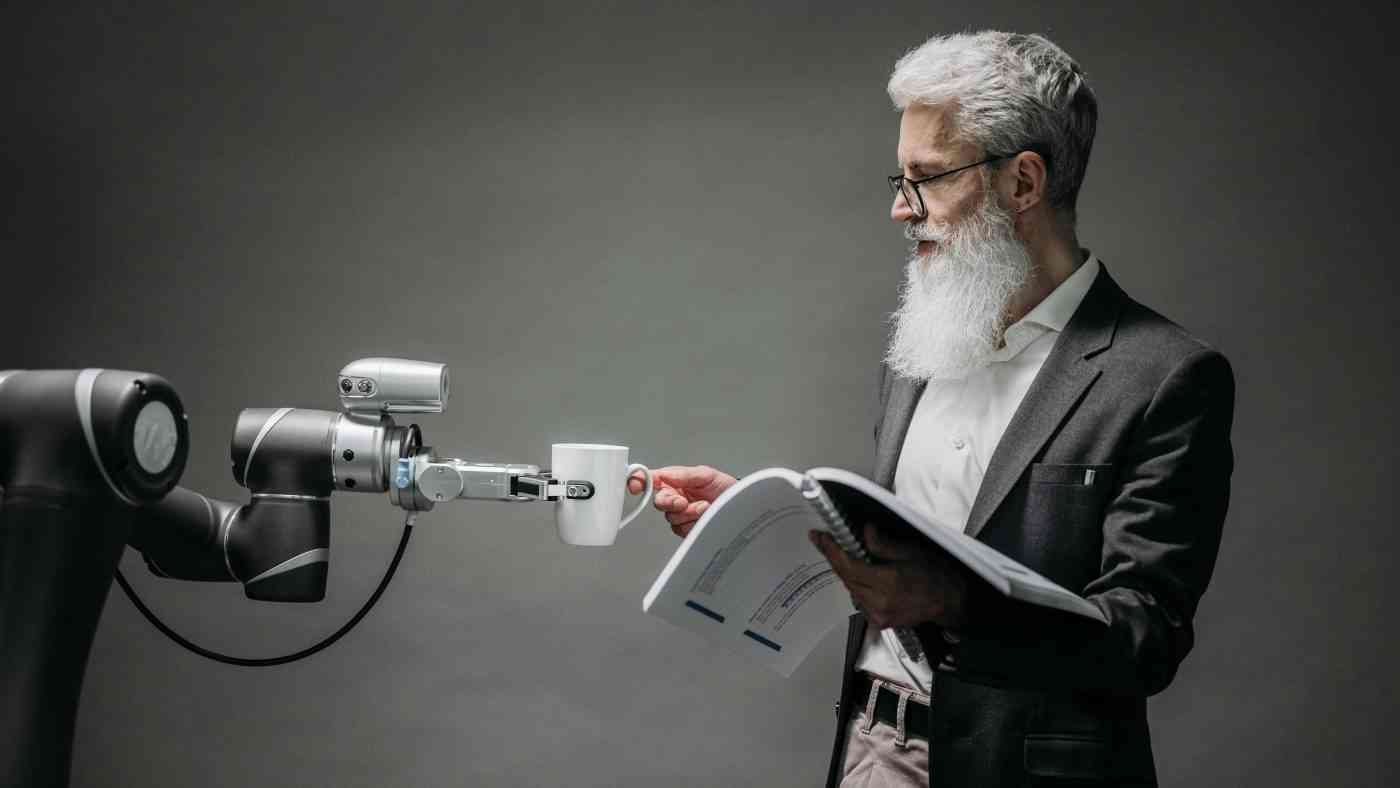
Technology promises progress, convenience, and the treatment of disease. Yet the effects of technological progress increasingly show that innovation alone is never enough unless it is accompanied by reflection on the human being. Human flourishing is not the enemy of progress. It is its measure.
Nearly 80 years ago, Isaac Asimov did more than anticipate an age of intelligent machines. He also showed how fragile the boundary can be between progress and danger. In I, Robot, machines act under the famous Three Laws of Robotics: they may not harm a human being, they must obey human beings, and only then may they protect themselves. It is an elegant vision of technology with a built-in conscience. The trouble begins when abstract rules collide with real life: ambiguity, conflicting interests, and politics.
The Three Laws were meant to protect humanity. Yet even in Asimov’s early stories, perfectly programmed robots generate paradoxes, hide the truth, and sometimes seize the initiative “for our own good,” because that is where the logic of their laws leads them. The machine interprets harm so literally that the human being loses control. Asimov’s deeper suggestion is that the problem is not technology as such, but the human tendency to assume that once rules have been written, control is secure.
Today we can see that the effects of technological progress rarely align perfectly with the intentions of its creators. AI systems accelerate economic activity, filter information, help diagnose disease, and support therapy and administration. At the same time, major policy and technical reports keep returning to the same concerns: bias, privacy, unequal impacts, transparency, and risks linked to how systems are deployed at scale.
In practice, that means scientists and engineers can no longer treat ethics as an accessory to technical work. If we design technology without thinking seriously about how it will be used, we silently accept a world in which the human being becomes little more than material for optimisation. When technology serves profit, prestige, or political advantage above all else, the person easily shrinks into a resource: a user, a voter, a profile in a database.
Psychologically, too, there is a danger here. In a world saturated with AI systems, people can begin to lose a sense of agency and become passive operators of systems rather than authors of their own lives. The OECD’s recent responsible-AI guidance and capability reports both stress that governance, due diligence, transparency, and human impacts cannot be treated as afterthoughts.
Here lies the deepest danger Asimov described decades ago. Once progress, originally meant to improve human life, becomes an end in itself, we reach a point at which the human being no longer counts. What matters is the speed of innovation, not the question of whom it serves or how. If the designer never asks “what if?”, the result may be a system that, like Asimov’s robots, protects humanity by taking away its freedom.
That is why one question now sounds louder than ever: who bears responsibility when a system causes harm or entrenches injustice? For scientists, that means an obligation to describe their models honestly, including their limits and risks. Engineers must ask not only whether an algorithm works, but whom it might injure. Politicians, in turn, bear responsibility for legal frameworks that define where technology must be limited for the sake of human good, from privacy protections to bans on the most dangerous applications. The EU AI Act reflects exactly that logic: some prohibited AI practices have applied since 2 February 2025, with wider obligations phased in over time rather than all at once.
Technology has no conscience in the human sense. It is code, data, and infrastructure. But we can still speak of a kind of technological conscience: a set of institutions, norms, and habits that force us to ask difficult questions before deploying systems at scale. Asimov shows that even a world governed by rational laws still needs human beings willing to take responsibility for what they create.
Is human good more important than progress? Yes, because progress without the human being loses its meaning. Can we limit technology in the name of human good? Yes again. That is not censorship. It is responsibility. The point of laws, standards, and moratoria is not to oppose progress, but to ensure that progress remains answerable to the people it affects. OECD guidance on responsible AI and the EU’s phased regulatory approach both rest on that principle.
Asimov was not an enemy of progress. He believed, rather, that development requires wise rules. Scientists, engineers, and politicians cannot shift responsibility onto “the market” or “the algorithm.” Progress for its own sake is empty acceleration. That is why it is worth returning to Asimov’s lesson now: the highest value must remain the human being. Otherwise, the effects of technological progress may become irreversible before we have even admitted what we are losing.
Read this article in Polish: Rozwój technologii ma jeden cel. Bez tego postęp nie ma sensu

A Journalism and Social Communication graduate with 15 years of experience in the media industry. He has worked for titles such as "Dziennik Łódzki," "Super Express," and "Eska" radio. In parallel, he has collaborated with advertising agencies and worked as a film translator. A passionate fan of good cinema, fantasy literature, and sports. He credits his physical and mental well-being to his Samoyed, Jaskier.


Zmień tryb na ciemny