Culture
A Life Spent Becoming Someone Else’s Ideal
12 October 2026





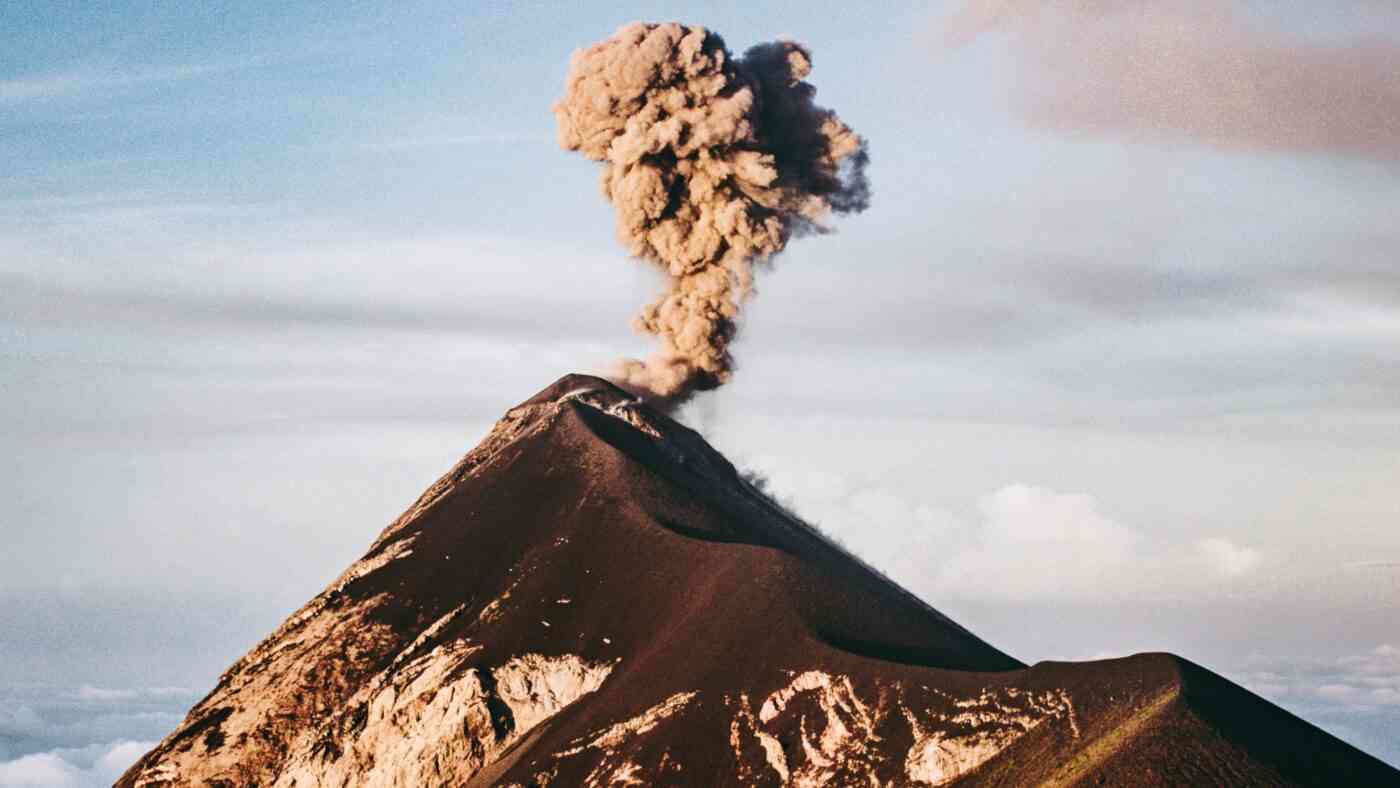
The plague did not appear out of nowhere. Before Europe began to perish, a different crisis had been escalating for several years. New research reveals what the true beginning of the Black Death looked like. It turns out that a cataclysmic natural event thousands of miles away created the perfect storm for the pandemic to ravage the continent.
The Black Death was one of the greatest catastrophes in European history. Within just a few years, it led to the deaths of approximately 25 million people, and its effects were felt long after the wave of infections began to subside. The continent changed for decades—demographically, economically, and socially.
For a long time, the cause of this tragedy seemed obvious. However, new research is shifting old assumptions.
For centuries, the blame was placed on a single bacterium. Yersinia pestis—transported with goods from Central Asia—was believed to have reached European ports, infected rats, and subsequently humans. This scenario was considered a sufficient explanation. Over time, however, doubts emerged.
Increasing evidence suggests that the bacterium alone could not have caused a pandemic on such a scale. Something must have prepared the ground beforehand—something unrelated to the disease itself that created the conditions for it to spread.
That missing piece, ignored for years, turned out to be a massive volcanic eruption.
The eruption did not cause the plague directly. However, it was the first link in a chain of events that led to the outbreak of the pandemic several years later.
This conclusion comes from an analysis conducted by researchers from the University of Cambridge and the Leibniz Institute for the History and Culture of Eastern Europe. By combining climate data and historical sources, they managed to reconstruct the sequence of events preceding the pandemic. Timing proved to be the key factor.
The eruption occurred about two years before the first plague outbreaks appeared in Europe. During this period, the continent began to struggle with a problem initially unlinked to the disease: a rapid deterioration of climatic conditions.
Following the eruption, vast amounts of dust and gases entered the atmosphere. For the next few years, a thick fog lingered over parts of Europe, restricting sunlight, particularly in the Mediterranean region. Temperatures plummeted. Crops began to fail.
It was then that a food crisis emerged, forcing many cities to seek grain outside their own regions. The effects of the eruption proved to be far more serious than initially thought—extending far beyond a mere change in weather.
When local harvests failed, the hardest-hit regions had no choice. Italian cities, especially those dependent on regular food supplies, began looking for grain beyond Western Europe. They headed in one direction: the Black Sea region.
It was alongside these grain shipments to European ports that the factor ultimately triggering the epidemic arrived. The bacteria responsible for the plague appeared on ships traveling between the east and west of the continent at a moment when Europe was already weakened by famine.
I noticed that the most severe famine in the 13th and 14th centuries occurred in the years immediately preceding the Black Death. Why the Black Death appears exactly in 1347 and 1348, at least in Italy, cannot be explained without considering the background of famine caused by climate change,
– said study co-author Martin Bauch, a historian of medieval climate and epidemiology, quoted by Ktvz.com.
The study’s conclusion is straightforward: had the volcanic eruption not occurred, there would have been no grain shortage. Consequently, grain would not have been transported from distant lands. This, in turn, means the bacteria that ultimately caused the plague would not have reached Italian ports.
Yet, one mystery remained: the plague appeared nearly 700 years ago. How do we know what the climate was like back then?
Chronicles and archives alone were not enough. While historical records allowed researchers to reconstruct the effects of the crisis, they did not provide a full picture of the climate. Therefore, the authors turned to a source that preserves such information with much greater precision: trees.
The results of this analysis were described in the journal Communications Earth & Environment. Trees, growing continuously for hundreds of years, record changes in temperature, rainfall, and sunlight in their rings. Each ring represents one year—including those preceding the beginning of the Black Death.
The analysis of tree growth clearly pointed to a period of significant climatic cooling in the years before the epidemic. This matches the exact moment when crop failures and food shortages began to plague Europe.
To ensure the conclusions were not based on a single source, researchers turned to data entirely independent of tree rings. They analyzed ice cores which, like trees, store a record of ancient environmental conditions.
A clear spike in sulfur concentration was discovered in the ice. Such a signal is characteristic of large volcanic eruptions. Sulfur compounds enter the atmosphere, eventually settle, and become trapped in successive layers of ice. Crucially, these data are not linked to the tree analysis, yet they point to the same moment in time.
Sulfur-rich eruptions are known for long-term climate cooling. In this case, both independent records—trees and ice—lead to the same conclusion. An event that was not associated with the plague for years actually preceded its outbreak and triggered the chain of changes that ended in a pandemic.
Understanding this environmental catalyst redefines how we view the beginning of the Black Death and the vulnerability of civilizations to sudden climate shifts.
Read this article in Polish: Tak zaczęła się czarna śmierć. Odkryto nowy trop


A graduate of journalism and social communication at the University of Rzeszów. She has been working in the media since 2019. She has collaborated with newsrooms and copywriting agencies. She has a strong background in psychology, especially cognitive psychology. She is also interested in social issues. She specializes in scientific discoveries and research that have a direct impact on human life.



Zmień tryb na ciemny