Truth & Goodness
Western Factories, Without Western Freedom
09 October 2026





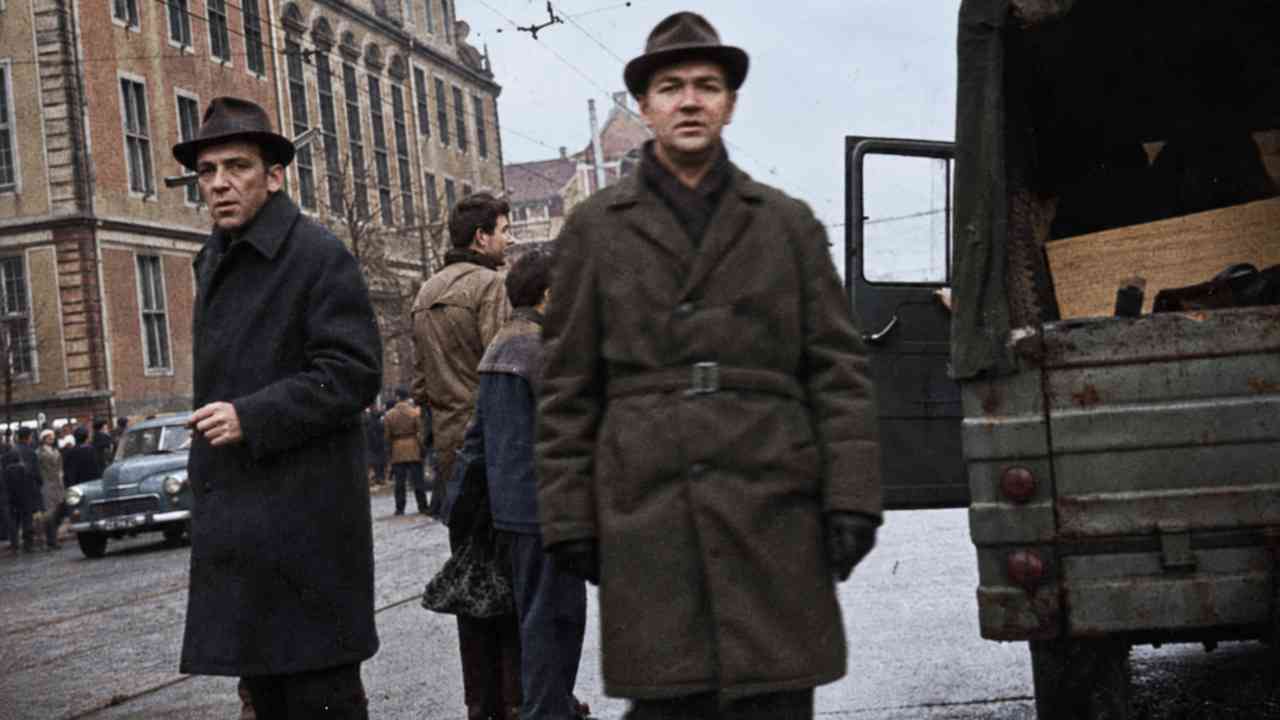
Journalists, artists, and academics attracted particular attention from the communist secret police. Among them were people working in Polish cinema: actors, directors, cinematographers, and film critics. The authorities tried to recruit some, kept others under surveillance, and received information from still others who volunteered reports on their colleagues. Vladimir Lenin had good reason to say that “of all the arts the most important for us is the cinema.”
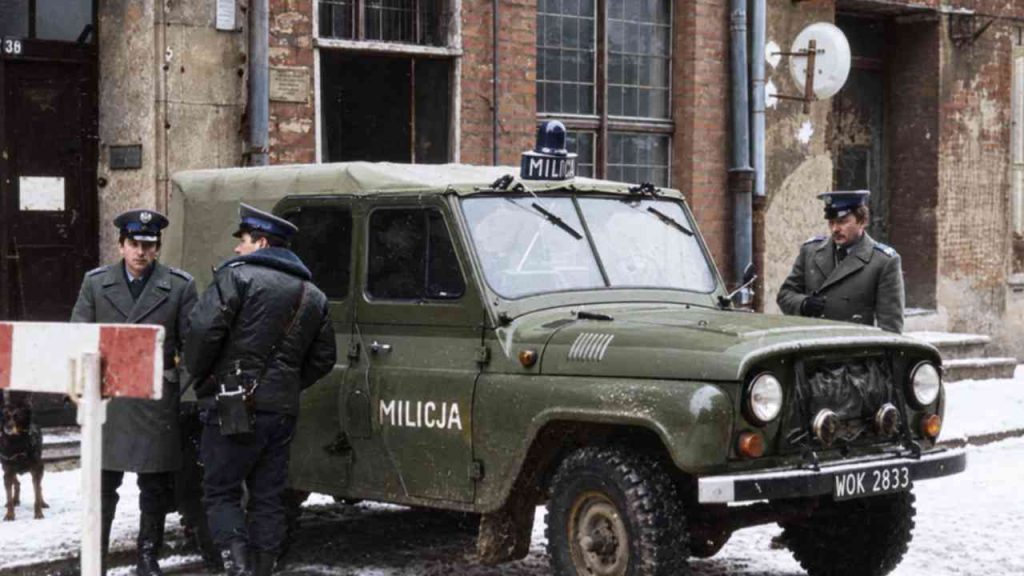
There was a time when revelations that a handful of stars of film and television—some more famous or well liked than others—had succumbed to pressure caused considerable surprise. Officers would threaten to revoke an actor’s driver’s license after the Citizens’ Militia, communist Poland’s regular police force, caught him driving with varying amounts of alcohol in his system. Such incidents were hardly uncommon among performers.
One such actor was Piotr Fronczewski, who stood at the height of his popularity in the 1980s. Traffic police stopped him in January 1983 and gave him a breathalyzer test. The result was less than encouraging, and they confiscated his driver’s license.
The actor agreed to meet a lieutenant from the Security Service, known by its Polish initials, SB, in a café. The officer’s pitch went something like this: “Well, you see, I could get that license back for you, but I need something to put on my boss’s desk.” He then added: “You’ll be helping us.”
According to Fronczewski, his response was: “What’s your name?”
“Zbyszek.”
“Zbyszek, no f…ing way!”
What is more, the actor told the story widely among his friends. The disconcerted SB officer wrote in an official memo that Fronczewski “presents the attempt to recruit him as a collaborator in an untruthful and humorous manner.”
The actor had effectively thumbed his nose at the SB. A secret police document recorded: “Fronczewski’s arrogance and aggression, and his dissemination of false information about his conversations with Lieutenant Grabowski, offer little prospect of success in further operational discussions within the area of activity of interest to us.”
The 1980s, however, were already very different from the immediate postwar years. In his engrossing and beautifully written book Filmowcy w matni bezpieki (Filmmakers in the Secret Police’s Trap), journalist and historian Dr. Filip Gańczak gives a detailed account of the distinguished cinematographer Jerzy Lipman, a leading figure in the Polish school of cinematography.
In 1945, the Office of Security, or UB, arrested the 23-year-old lieutenant in the “People’s” Polish Army. A court sentenced him to death for desertion and armed robbery, but an act of clemency commuted the sentence to 10 years in prison. He left prison 3 years later, at the price of signing a “pact with the devil,” as Gańczak puts it.
As a secret police informant, Lipman spent a period diligently reporting on his acquaintances. He singled out their “reactionary” views and hostility toward the “people’s” authorities, while also supplying plenty of information about their private lives. After several years, however, he began avoiding contact, and in 1955 the security apparatus removed him from its active network of informants.
The cinematographer behind such masterpieces as Andrzej Munk’s Bad Luck and Roman Polański’s Knife in the Water soon became a target of the Security Service himself. Among those reporting on him was an informant using the codename “Stefania”: director Tadeusz Chmielewski, whose films included the celebrated comedy How I Unleashed World War II.
In 1963, Lipman once again agreed to act as a secret collaborator for the security apparatus, but soon began avoiding meetings with SB officers. In 1969, he failed to return to Poland from a trip abroad, a decision connected to the antisemitic campaign unleashed in communist Poland in 1967–1968. He died in London in 1983.
The SB maintained a fairly dense network of informants in the film community. The extensive documentation concerning the marriage of director Janusz Morgenstern and his wife, Krystyna, offers evidence of its reach. The material that informants produced about Elżbieta Czyżewska, a star of Polish cinema in the 1960s, is even more substantial.
The political police eagerly recorded every detail of people’s private lives, including gossip. Filip Gańczak’s book is full of the codenames that appear in the extensive SB files on the actress, which run to several hundred pages.
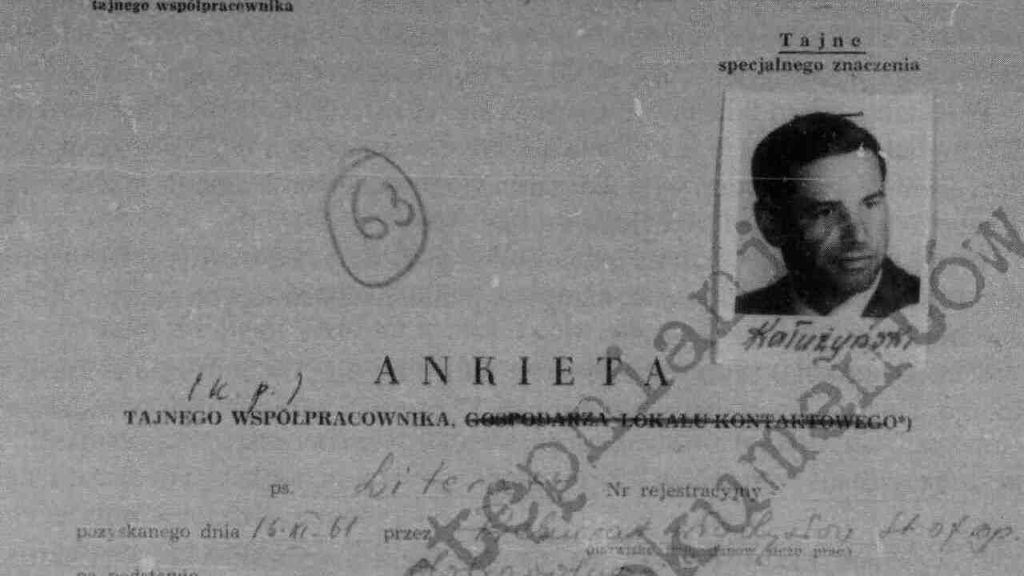
Among them is “Literat,” meaning “Man of Letters”: perhaps the best-known film critic in communist Poland, who remained prominent long after the regime’s demise. Zygmunt Kałużyński wrote distinctly acerbic reports about Elżbieta Czyżewska, despite being a close acquaintance of hers. The secret police took particular interest in Czyżewska’s relationship with David Halberstam, the Warsaw correspondent for The New York Times. The couple married in 1965.
The authorities soon revoked the journalist’s accreditation because his articles criticized Poland’s rulers. Czyżewska also left the country some time later, but returned to play one of the leading roles in Andrzej Wajda’s Everything for Sale (1969). During the Solidarity movement’s surge, she visited Poland again and appeared in several films. She died in New York in 2010.
The 1970s—the “Edwardian decade,” named after communist leader Edward Gierek—brought a relative easing of the Security Service’s infiltration of the film community. Officers continued collecting material, however, including through listening devices in hotel rooms. One report, for example, recorded that a very famous actor and his casual partner, a woman named Małgosia, “went to bed and had sexual intercourse” in a hotel in Bydgoszcz.
The SB paid particular attention to filmmakers’ connections with the democratic opposition emerging in the mid-1970s. Actors who supported the Workers’ Defense Committee, or KOR, with varying degrees of involvement came within the secret police’s operational reach. KOR formed after the workers’ protests in Radom and Ursus in June 1976.
The authorities placed actor Andrzej Seweryn, a KOR supporter, under surveillance. Perhaps the heaviest price fell on Halina Mikołajska, an actress who joined KOR in September 1976, risking her entire professional career. Known for her work in theater and televised theater productions, as well as her roles in films by directors including Krzysztof Zanussi—Family Life, Quarterly Balance, and Camouflage—she suddenly disappeared from both television and cinema screens.
Surveillance was only part of what she faced. She also endured a campaign of intimidation that must have had the SB behind it. Her husband, the writer Marian Brandys, recorded the incidents in his diary: “Someone damaged all 4 locks on Halina’s car.” “They partly cut through the wires in the car’s ignition system.” “Someone planted a bottle in the car containing something so appallingly foul-smelling that we all nearly suffocated.” “Someone stuffed some filth into all the door locks, so we can’t get a key in.”
Harassers also targeted the actress with abusive telephone calls and letters. One day, people claiming to be workers from Ursus forced their way into Mikołajska and Brandys’s apartment. In reality, the SB had sent them.
Mikołajska attempted suicide after the incident. “The next day, when we finally managed to bring her around, she desperately resisted coming back to life. She shouted that she had had to do it because she could no longer live amid this all-encompassing lie. She was in a state of acute shock,” Marian Brandys wrote. The authorities interned the actress during martial law. She died shortly after the elections of June 4, 1989.
Finally, a grotesque twist: the Security Service acquired a film unit of its own. It is worth recalling that, in communist Poland, state-run creative and production groups headed by established filmmakers handled film production. These included “Iluzjon,” “Kadr,” “Rytm,” “Tor,” “X,” “Pryzmat,” “Profil,” and “Zodiak.”
The Ministry of Internal Affairs likewise decided to establish its own departmental film unit, “Sektor.” It adopted the name in 1974. Its “educational” and “training” films catered to ministry employees and students at police schools in Legionowo and Szczytno.
Its output included such works as Szyki i ugrupowania MO – ćwiczenia ZOMO (Citizens’ Militia Formations and Deployments: ZOMO Riot Police Exercises, 1979), Imieniem Feliksa Dzierżyńskiego (In the Name of Felix Dzerzhinsky, 1981), and Wysoko trzymajcie sztandar (Hold the Banner High, 1983). It also produced Obsługa codzienna samochodu Fiat 125p (Daily Maintenance of the Fiat 125p, 1975).
Interestingly, one of the studio’s directors was Jerzy Obłamski, the filmmaker behind the excellent television film Ostatnie takie trio (The Last Trio of Its Kind, 1976), starring Zbigniew Zapasiewicz. Obłamski had also worked as an assistant director on Andrzej Wajda’s The Promised Land and occasionally appeared as an actor. His filmmaking nevertheless became immersed in subjects associated with the security apparatus. One of the last films he made at the ministry was Poznałem go w Los Angeles (I Met Him in Los Angeles, 1989), a paean to communist Polish spy Marian Zacharski.
Several years earlier, in 1986, Polish Television broadcast Obłamski’s series Kryptonim Turyści (Codename: Tourists), starring Tomasz Zaliwski. An exceptionally dreadful, unwatchable production, it purported to portray the SB’s triumph in dismantling an American intelligence network.
The authors of the valuable edited collection Filmowcy w rzeczywistości politycznej Polski Ludowej (Filmmakers in the Political Reality of People’s Poland) examine this chapter of Polish cinema in detail. Edited by Filip Gańczak and Sebastian Ligarski, the book recently appeared from Poland’s Institute of National Remembrance.
Read this article in Polish: Donosy, szantaż i wielkie nazwiska. Tak SB weszła w świat polskiego kina

A Polish historian, specialist in German studies, and professor of the humanities at the Institute for Western Affairs in Poznań. He describes himself as a historian who brings history to a wider audience—and says his professorial title in history does not get in the way at all.

Zmień tryb na ciemny