Education
What Does It Take to Keep a Child Curious?
28 September 2026





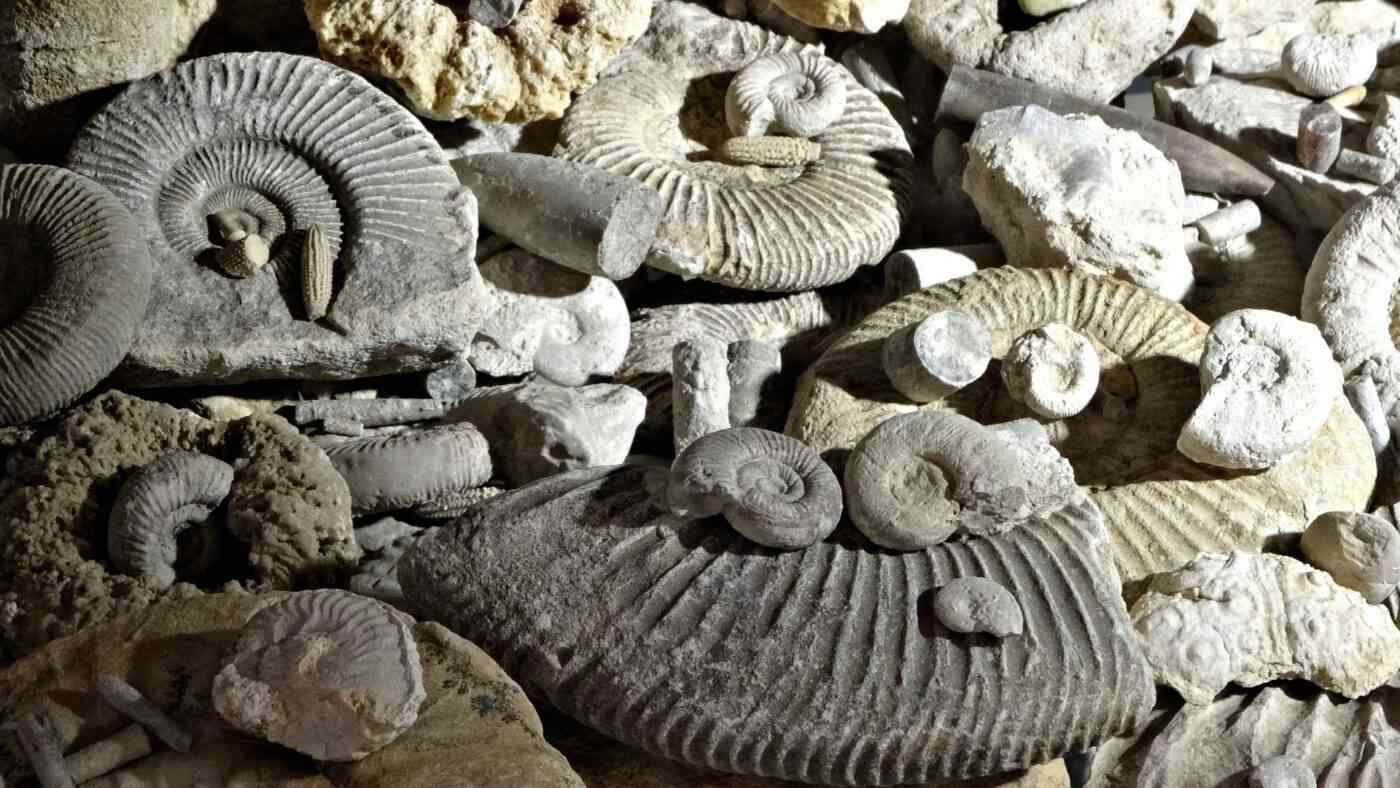
More than 50,000 exquisitely preserved specimens from a recent fossil discovery in China offer a sharper picture of how life recovered after the first major mass extinction in animal history. The find shows how ecosystems regroup after catastrophe—and how long that process can take on a planetary scale.
A team of researchers linked to the Chinese Academy of Sciences uncovered an exceptional fossil bed in Hunan Province in southern China. The story began in 2020, when road construction exposed ancient shale layers and set off a multi-year excavation. Since then, scientists have collected more than 50,000 specimens from a single quarry roughly 12 meters high, 30 meters long, and 8 meters wide.
The collection represents at least 153 species, and 91 appear to be new to science. Marine invertebrates dominate the assemblage: arthropods, sponges, cnidarians, and a range of planktonic organisms. Researchers also report forms that resist easy classification, suggesting the ecosystem still holds surprises even after thousands of specimens.
What makes this site extraordinary is preservation. Many fossils retain soft tissues and internal structures—details such as digestive and respiratory systems, and in some cases traces consistent with nervous tissue. That level of fidelity lets palaeontologists reconstruct not only what these animals looked like, but how they lived: how they fed, how they moved, and how predators and prey interacted in a newly reorganised sea.
The fossils date to around 512 million years ago, shortly after the “Sinsk event,” an early extinction that disrupted the Cambrian Explosion—the long evolutionary surge that produced most major animal groups. Many shallow-water species disappeared during this interval, likely driven by environmental upheaval linked to volcanism, rapid climate shifts, and severe oxygen loss in the oceans.
Until now, scientists had strong data on ecosystems before the die-off and on communities that flourished later. The immediate aftermath, however, remained a stubborn blind spot in the geological record. This excavation—often referred to as the Huayuan biota—offers one of the most detailed snapshots yet of marine life during that critical recovery window.
Current analyses suggest the Huayuan site formed in a deeper-water setting near the edge of the South China continental shelf. While the extinction hit shallow habitats hard, this deeper zone likely acted as a refuge—a place where diverse communities endured and then helped repopulate other environments as conditions stabilised.
The fossils include bottom-dwelling animals alongside many free-swimming species, including active predators and tunicates. Because researchers often treat tunicates as relatively advanced chordates, their presence hints that complex, “modern-feeling” food webs may have assembled earlier than many assumptions suggested.
This find closes a key gap in the story of life on Earth. Previous discoveries documented later surges in biodiversity, but they rarely captured the first pulse of rebuilding right after collapse. Here, the record shows ecosystems rising from the shock of a global crisis, with surprising richness and structure.
The extraordinary biodiversity of this find provides a unique window into the Sinsk event, showcasing the renewal of life within the outer shelf environment after a major extinction,
– the study’s authors emphasise.
This site carries at least 3 big implications for how we think about resilience, ecosystems, and climate stress. First, it supports the idea that deeper continental-shelf settings can serve as refugia—safe zones that preserve biodiversity and seed recovery after a crash. Second, it shows that complex marine systems can rebound faster than expected if stable niches survive the worst phase of a crisis.
Third—and most sobering—this record is a warning. Life as a whole can prove resilient, but specific ecosystems can change irreversibly after abrupt warming, acidification, or oxygen loss. Even when the planet “recovers,” the timescale can stretch into millions of years—far beyond any human horizon. That is the deeper message behind this fossil discovery in China.
Read this article in Polish: Jak odradzało się życie na Ziemi? Odpowiedź znaleziona w skałach


A Journalism and Social Communication graduate with 15 years of experience in the media industry. He has worked for titles such as "Dziennik Łódzki," "Super Express," and "Eska" radio. In parallel, he has collaborated with advertising agencies and worked as a film translator. A passionate fan of good cinema, fantasy literature, and sports. He credits his physical and mental well-being to his Samoyed, Jaskier.



Zmień tryb na ciemny