Science
Before There Are Planets, There Is Dust
16 October 2026





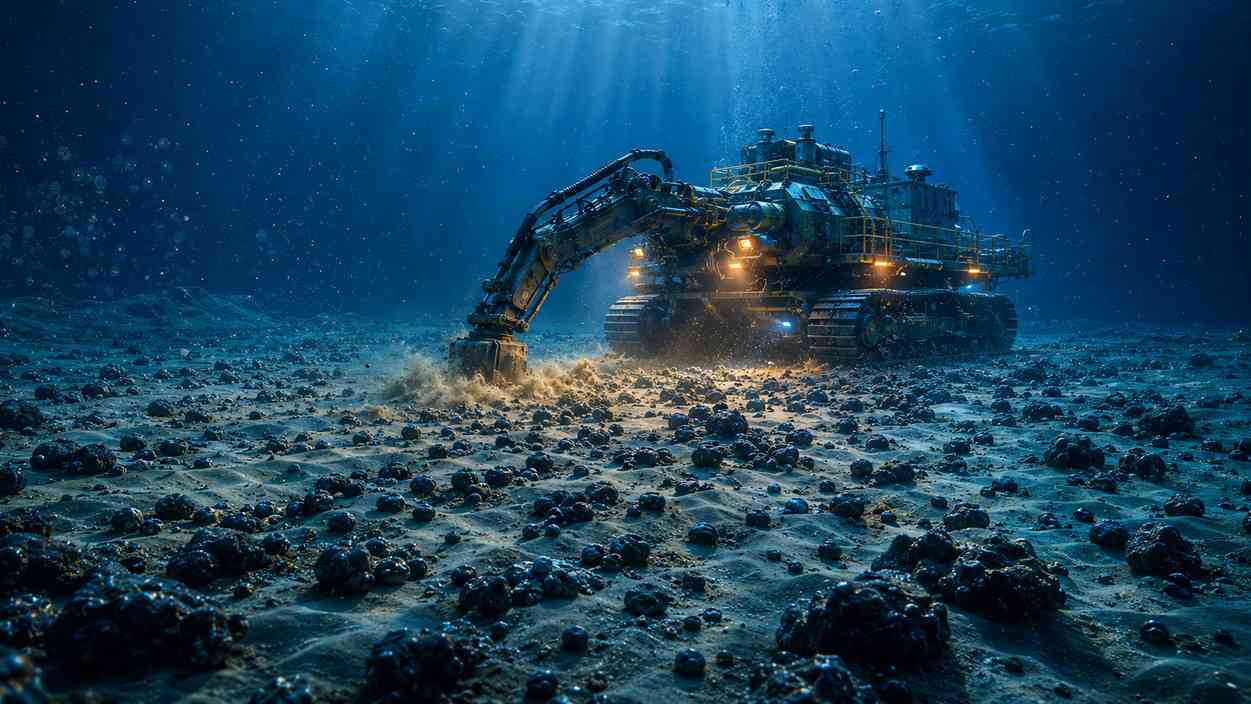
Deep-sea mining sits at the heart of a troubling paradox. To build electric cars, energy storage, and renewable infrastructure, the world needs more metals. Some in industry see their future on the Pacific floor. The problem is that the green transition may bring heavy machinery into one of the least understood environments on Earth.
That is where, on the floor of the Pacific, a race is beginning that could define the geopolitics of the 21st century. The paradox is striking. In order to clean the atmosphere and limit the effects of the climate crisis, humanity is considering the industrial exploitation of one of the last almost untouched environments on Earth. Saving the sky may mean devastating the ocean.
This is not a conflict between progress and backwardness, or between industry and environmentalists. The dispute concerns 2 goods that, until now, seemed inseparable: a stable climate and intact nature.
For years, the architects of the energy transition have warned that without new sources of strategic metals, the entire process may stall. Traditional mines are gradually being depleted, while rising demand is becoming harder and harder to meet through land-based extraction alone.
One only has to look at forecasts for manganese. Global supply of this element would have to increase many times over before the end of the current decade. Similar pressure applies to nickel and cobalt, both crucial to many energy storage technologies. That is why the world’s attention is shifting toward the ocean depths.
Polymetallic nodules lie on the floor of the Pacific: dark, stone-like mineral clusters rich in strategic raw materials. For industry, they promise new resources. For some scientists, they signal intervention in an environment whose mechanisms we still understand poorly.
Supporters of deep-sea mining present the technology as the “lesser evil.” Their argument rests on emissions. Producing 1 kg of nickel from the ocean floor generates about 6.2 kg of carbon dioxide. Extracting the same raw material from land-based mines, meanwhile, may mean emissions of roughly 20 kg to even 100 kg.
Seen this way, the calculation seems simple: if the world takes climate policy seriously, it must accept new forms of extraction. The problem is that a simple emissions balance does not answer the most important question: what ecological cost is hidden beneath the surface of the ocean?
The prospect of mining in the depths does not resemble a vision of careful scientific research. It is a project of heavy industry conducted at depths measured in thousands of metres.
Tracked machines weighing tens of tonnes would crush the ocean floor and scrape away its upper layer, together with organisms that have been developing there for millions of years. For many species, this would mean the destruction of habitats with no realistic possibility of recovery.
The second threat comes from huge clouds of sediment generated during extraction. Some of the dust is stirred up by the machines working along the seabed. A much greater risk, however, comes from material discharged from ships after ore has been separated from water. Such suspended particles can travel with ocean currents for hundreds of kilometres. They act like underwater smog, suffocating filter-feeding organisms, releasing heavy metals into the water, and limiting the access of light in the lower layers of the ocean.
Then there is noise and artificial light. In a world of permanent darkness, the presence of machines would mean deep sensory disruption, affecting the communication and orientation of marine mammals, including endangered whales.
Research published in 2024 made the situation even more complicated. Scientists confirmed the existence of processes on the Pacific floor that lead to the production of so-called dark oxygen, a phenomenon that occurs without light or photosynthesis, probably thanks to the properties of the nodules themselves.
The discovery does not yet amount to a biological revolution, but it reminds us of something important: the ocean depths remain an environment we still do not fully understand. That means the scale of the risk may be greater than we assume.
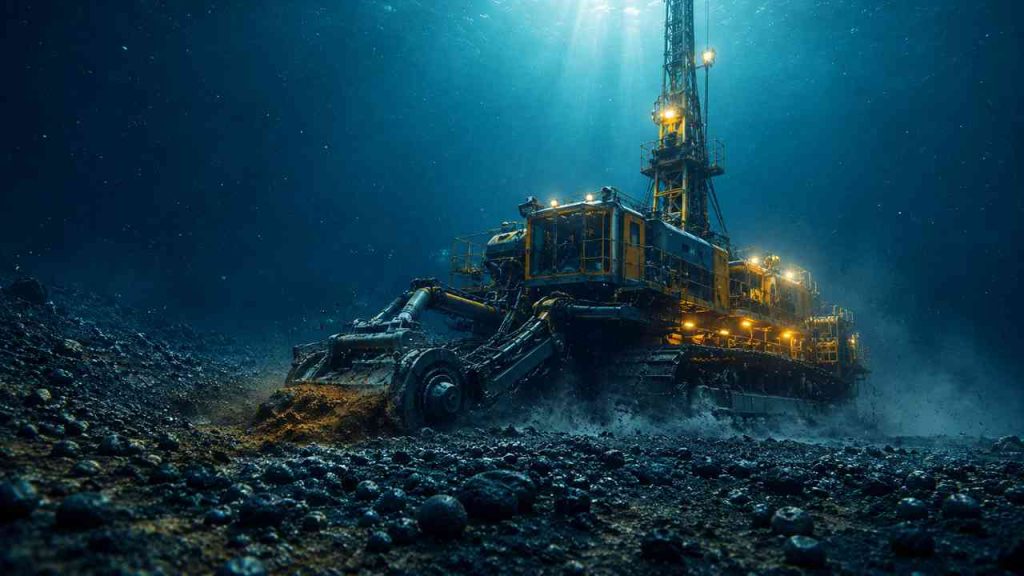
A narrative of a new raw-materials rush has grown around deep-sea mining. Supporters speak of a market worth billions of dollars and a strategic breakthrough for the global economy. But economics does not always confirm this optimism. The most comprehensive analyses suggest that the sector’s total net value over a 5-decade horizon may remain negative: from about minus 55 billion to minus 92 billion dollars.
The reason is simple. Projected corporate profits, estimated at about 12 billion dollars, appear lower than the long-term environmental costs resulting from ecosystem degradation and biodiversity loss.
The risk also concerns the technology itself. Industrial deep-sea mining has not yet been tested at full operational scale. A fall in metal prices or a rise in costs would be enough to make the entire economic model unprofitable.
In addition, the technology market is changing quickly. Lithium iron phosphate batteries, which require neither nickel nor cobalt, are playing an increasingly important role. This does not mean the end of demand for metals, but it does undermine the belief that the green transition will become impossible without exploiting the ocean floor.
If the economics raise so many doubts, why is the race accelerating? Because its real fuel is geopolitics. Control over future supply chains may decide the balance of power in the 21st century. Today, China holds a dominant position, having spent years building an advantage in strategic raw materials and green technologies.
The ocean depths are a natural next stage in that strategy. It is no coincidence that Beijing has secured the largest number of exploration licences issued by the International Seabed Authority, the institution that manages the seabed as the “common heritage of mankind.” The ISA itself, however, is under growing political pressure.
Prolonged negotiations and disputes between states increase the risk of regulatory deadlock. The most troubling scenario assumes that economic pressure may outrun the law. And where a strategic raw material appears alongside a regulatory gap, the age of declarations usually ends and the politics of faits accomplis begins.
At the same time, resistance to the industrial exploitation of the deep sea is growing. More than 20 countries, including Canada and New Zealand, support the idea of an international moratorium. Technology and industrial companies such as BMW, Google, and Samsung have also joined this group. Their argument remains simple: damage to the ocean floor may prove permanent on a human timescale.
The cost of merely attempting to restore such ecosystems is estimated at more than 5 million dollars for every square kilometre, and even then there is no guarantee of success. The war for the bottom is not a dispute between good and evil.
It is a conflict between 2 visions of responsibility. One says that without new raw materials, limiting the climate crisis will not be possible. The other reminds us that not every environment can be rebuilt after industrial intervention.
The most uncomfortable point, however, lies elsewhere. Perhaps for the first time in the history of the green transition, the world faces not the question of whether to act, but where to accept loss. Saving the sky may mean risking the loss of part of the ocean. And the decisions made today will determine not only the state of the climate, but also who builds new empires on resources extracted from the abyss. That is why deep-sea mining is no longer just an industrial project. It has become a test of what kind of future we are willing to damage in order to save another.
Read this article in Polish: Wojna o dno. Czy ekologia musi zniszczyć ocean, by ratować niebo?


Content marketing specialist with his heart in journalism and English translations. An active writer for 20 years. Majored in economy. He has authored several non-fiction books, one of which won an award at the Ladek Mountain Festival. Sports, hard rock, and Italian cuisine afficionado.



Zmień tryb na ciemny