Culture
A Life Spent Becoming Someone Else’s Ideal
12 October 2026





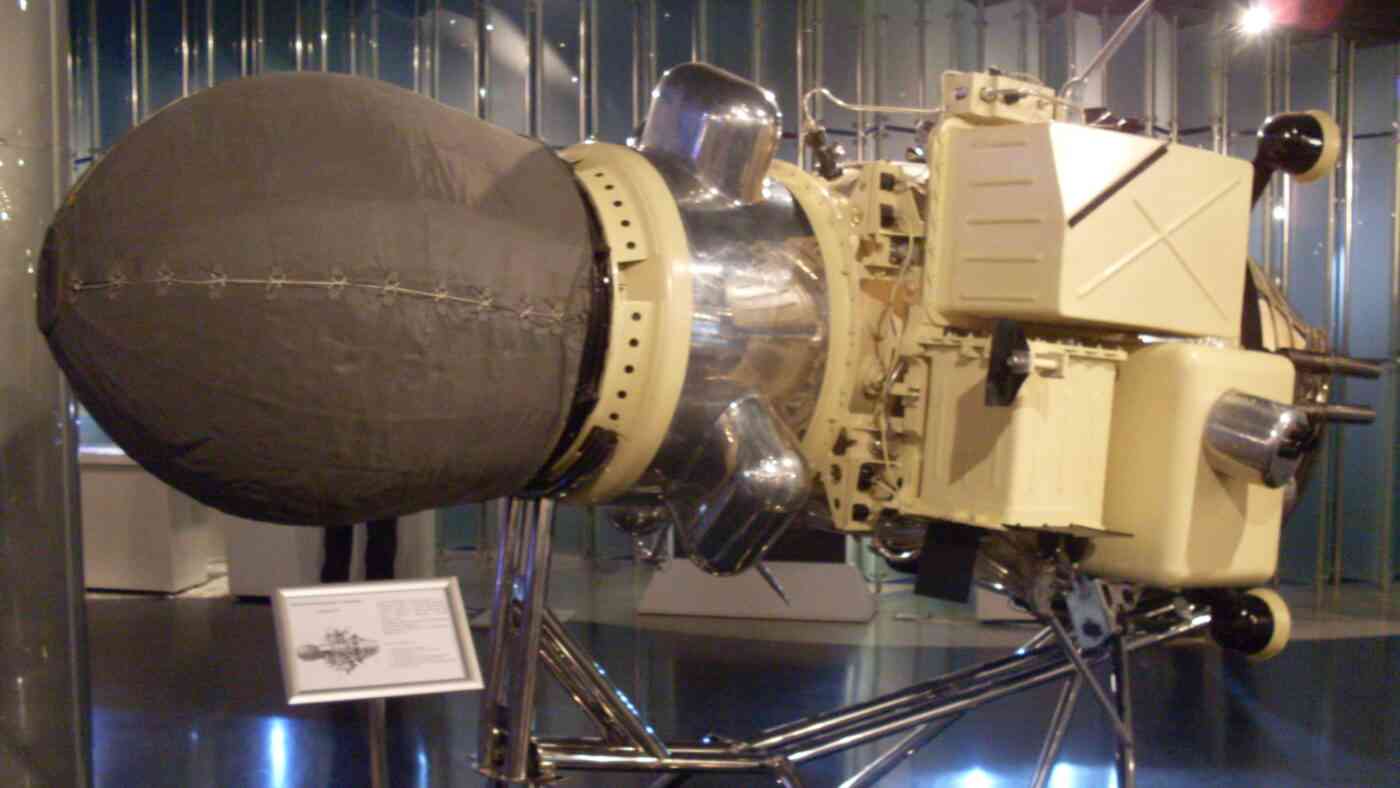
It was the first to achieve a soft landing on the lunar surface, sending back images that forever changed the history of space exploration. Yet, for six decades, no one could pinpoint exactly where the Luna 9 lander rests. Today, artificial intelligence has picked up its trail.
The Soviet Luna 9 spacecraft made history on February 3, 1966, by achieving the first-ever soft landing on the Moon. This mission changed everything. By transmitting the first panoramic images from the lunar surface, the Luna 9 lander proved that the ground was solid enough to support a spacecraft. It operated for three days, sending invaluable data until its batteries finally died. However, for six decades, its exact final resting place remained a mystery. Original tracking systems only provided rough coordinates in the Ocean of Storms (Oceanus Procellarum), leaving an uncertainty gap of several miles.
The margin of error proved too wide for orbital cameras to spot an object just a few pixels across. Scientists placed their hopes in NASA’s Lunar Reconnaissance Orbiter (LRO), which has been photographing the Moon since 2009 with a resolution of up to 0.25–0.5 meters per pixel. Although the LRO successfully located many other landing sites and crash zones, it failed to identify the Soviet pioneer.
Various hypotheses emerged over the decades to explain the disappearance. Some suggested the lander sat just outside the predicted zone, while others argued that landslides or micrometeoroid impacts buried it. A simpler theory proposed that no one had simply looked at the right spot under the correct lighting conditions. Furthermore, distinguishing a metallic object from a fresh crater remains difficult, as both can appear as a single bright pixel or a smudge without multi-angle photo analysis.
The tide is finally turning. Recently, two independent teams re-analyzed LRO data using vastly different strategies. The first team, led by Lewis Pinault of University College London, deployed an AI algorithm called YOLO-ETA (You-Only-Look-Once – Extraterrestrial Artefact). This AI learned its craft by studying photos of Apollo landing sites and other probes, training itself to recognize the specific “signatures” of man-made hardware: geometric shapes, unnatural shadows, and disturbed regolith.
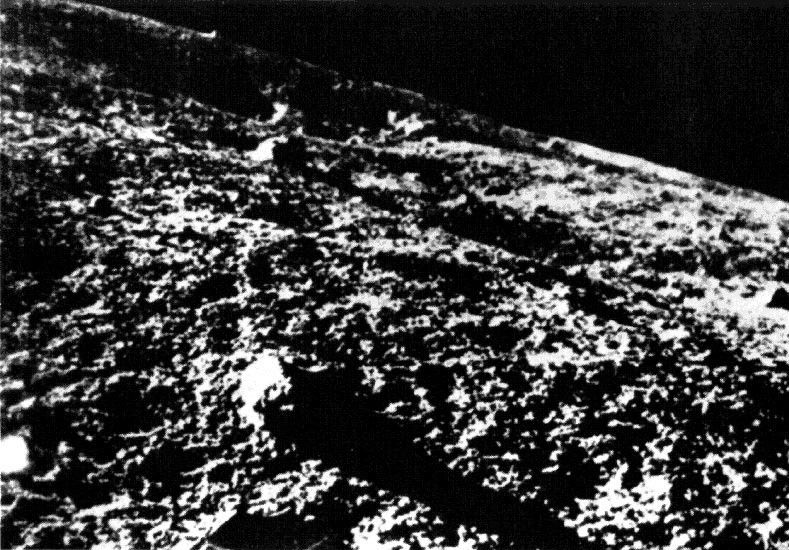
The researchers scanned a 5×5 kilometer area centered on the historical coordinates. Consequently, the AI flagged a cluster of objects as a potential match for the lander and its jettisoned covers. Additionally, topographic analysis confirmed that the horizon line in these new scans matches the original 1966 photos taken from the surface.
Simultaneously, a second team led by Vitaliy Egorov took a more “manual” approach. They combed through hundreds of LRO images, searching for a landscape identical to the one captured by the lander’s cameras sixty years ago. Eventually, they identified a location where the arrangement of ridges, shadows, and boulders mirrors the 1966 panoramic shots. Most importantly, several bright pixels nearby suggest the presence of the spacecraft itself.
Nevertheless, these two methods produced conflicting results. While both sites lie within the Ocean of Storms, they sit 29 kilometers (approx. 18 miles) apart. The AI-generated location is about 5 kilometers from the official Soviet coordinates, whereas Egorov’s site sits roughly 25 kilometers away.
Currently, no consensus exists regarding the final location of the spacecraft. We are left with two competing hypotheses, each meeting different criteria for credibility. The researchers emphasize that their findings require verification, specifically through new high-resolution imaging.
These results do not constitute final proof of discovery, but they provide credible targets for focused re-imaging.
– the Pinault team noted in their report.
Fortunately, a resolution may be months away. India’s Chandrayaan-2 orbiter, equipped with a camera superior to the LRO’s, is scheduled to fly over these specific coordinates soon. If it captures sharper images under optimal lighting, we might finally confirm the identity of the hardware—and the exact Luna 9 landing site. Until then, the pioneer remains “found and lost” at the same time—a tantalizing ghost on the lunar plains.
Read this article in Polish: Zaginęła na Księżycu 60 lat temu. Dziś szuka jej AI


A Journalism and Social Communication graduate with 15 years of experience in the media industry. He has worked for titles such as "Dziennik Łódzki," "Super Express," and "Eska" radio. In parallel, he has collaborated with advertising agencies and worked as a film translator. A passionate fan of good cinema, fantasy literature, and sports. He credits his physical and mental well-being to his Samoyed, Jaskier.



Zmień tryb na ciemny