Humanism
The Answer Machine and the Vanishing Art of Doubt
08 July 2026





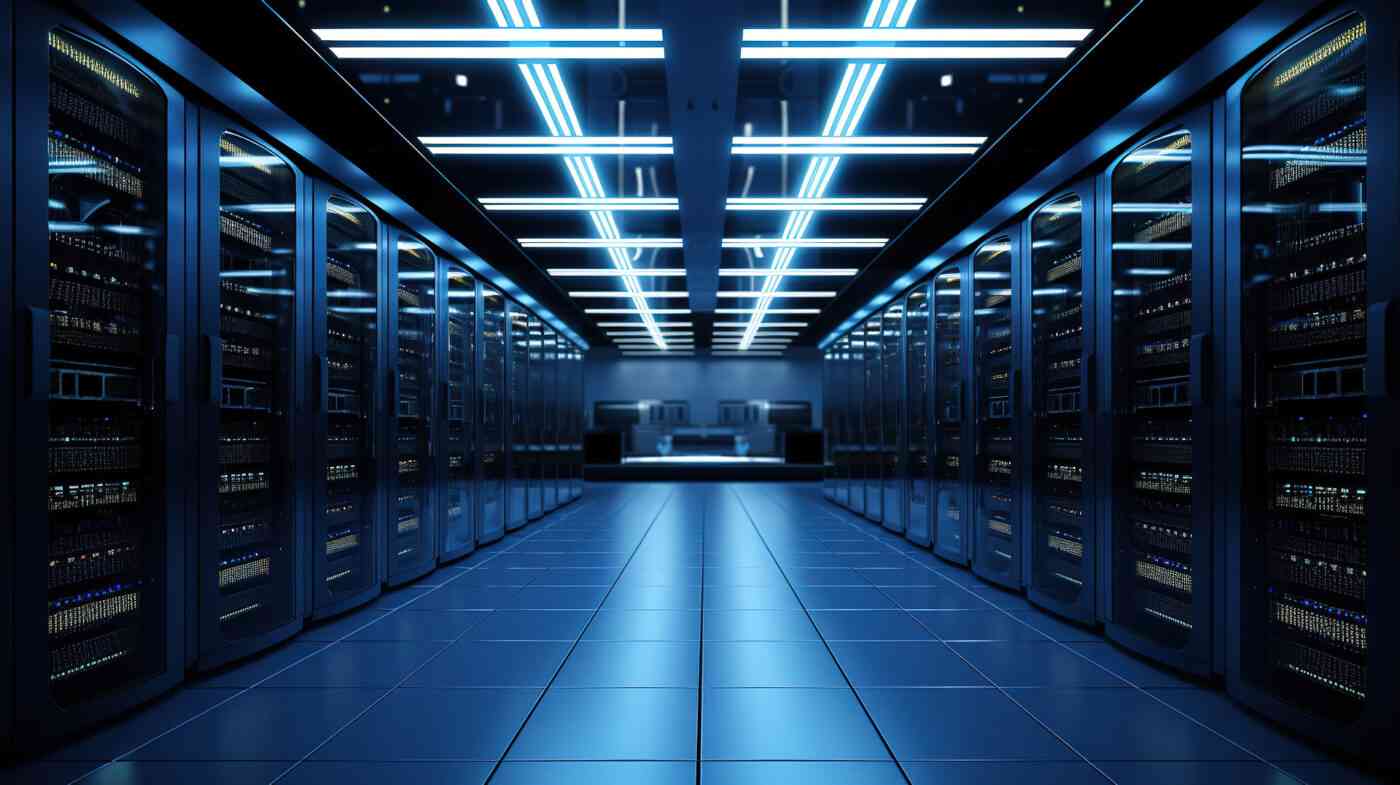
On a small sheet of glass—the kind found in oven doors—you can fit terabytes of information that will survive fire, water, radiation, and successive generations of digital storage. Thanks to a breakthrough in laser technology, Project Silica is entering a new phase. Is this the end of our data loss problems?
Project Silica is a Microsoft initiative, developed since 2019, that uses femtosecond lasers to record data. The process involves modifying the structure of the glass using ultrashort laser pulses. The laser does not burn traditional “grooves” like on a CD; instead, it creates microscopic structures inside the glass. These so-called voxels—three-dimensional counterparts to pixels—change the way the glass refracts light. Each voxel has its own position, size, and optical orientation, and their combinations correspond to encoded zeros and ones.
Data retrieval is performed using a precise optical system and a microscope that analyses how light passes through the glass and the “hidden” voxels within it. Subsequently, specialised algorithms and machine learning models decode these patterns into bits. This reconstructs the original files. Glass data storage ensures that information remains intact even if the original software becomes obsolete.
Every piece of glass is fully self-describing, so you can start from scratch and recover the data regardless of the situation,
– emphasises Ioan Stefanovici from Microsoft Research.
The technology is constantly evolving. The latest improvements concern recording voxels with different optical properties. Scientists have developed a technique where a single laser pulse can write two different voxels. They have also introduced parallel recording, allowing many voxels to be created simultaneously. As a result, both recording density and the efficiency of the entire process are increasing.
However, the most significant breakthrough is that data can now be recorded not only in expensive, specialised quartz glass but also in ordinary borosilicate glass—the kind used in kitchenware and oven doors. Importantly, this significantly lowers the cost of the medium itself. It also paves the way for using commonly available materials in future glass data storage libraries.
While testing the new technology, researchers managed to store 4.8 TB of data (about 200 films in 4K) in 301 layers of a glass plate with an area of about 1.2 cm² and a thickness of just 2 mm. In addition, the recording speed reached several megabytes per second.
Accelerated ageing tests at high temperatures, high humidity, and under the influence of radiation indicate that data stored this way can survive for up to 10,000 years. According to Microsoft, glass offers a lifespan reaching thousands of years. It is resistant to electromagnetic fields and does not require power to maintain the stored information.
The system developed under Project Silica is a WORM (Write Once, Read Many) medium, meaning that once data is written, it cannot be overwritten. This characteristic is perfectly suited for archives, backups, and assets that do not need modification but only need to be preserved for decades or centuries. In return, we get an incredibly stable medium. Borosilicate glass is resistant to high temperatures, most chemicals, and typical environmental conditions. Furthermore, the voxels recorded within it do not undergo magnetic or mechanical degradation like traditional disks or tapes.
Importantly, once recorded, the glass requires no energy to maintain the information. As a result, data centres can reduce energy-intensive asset migrations to subsequent generations of media. This thereby lowers both costs and the carbon footprint. The recording density allows for the vision of large-scale glass data storage in the form of shelves filled with thin glass plates handled by robots. Instead of halls filled with traditional servers, robots can handle glass plates.
However, this technology has its limitations. Current recording speeds of a few megabytes per second are far from the standards of modern SSDs and LTO tapes. For now, this makes Project Silica a strictly archival solution rather than a medium for “live” work.
Additionally, there is the high cost and complexity of femtosecond lasers, which require advanced optics and precise engineering. To enter widespread use, the technology also needs a complete infrastructure. This includes library robots, cataloguing systems, programming interfaces, and integration with existing cloud platforms.
Project Silica is a technology created primarily for long-term cloud archives. It is meant to store petabytes of data that are accessed relatively rarely but must be preserved. This way, everything from service backups and system logs to social media and streaming service archives can be stored. For the end user, this technology will remain invisible. Data stored in the “glass archive” will simply become another layer in cloud services.
A natural area for the application of this new technology is also cultural heritage collections. Films, audio recordings, museum collections, and digital national archives require media that will survive not only subsequent generations of hardware but also potential disasters. Furthermore, scientific archives, including data from telescopes or physics experiments, can benefit from this technology.
In the perspective of the coming years, glass data storage will likely appear first in large data centres as a supplement to magnetic tapes. A scenario where “glass flash drives” appear in homes would require a massive reduction in the cost of femtosecond lasers and the development of simple, inexpensive readers. More realistically, an “eternal cloud archive” could store our photos, videos, and documents. Meanwhile, we continue to use classic disks and flash memory.
Encoding data in glass is not the only futuristic approach to long-term data storage. DNA Storage uses DNA molecules instead of glass. Digital data (zeros and ones) are algorithmically converted into sequences of nucleotides (A, T, G, C) and then physically synthesised in the form of DNA molecules. Reading involves sequencing the DNA and converting the read sequence back into bits.
DNA Storage theoretically offers a gargantuan recording density—many petabytes of data can fit into a volume comparable to a sugar cube. Similarly, with glass, the potential durability of such encoded data is also measured in thousands of years. In this case, however, appropriate storage conditions for the DNA molecules are necessary.
The biggest problems today are the costs and efficiency of this technology. DNA synthesis remains an expensive and relatively slow process. The same applies to sequencing, which requires equipment and procedures on the border of biotechnology and medicine.
While Project Silica and DNA Storage share a common goal—creating an archival medium “for generations”—clear differences exist between them. DNA is extremely dense but requires a sensitive, specialised “wet” laboratory. Its cost still limits its use to niche experiments and prototypes. Borosilicate glass, on the other hand, is mechanically and chemically resistant and unafraid of high temperatures or electromagnetic fields. In addition, its integration with library robots and server rooms is much simpler.
In practice, DNA Storage and glass data storage do not so much compete as represent two different philosophies of information storage: biological and material. One shows how a vast amount of information can be condensed into a volume smaller than a grain of sand. As a result, the goal of the other is to ensure that this information survives for thousands of years in an ordinary piece of glass.
Read this article in Polish: Dane zapisane w szkle z piekarnika. Przetrwają 10 tys. lat

A Journalism and Social Communication graduate with 15 years of experience in the media industry. He has worked for titles such as "Dziennik Łódzki," "Super Express," and "Eska" radio. In parallel, he has collaborated with advertising agencies and worked as a film translator. A passionate fan of good cinema, fantasy literature, and sports. He credits his physical and mental well-being to his Samoyed, Jaskier.
Zmień tryb na ciemny