Science
A Flicker from Cosmic Dawn, and the Black Hole Mystery It Deepens
09 July 2026





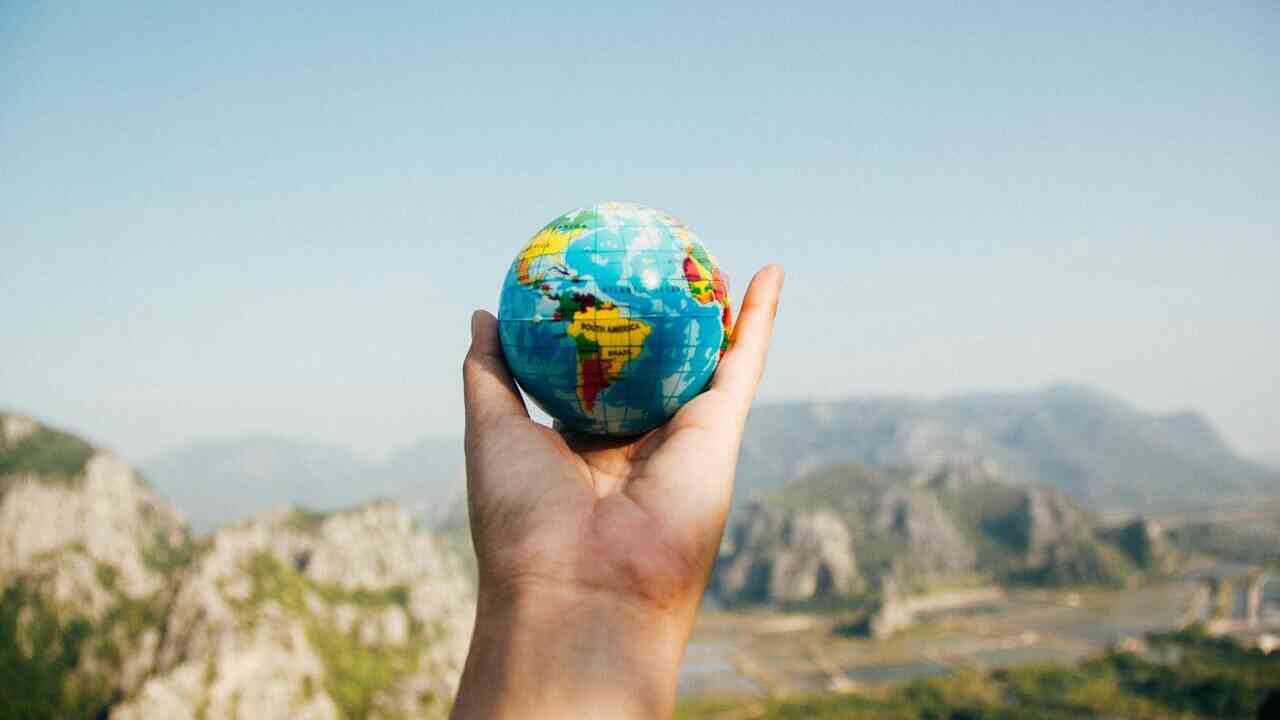
For thousands of years, humans wandered and discovered the globe, risking their lives to see what lay beyond the horizon. Today, we can reach almost anywhere faster than ever, yet we must ask whether this ease has caused us to stop truly experiencing the world.
People living generations—or even dozens or hundreds of generations—before us perceived time and space in a completely different way than we do. Consuming space, exploring new territories, and colonizing them have always been the domain of our species. It is almost difficult to imagine that we appeared as a race on the African highlands and from there traversed the entire globe.
Harassed by wild animals and climate catastrophes, threatened by hunger, piercing cold, treacherous heat, diseases, and parasites, we nevertheless spent millennia taking more and more space into our possession: Europe, the Near and Far East, and eventually even the Americas, Polynesia, and Australia. One could say, then, that we were a race of wanderers. Constantly restless, moving, seeking perhaps not so much new challenges as a new, better world.
Our modern history, however, is a history of settled civilizations. These societies set the rhythm of life for the entire human species; they produced epoch-making technological inventions; through them, we learned to build cities and fortresses, to cultivate and store grain. Mathematics, geometry, and art all stem from their heritage. Yet, even within these settled civilizations, the need for expansion still simmered intensely. This time, however, it was carried out not by entire tribes and nations (as was the case with barbarian peoples), but by select explorers, merchants, and soldiers.
In ancient Rome, travel was facilitated by one crucial fact: the entire Mediterranean world belonged to a single state. Although cultures or customs might—and did—differ in Gaul or Syria, people lived under the rule of the same emperor, followed the same law, used the same currency, and the same soldiers guarded their safety. Perhaps most importantly: solid, well-known roads led throughout the Empire. Romans eagerly engaged in trade, but merchants were not the only ones traversing vast stretches of the world.
Roman armies were famous for their great mobility. Although in peaceful times legionnaires might spend their entire lives in one province, during periods of war or civil strife, soldiers could be deployed at lightning speed from Syria to the Danube, and then to Spain or Egypt. A similar situation occurred even earlier with the Macedonian Empire, where Alexander the Great’s soldiers had the opportunity to fight tribes on the Danube while also conquering Egypt and present-day Iran, Iraq, Afghanistan, and Pakistan.
And who knows, perhaps some of them even glimpsed the mighty peaks of the Himalayas painting the horizon. Quite a journey for a man from the fourth century BCE, wouldn’t you agree? From the Danube all the way to the Indus.
However, if we set aside the wandering merchants, magnates, soldiers, or pilgrims; if we do not focus on the conquistadors or organized colonization efforts (for example, in the Polish-Lithuanian Commonwealth, farmers from Western Europe were encouraged to settle on the eastern, nearly deserted fringes of the empire—lands belonging to today’s Ukraine); if we look at the majority of so-called “ordinary people,” we find that their mobility was negligible.
Setting aside legal and financial considerations, the fundamental question was: why should I travel? It was not unusual for people to be born and die in the same village, never venturing further than the borders of their own county throughout their entire lives. Travel was time-consuming, dangerous, and mentally as well as physically exhausting. This applied not only to some poor vagabond wandering from town to town for bread.
Surviving diaries and account books of our ancestors speak of the enormous costs and great effort associated with travel. Even for a wealthy nobleman or magnate, a journey from one end of the Commonwealth to the other (at its peak, it occupied an area of nearly a million square kilometres) was an exceptional undertaking, carefully prepared for and often leading to financial trouble.
Citizens of the old world might not have wanted to risk life and limb in travel, but they eagerly listened to stories of distant lands and the wonders to be seen there. They took pleasure in meeting well-travelled people, especially those who journeyed to holy places and could captivatingly recount the various miracles and marvels they had witnessed. In later centuries, as literacy grew and became popular, travel books became immensely sought after, followed by travellers’ reports published in newspapers.
Societies truly lived through the successes, adventures, and tragedies of great explorers. They cheered for those reaching the Poles, grew enthusiastic about the search for the sources of the Nile and the Amazon, and followed the great expeditions sent to find the Northwest Passage. Notice that in this case, these were no longer expeditions aimed at gaining wealth or magical artifacts, such as the search for El Dorado, the City of Gold, or the Fountain of Youth.
What pushed people to the Poles and into the African and American jungles was primarily the desire to conquer space—to turn empty, white areas on maps into coloured regions filled with cartographic details. It was in the 19th century that geographical societies were formed en masse, and it was then that the governments of many countries (and even the media!) competed to organize numerous and well-equipped expeditions (such as Stanley’s expedition to rescue Dr. Livingstone).
Travel in past centuries was very difficult, especially in less industrialized countries. But the railway changed the world. I still remember a fragment from the novel In Desert and Wilderness, when the now-adult Stanisław Tarkowski and Nel Rawlison travel by a newly built railway line, retracing their childhood journey. A trip that once took them months now took them a few days. That is exactly how the world shrank.
In the United States, the construction of the railway was considered a fundamental condition for the state’s development, enabling not only the transport of goods but also the relatively easy and safe movement of settlers. On the seas, steamboats played a similar role—ugly, clumsy, lacking the grace of sailing ships, but consistent, entirely predictable, and able to enter waters where sailing ships could not manage.
We are currently so fantastically mobile that we might seem like magical beings to someone from the not-too-distant past—beings who have harnessed the forces of earth, fire, water, and air. Our trains can race at speeds of up to 600 kilometres per hour (though in daily practice on the world’s fastest lines, it is about 300–400 km/h), and our planes carry hundreds of people from America to Europe or Africa in a few hours (with thousands of such flights occurring every day). We are the masters of space—something the man of old could only dream of or tell tales about, like owning seven-league boots.
A separate question, of course, is whether we use this great power over space appropriately. Do we use it wisely? I still remember a conversation with a couple I met in Egypt who spoke about their holiday in Mauritius. They did nothing there except lie by the pool. In Egypt, they also never ventured outside the hotel complex.
On one hand, one could say: if they like that lifestyle, it is their business. On the other hand, isn’t it a bit of a pity that we have harnessed and tamed space just so someone can cover thousands of kilometres only to lie by a hotel pool? This paradox highlights the difference between mere movement and truly experiencing the world.
Read this article in Polish: Jacek Piekara: podróżujemy wszędzie. Ale czy jeszcze widzimy świat?


Jacek Piekara: One of Poland's most popular fantasy writers, a journalist, and a columnist. He is the author of the widely acclaimed "Inquisitor Series" (Cykl Inkwizytorski), dozens of books, and numerous short stories. Piekara has also contributed to specialized and popular press, including the magazines Click! and Gambler. In addition to literature, he writes scenarios for computer games and works as a publicist.



Zmień tryb na ciemny