Culture
Between Spectacle and Reflection: What Do We Really Expect From Culture?
18 September 2026





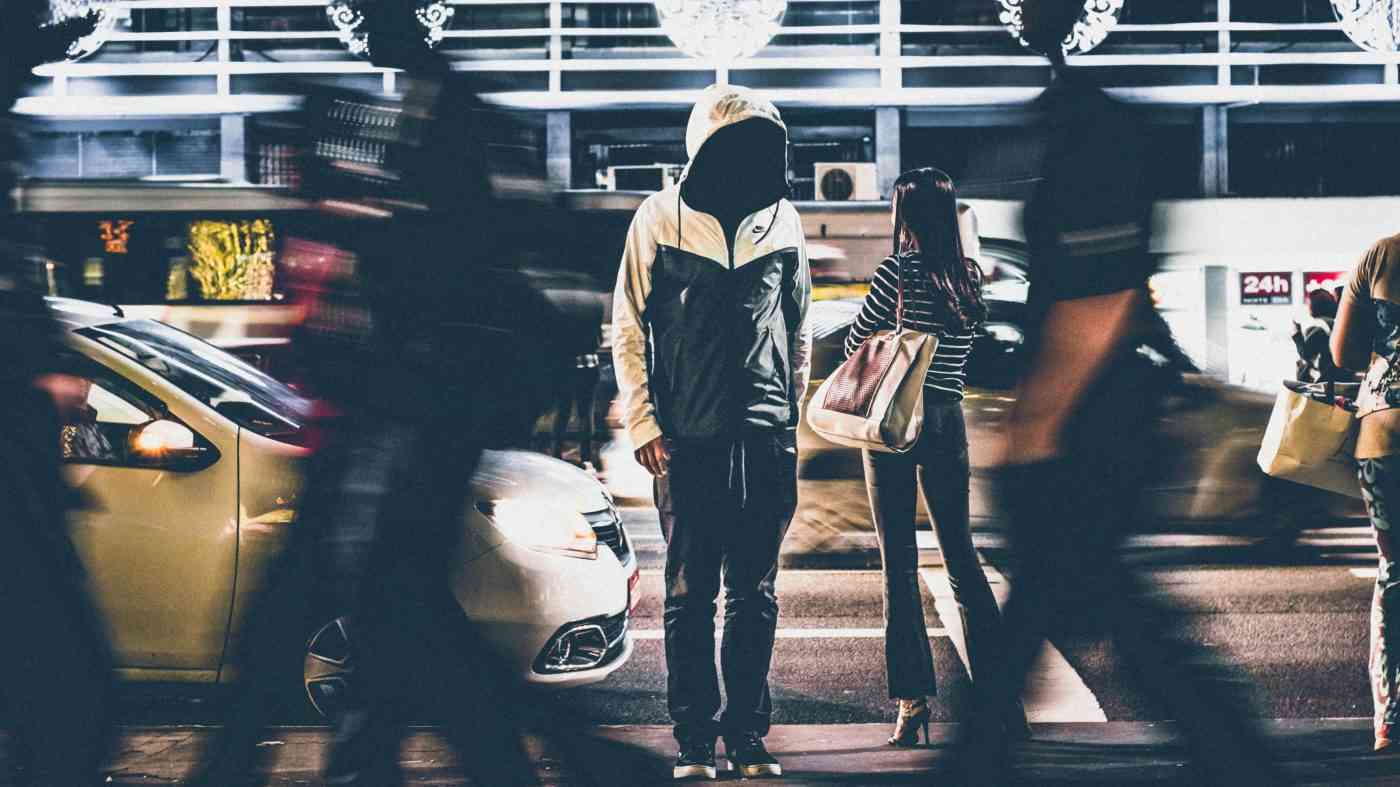
We rarely lose our autonomy in one violent stroke. More often, we surrender it piece by piece, trading it for convenience, safety and the removal of uncertainty. The real danger lies in the threshold. By the time we recognise what has happened, the gate has often already closed behind us. The erosion of liberty often begins as a promise of comfort and ends as a loss of agency.
Can authoritarianism harm the individual and still serve the collective? Can stability, security and prosperity for the majority justify limiting personal freedom? In his brilliant novel Limes Inferior, Janusz Zajdel shows just how tempting—and how dangerous—this calculation can become.
Argoland is not a classic high-pressure dystopia. It is not an open dictatorship with rifles at every street corner. Instead, Zajdel presents a subtler form of bureaucratic totalitarianism. The state monitors every aspect of life in the name of a higher purpose. The whole world runs on ranks, measurements and social categories. A person’s assigned level determines everything: work, housing, access to goods and even the amount of leisure time they are allowed.
This sophisticated form of authoritarianism works mainly through social and technological engineering. The system treats the human being like a carefully selected puzzle piece, designed to fit neatly into a designated slot. In theory, such a regime serves everyone. Since people differ in ability, the authorities argue that they must be placed correctly in order to avoid waste and preserve stability. The entire structure of classes, points and job assignments promises a life without chaos, where everyone has their place.
In practice, however, Zajdel shows the exact opposite. The individual becomes a mere parameter in a spreadsheet. People assigned to lower intellectual classes are immediately pushed to the margins. Those considered gifted are turned into cogs and forbidden to step outside their assigned limits. Instead of encouraging talent or building trust, the system rewards concealment, manipulation and performance. The “greater good” no longer means a flourishing life for real people. It comes to mean only the smooth functioning of a machine.
Zajdel portrays authoritarianism as a promise of security and justice. In reality, it turns citizens into automatons who serve the collective while losing their autonomy and time.
A person’s greatest wealth is the time that remains of life after subtracting all the hours filled with obligations toward society and the necessary efforts to ensure material survival,
– says Sneer, the novel’s protagonist.
The individual remains under constant pressure to adapt: to a rank, to a job that rarely matches their actual talents and to a life stripped of personal dreams in favour of “social duty.” The system produces a refined illusion of choice. In truth, it creates a perfectly controlled disorder that only imitates freedom. People lose authenticity, creativity and the right to remain themselves. They sacrifice all of it at the altar of a supposed higher purpose.
Importantly, the authorities in Limes Inferior do not present themselves as cynical tyrants. They claim to govern in order to protect humanity from a real external danger—aliens who may destroy or subjugate the human race. In this vision, surveillance, control and selection function not as a whip but as a shield. Necessity becomes the final justification for the erosion of liberty. Restricting freedom appears as a small price to pay for the survival of civilisation.
Seen from that angle, the question of whether such a system “works” becomes more complicated. If the threat is real and the survival of the species is at stake, then subordinating the individual may seem morally necessary: freedom today exchanged for life tomorrow. Yet Zajdel steadily undermines this logic. He shows that a system built to protect society ends up destroying what makes that society alive.
Adi “Sneer” Cherryson begins as someone who knows how to function in Argoland. He understands the rules and knows how to bend them. At first, he resembles the classic clever rogue who can find a niche in any regime. But the more he sees, the more clearly he understands that the foundations are false. Behind the façade of rational order stands a structure in which real decisions are made elsewhere, while “public interest” serves only as a cover for permanent control.
That discovery raises a fundamental question: what actually remains of the society the state claims to protect? Do people who live in fear and constant dependency still form a community, or have they become nothing more than statistics? If the “greater good” requires a population of obedient and intimidated units, does a collective still exist at all—or only a manageable mass?
Zajdel gives no easy answers. But he strongly suggests that once authoritarianism destroys the individual in order to save the whole, it eventually reaches a point where nothing worth saving remains. A society without free and creative individuals loses its meaning. In that sense, even a real threat cannot justify building a regime that slowly strips people of their essence in the name of a higher purpose.
The conclusion is bitter, but clear. Authoritarianism can hide behind noble goals and defend society from outside danger. But when it does so by destroying dignity and autonomy, it also destroys the very idea of the common good. Without the individual, no “greater good” remains to be protected—only the silence left by the erosion of liberty.
Read this article in Polish: System „wie lepiej”. Tak oddajemy wolność za bezpieczeństwo

A Journalism and Social Communication graduate with 15 years of experience in the media industry. He has worked for titles such as "Dziennik Łódzki," "Super Express," and "Eska" radio. In parallel, he has collaborated with advertising agencies and worked as a film translator. A passionate fan of good cinema, fantasy literature, and sports. He credits his physical and mental well-being to his Samoyed, Jaskier.

Zmień tryb na ciemny