Truth & Goodness
Played for Money. Gambling Addiction Was Taking a Life
13 September 2026





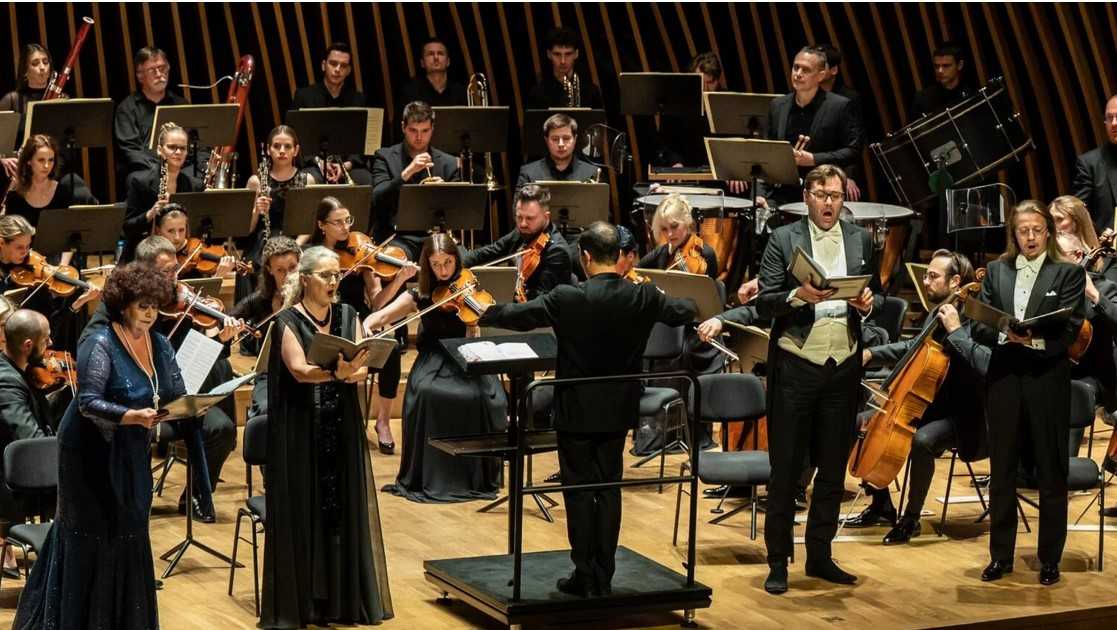
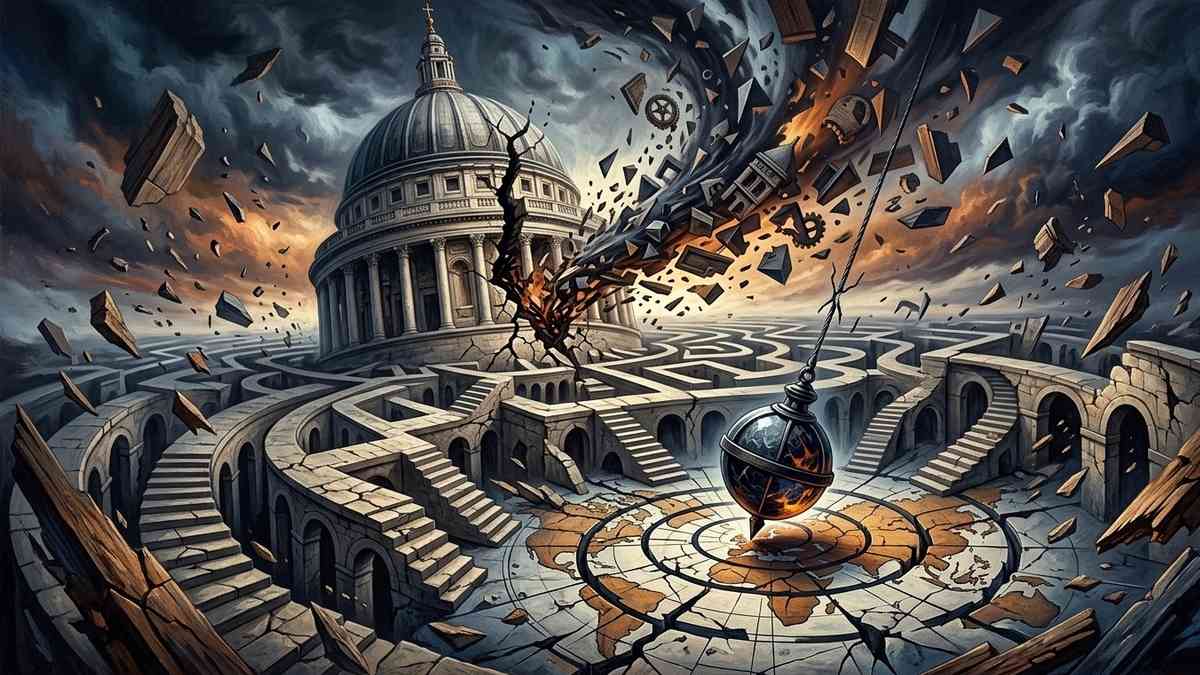
A conductor who has spent his entire life immersed in the world of art has no illusions today. Andrzej Kucybała shows why refined aesthetics are increasingly losing ground to whatever is easy, fast and loud. The shifting priorities of local and national authorities suggest that we are witnessing a profound crisis of high culture, in which substance is sacrificed for shallow accessibility.
Last year, I received a copy of a letter that a dear friend had written to the mayor of his city. He strongly disagreed with the local government’s approach to cultural promotion and with the way it carried out its civic responsibilities. In his view, the authorities have been flattening the cultural landscape so severely that high culture has been pushed onto a distant and neglected side track. I share that view entirely. It is worth asking why this decline has become so visible.
My friend does not work directly in the cultural sector, yet he has loved culture all his life. He has taken part in it as a conscious and committed recipient: he regularly attends concerts, goes to the theatre and visits art exhibitions. He is, in the fullest sense, a man of culture—a mechanical engineer, a social activist and a local government official, a true Renaissance man. What struck me most in his letter were 4 maxims that captured, with remarkable precision, the current state of our spiritual life:
These reflections deserve careful analysis. When we look at the processes shaping the modern world—especially those linked to cultural values as markers of social well-being—we can clearly see a deep mismatch between accessibility and quality. On a scale from 1 to 5, the availability of cultural events might deserve a 4 plus. Their artistic quality, however, would receive no more than a failing grade, perhaps even a failing grade with a minus.
As an active participant in artistic life, especially in music, I have to agree with my friend. He rightly argues that a city or a country should not build its identity on universally accessible but flattened and simplified culture. Its true hallmark should be sophisticated artistic forms—high culture. Those forms both express and preserve the testimony of economic and humanistic development. They offer genuine proof of prosperity, far more than fairground entertainment or fashionable street art ever can.
If we look more closely at these maxims, it is hard to deny that entertainment performs one function extremely well: it kills boredom and fills free time. Great art works differently. When a work achieves mastery in both content and form, it asks for concentration, patience and reflection. It takes time to absorb it, to think it through and to experience its emotional force.
High art confronts us with difficult and universal questions about the meaning of life and the nature of morality. It asks something of its audience: knowledge, ambition and intellectual agility. It also possesses a quality that fairground culture lacks entirely—durability. It survives the passing of years. Yet this durability comes at a price. High art also demands a certain elitism of reception, not in the social sense, but in the sense of effort, preparation and depth of response.
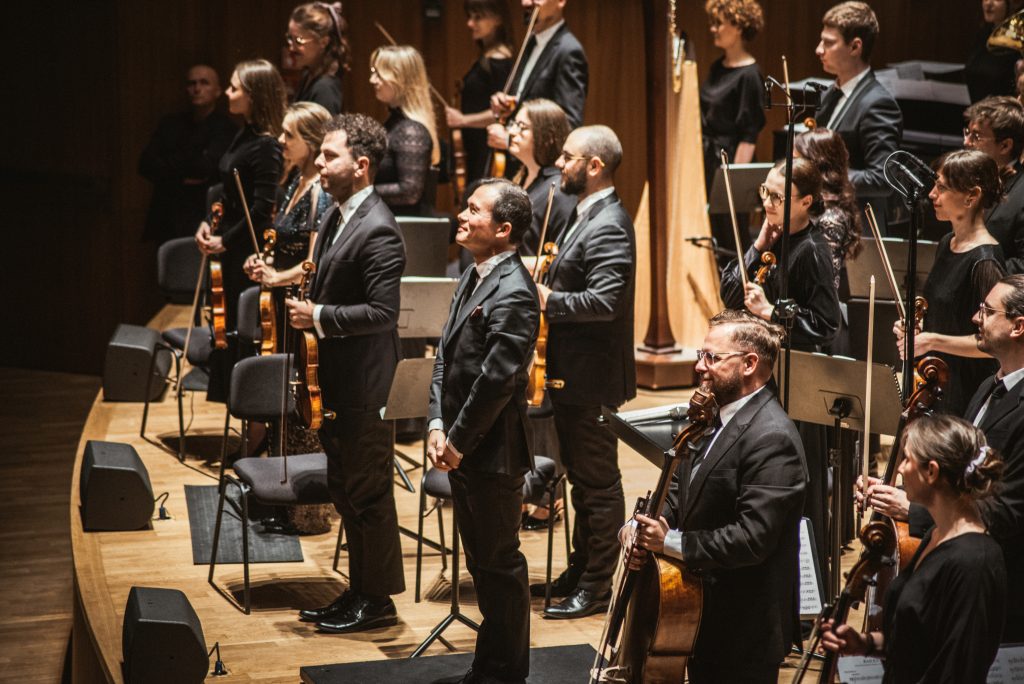
For people taught only to consume and digest rather than to experience and reflect, high art becomes an almost insurmountable obstacle. No one has shown them how to overcome such barriers. We forget a simple truth: when we learn to walk, we fall and bruise ourselves. No one is born able to clear hurdles. Only through repeated effort do we become masters of the long jump or the high jump. We reach summits through discipline, intensity and practice.
Authorities often forget this educational dimension of culture. Teaching through culture is a difficult art. It requires knowledge, patience and serious financial investment. It is far easier to throw the public a scrap—even a seemingly tasty one—and satisfy a basic hunger with a substitute.
What is especially striking is that political debate almost never touches this issue. No party meaningfully addresses it, let alone gives it a serious place in an election programme. Culture has become a peculiar taboo. On this matter, all parties seem united by the same deafening silence.
That silence weakens society’s ability to perceive culture and suppresses public demand for it. As a result, art begins to look like a burden to both local and central authorities, including the Ministry of Culture and National Heritage. These institutions now focus above all on opinion polls and on attracting voters, who ultimately decide the one overriding question: will I win another term on the city council, in the Sejm or in the Senate?
The quality of culture has slipped far into the background. Even within the Ministry itself, the second half of its name—National Heritage—often receives only marginal attention and is reduced to the preservation of physical monuments. Yet heritage also includes intangible art, and today that sphere is treated like an unwanted stepchild. This neglect forms one of the foundations of the crisis of high culture.
We have almost completely forgotten the truth contained in the phrase: culture gives meaning to power. That sentence becomes real only when power itself—political, military, economic or technological—stops being an end in itself and begins to serve the values, ideas and meanings a society has created.
Put simply, power gives us the possibility of action. Culture tells us why we act and how we should act. Without culture, power turns chaotic or destructive. Culture determines whether we pursue development, justice or mere domination.
Without cultural norms—morality, law, tradition—everything that can be done starts to seem permissible. The prohibition against violence toward civilians in wartime, for example, arises from culture, not from raw force.
Culture builds identity; without it, we lose any real sense of who we are. It allows power to endure, to be transmitted and to claim legitimacy. In the end, culture ensures that strength remains subordinate to values, rather than values becoming subordinate to strength.
The final 2 maxims—“A cultural dwarf cannot resurrect high culture” and “Insolence is armed to the teeth; culture does not even have elbows”—are so sharply formulated that commenting on them almost feels impertinent. Yet they illuminate, with unusual force, the tension between the subtle and the aggressive.
The dwarf in this context does not mean someone physically small. It means a person of small spiritual and intellectual stature, someone lacking depth, knowledge and sensitivity. The thought recalls Friedrich Nietzsche, who attacked mediocrity and believed that truly great values could emerge only from exceptional individuals.
The second maxim draws an even harsher contrast. In real life, insolence is aggressive. It comes armed with the tools of domination, visibility and advertising. Culture, when placed in that confrontation, appears all the more delicate and defenceless. It has almost nothing with which to fight back. In today’s social world, insolent attitudes often break through far more effectively than cultivated ones.
Culture speaks quietly, and for that very reason it loses to noisy, aggressive vulgarity. We encounter this dynamic every day—in social life, in politics and in private relations.
The overall message of these reflections is clear. High culture is fragile, difficult to sustain and easy to overwhelm with vulgarity or aggression. Not everyone can create it, and not everyone can preserve it. If we fail to recognise that fact, the crisis of high culture will eventually cost us the soul of our civilisation.
Read this article in Polish: Kultura przestaje być ważna. A to może nas dużo kosztować

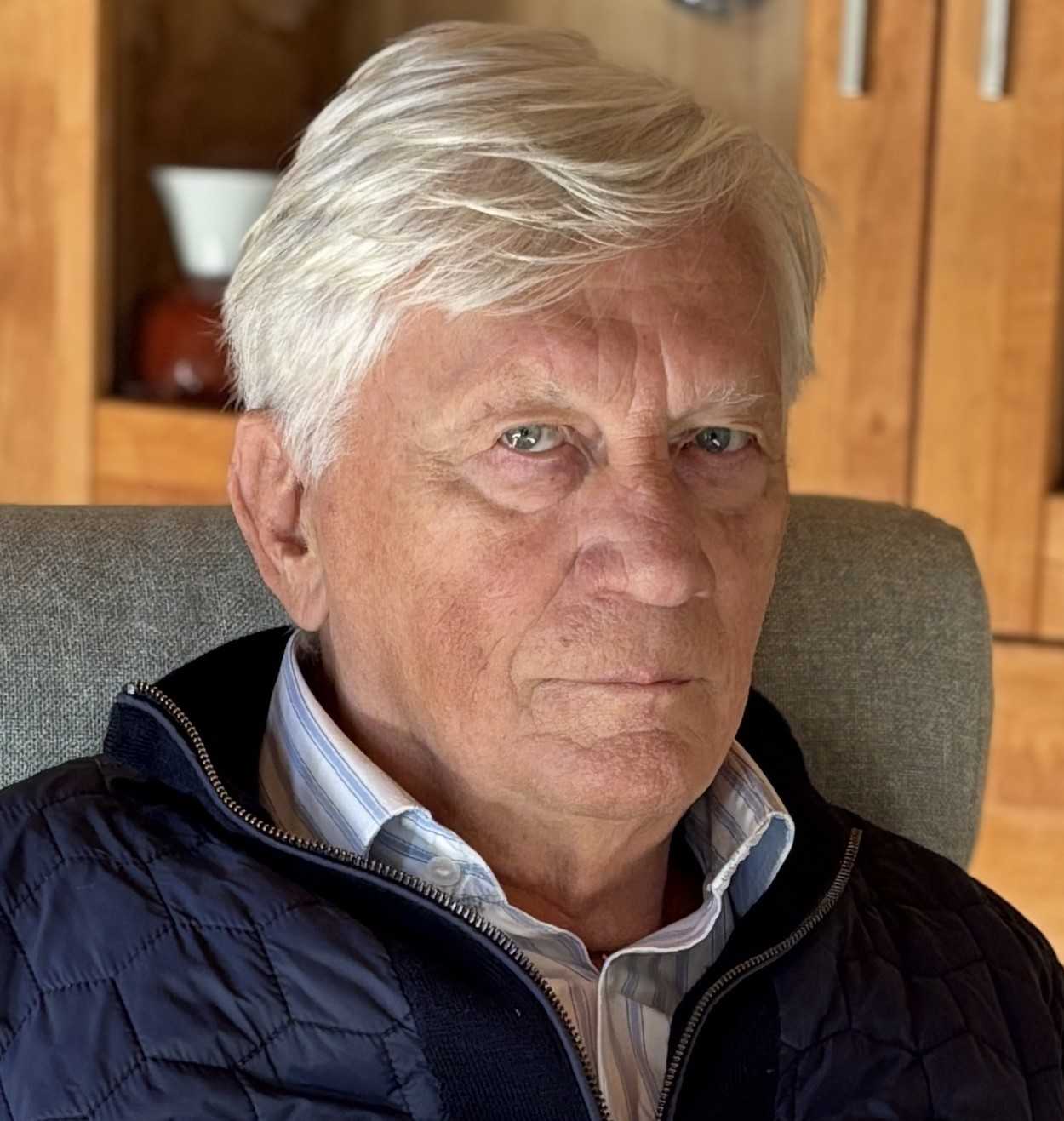
Polish conductor, educator, and cultural manager. He founded and led the Symphony Orchestra in Tarnobrzeg and also co-organized prestigious music festivals. He served, among other roles, as conductor and artistic director of the “Lasowiacy” Song and Dance Ensemble. He also headed the Stanisław Moniuszko Music School Complex in Bielsko-Biała, transforming it into one of the country’s leading artistic institutions. He was honoured with numerous distinctions, including the Knight’s Cross of the Order of Polonia Restituta, the Gold Cross of Merit, and the Silver Medal for Merit to Culture “Gloria Artis.”

Zmień tryb na ciemny