Education
The Endless Scroll: How Short Videos Are Changing the Way We Pay Attention
19 September 2026






In today’s world, full of division, polarisation, and informational noise, mutual understanding often feels harder than ever. Cultural, ideological, and linguistic differences seem to push us further apart. And yet languages around the world carry something deeply shared within them.
A new study analysing more than 1,700 languages from across the globe suggests that, for all their astonishing diversity, many of them follow the same grammatical script. The finding does more than shed fresh light on the nature of language. It also reminds us of what truly binds us together as human beings.
The team, led by Annemarie Verkerk of Saarland University and Russell D. Gray of the Max Planck Institute for Evolutionary Anthropology, conducted one of the largest grammatical analyses in the history of the field. Using Grambank, the world’s largest database of grammatical features, the researchers tested 191 proposed “linguistic universals,” patterns long thought to recur across human languages.
The results were both surprising and quietly hopeful. Roughly 1/3 of the proposed universals received strong statistical support in this vast sample. The clearest support appeared in rules governing word order, such as whether a verb tends to come before or after its object, and in hierarchical structure, the deeper grammar that helps languages organise who does what to whom. These similar solutions recur in hundreds of unrelated languages across different continents. That pattern suggests that languages do not evolve at random. They develop under durable cognitive and communicative constraints.
The authors argue that these shared patterns most likely reflect the way the human mind works and the universal demands of effective communication. Whatever our culture, we all need to grasp certain things quickly: who acts, who receives the action, what matters most, and what belongs in the background. Grammar gives shape to that complexity.
In that sense, research on languages around the world reveals more than similarities between systems of signs. It reveals similarities between people. When distant communities arrive at comparable grammatical solutions, they point to a shared cognitive infrastructure. The implication is simple and profound: we may describe the world in different words, but we organise it in strikingly similar ways. That interpretation matches the researchers’ conclusion that universal tendencies in grammar likely arise from common pressures on human cognition and communication.
That is an important lesson for an age of fracture. If even grammar, the very domain in which we expect maximum diversity, reveals enduring common rules, then we have good reason to look for what connects us rather than stopping at the surface of difference. At the deepest level of how we speak and think, we may be far closer to one another than we imagine.
So we should not see the diversity of languages around the world as chaos. We should see it as richness unfolding within a shared order. It offers one more reminder that human communication is not arbitrary, but rooted in something common. And it suggests that humanity, despite all its differences, still moves along one path, however many branches it may contain: the path of understanding.
Read this article in Polish: Dziwne podobieństwo języków. Mówimy inaczej, myślimy tak samo

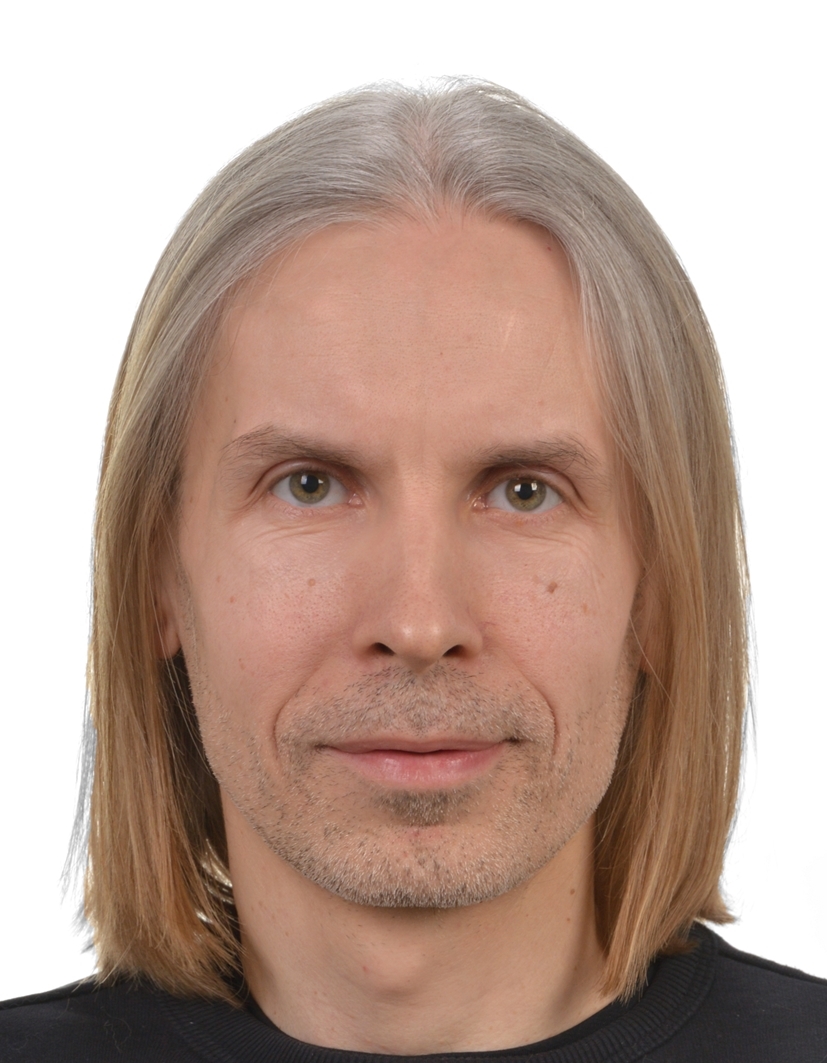
A Journalism and Social Communication graduate with 15 years of experience in the media industry. He has worked for titles such as "Dziennik Łódzki," "Super Express," and "Eska" radio. In parallel, he has collaborated with advertising agencies and worked as a film translator. A passionate fan of good cinema, fantasy literature, and sports. He credits his physical and mental well-being to his Samoyed, Jaskier.
Education
19 September 2026



Zmień tryb na ciemny