Culture
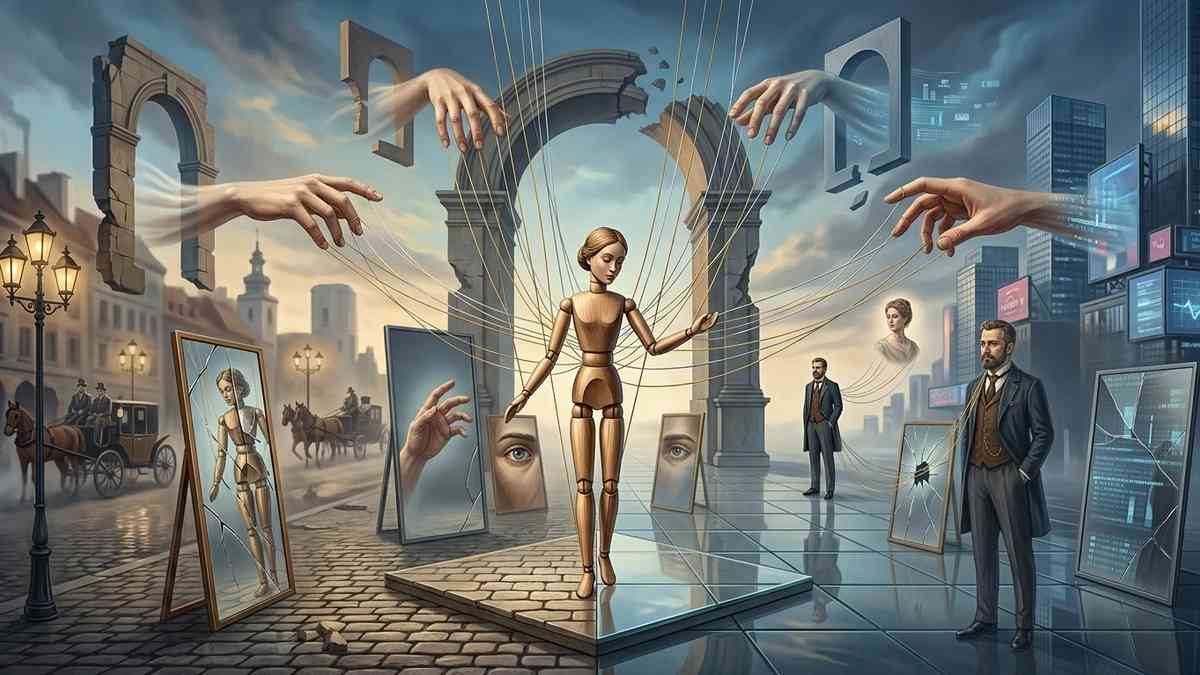
A Life Spent Becoming Someone Else’s Ideal
12 October 2026






Do more children mean more happiness? Intuition suggests one answer, yet the data tells another. When we look closely at the link between children and happiness, the least satisfied group turns out to be the one we rarely discuss.
Psychology has long shown that parenthood can affect mental well-being in both positive and negative ways. The reasons differ from person to person, and personal preferences play a crucial role.
No research shows that any specific number of children guarantees happiness, better well-being, stronger family bonds, or a sense of fulfilment. Much depends on who we are—on our expectations, our values, and the way we experience close relationships.
An international team of researchers decided to explore precisely this question. They examined the connection between happiness and family life by surveying more than 23000 participants. Each respondent answered two simple questions: how many children they had, and how many they would ideally like to have.
The data revealed five distinct groups:
The results, published in the Journal of Personality, offered a fresh perspective on the relationship between family life and psychological well-being.
Four of the five groups reported a similar level of life satisfaction. Only one stood apart.
Parents who had more children than they originally planned showed lower levels of life satisfaction than the others. This group clearly differed from the rest.
Interestingly, among childless individuals, age played an important role. Older adults without children reported lower levels of satisfaction than others. On average, respondents had about 1.5 children per couple, while they described their ideal family size as around 2 children. Across the study as a whole, the average came to approximately 2.3 children per couple.
The findings confirm something many parents already know from experience. Children shape not only our daily lives but also the way we evaluate them. Researchers do not point to a single cause, but they do emphasise the pressures of ordinary life: less time for oneself, more responsibilities, and higher expenses.
At the same time, parenthood often brings a sense of meaning, closeness, and fulfilment that is difficult to find elsewhere. That tension explains why life with children can feel both more demanding and more meaningful at once.
Although the study rests on statistics, it ultimately reminds us of something deeper. Human flourishing begins in freedom.
Seen through a philosophical lens, this recalls Aristotle’s idea of a fulfilled life. True satisfaction does not come from obeying social expectations, but from living in a way that remains faithful to one’s values.
We live in a world that often treats family as a project to be managed rather than as a unique and intimate dimension of human life. Yet what matters most is something else entirely: the ability to look back on our decisions without regret.
No matter how many children we have.
Because in the end, children and happiness are shaped not by numbers, but by authenticity—the quiet certainty that our choices were truly our own.
Read this article in Polish: Liczba dzieci nie decyduje o szczęściu. Klucz jest gdzie indziej


A graduate of journalism and social communication at the University of Rzeszów. She has been working in the media since 2019. She has collaborated with newsrooms and copywriting agencies. She has a strong background in psychology, especially cognitive psychology. She is also interested in social issues. She specializes in scientific discoveries and research that have a direct impact on human life.


Zmień tryb na ciemny